Licensed master electrician · Call 414-207-0109

It depends on the type. A gas tankless water heater needs a 120-volt supply for its controls, ignition and fan. A small electric point-of-use unit for one sink may run on 120 or 240 volts. A whole-house electric tankless heater needs several dedicated 240-volt circuits, and one 36-kilowatt model draws 150 amps at full output, more than an entire 100-amp service can supply, so a load calculation comes first.
A tankless water heater, also called an on-demand water heater, heats water only as it flows through the unit instead of keeping a tank hot. That is efficient, but it means the heater has to deliver all of its heat in the moment you turn on the tap. With gas, that heat comes from a burner. With an electric unit, it comes straight from your electrical service, which is why the electrical side can be simple or can decide the whole project.
Point-of-use or whole-house: two very different loads
The electrical needs depend on whether the heater serves one fixture or the whole house. Here is how the main types compare:
| Type | What it needs electrically | What it serves |
|---|---|---|
| Gas tankless, whole-house | A 120-volt supply for controls, ignition and fan | The whole house; the heat comes from gas |
| Electric point-of-use | 120 volts or a dedicated 240-volt circuit, depending on the model | One sink or a nearby fixture |
| Electric whole-house | Several dedicated 240-volt circuits, each with its own two-pole breaker | The whole house |
| Electric tank heater (for comparison) | One dedicated 240-volt circuit | The whole house, from stored hot water |
A point-of-use unit is a small heater under a sink or close to one fixture. It suits a powder room or a far-off bathroom where hot water takes a long time to arrive. The whole-house electric unit is a different scale of load altogether, and it is the type that can call for an electrical panel upgrade.
What a whole-house electric unit needs
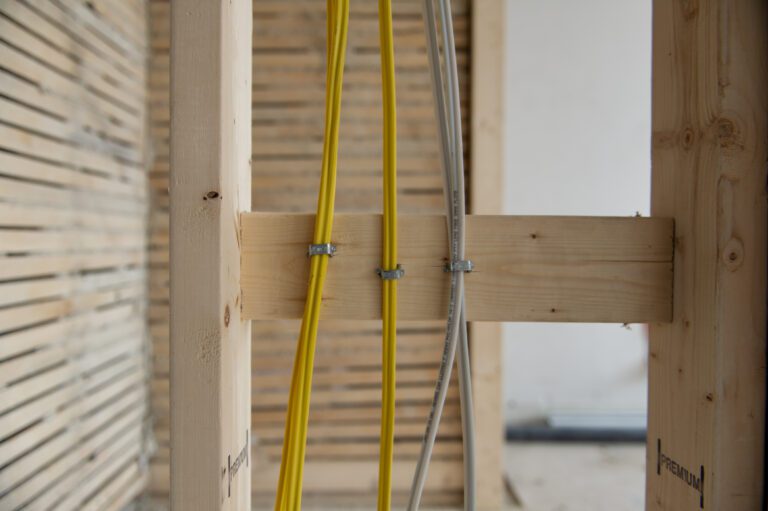
A whole-house electric tankless heater needs several large 240-volt circuits, all run from the panel to the heater, sized exactly as the manufacturer specifies. The unit splits its heating elements across those circuits, and each circuit gets its own two-pole breaker.
To give a sense of scale, Rheem’s published specifications for its 36-kilowatt Professional Classic RTEX-36 list a draw of 150 amps, four 40-amp double-pole breakers and 8-gauge wire for each of the four circuits. The total is simple arithmetic: 36,000 watts divided by 240 volts is 150 amps. The breaker and wire sizes are the manufacturer’s, set for that listed appliance, and they assume copper wire and apply to that model only. Your electrician sizes each circuit from your own unit’s installation manual and the code, not from a rule of thumb. Amperage, the current a circuit carries, is what the breaker and the wire are sized for. The same RTEX line includes much smaller units, down to 8 kilowatts. Smaller whole-house models draw less, but the pattern holds: several circuits, heavy wire, and a large share of the service.
Each of those circuits is a new circuit installation in its own right, and four full-size double-pole breakers take eight spaces in the panel.
Like an electric tank heater, the unit runs on dedicated circuits with nothing else connected, but where a tank heater uses one circuit, a whole-house tankless unit uses several, as our article on appliances that need a dedicated circuit shows.
Will your electrical service carry it?
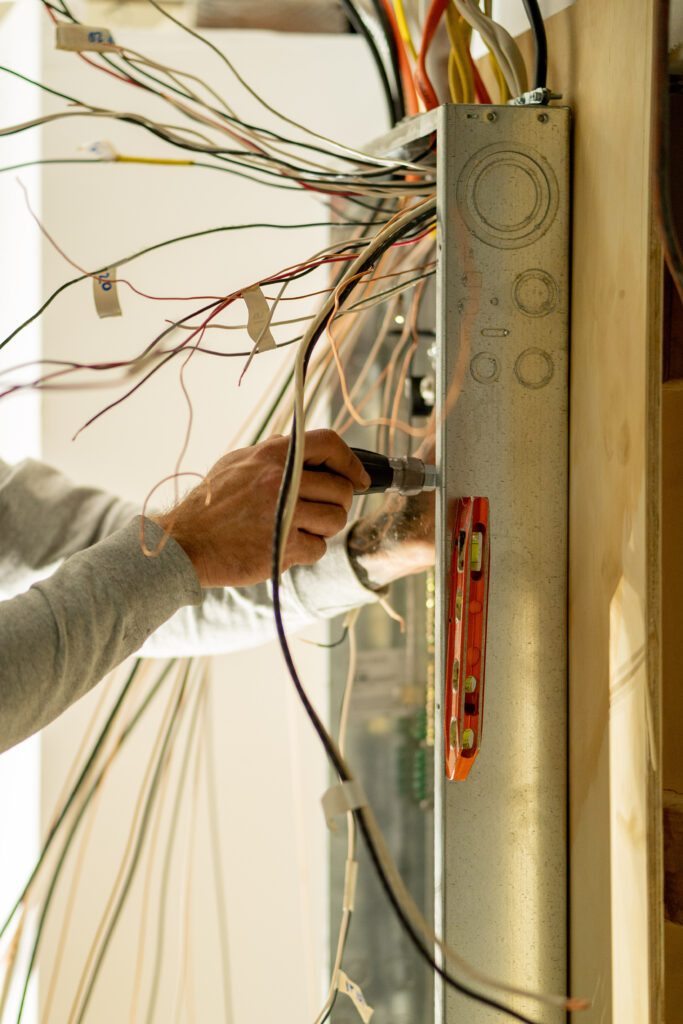
Only a load calculation can tell you whether your electrical service can carry a whole-house electric tankless heater. A load calculation is an arithmetic check, done by an electrician, of everything the house draws against the size of the service, the main supply that feeds your panel from the utility.
> A whole-house electric tankless heater asks the electrical service to deliver, in an instant, the heat a tank heater spreads over an hour. A unit that draws 150 amps at full output needs more current than a 100-amp service can supply for the entire house, before the furnace, the range, the dryer or a single light is counted. That is why the electrical service, not the plumbing, usually decides whether a whole-house electric unit is possible.
On a 100-amp service, a large whole-house electric unit is generally out of reach without a service upgrade, which we discuss in whether 100-amp service is enough.
On a 200-amp service, the answer depends on what else the house runs and on whether the panel has the spaces, a question we cover in how many circuits a 200-amp panel can handle.
When the numbers do not work, the options are a larger service, a smaller unit or point-of-use units serving individual fixtures, or a different type of water heater. Your electrician can show you the load calculation so the decision rests on your house’s figures rather than a rule of thumb.
Planning an electric tankless heater?
Send us the heater model and your panel’s service size, and we will check what circuits and service it needs.
Licensed master electrician. 12-month workmanship warranty.
Why Wisconsin winters matter
Winter matters because an electric tankless heater’s output is limited by how far it has to raise the water’s temperature. In a Wisconsin winter, the water coming into the house is much colder than in summer, so the heater has to work harder for the same shower.
The heat needed is the flow of water multiplied by the temperature rise. The standard rule is gallons per minute times degrees of rise times 500, which gives BTUs per hour, and 3,412 BTUs per hour make one kilowatt. The 500 comes from 60 minutes in an hour times about 8.33 pounds per gallon of water. As a worked example for an electric unit, which turns essentially all of its power into heat, raising 2 gallons per minute by 70 degrees Fahrenheit takes 70,000 BTUs per hour, or about 20.5 kilowatts, which is about 85 amps at 240 volts. Double the flow, for two showers at once, and the power doubles. When a unit reaches its limit, it delivers either less water at the set temperature or the same flow at a lower temperature.
That is why sizing for the coldest month, not an average day, matters here. A unit that keeps up comfortably in August can fall short in February. Your plumber sizes the unit for flow and temperature rise, and your electrician confirms the circuits and service can deliver the power that size requires.
Gas tankless heaters need power too
A gas tankless water heater burns gas for heat, but it still needs electricity for its controls, electronic ignition and the fan that pushes exhaust through the vent. That is usually a 120-volt supply, either a standard outlet near the heater or a hardwired connection, and some units call for a dedicated circuit, as the installation manual specifies. Units with built-in freeze protection also rely on that supply to keep the heat exchanger from freezing, which matters for a heater in a cold garage or crawlspace through a Wisconsin winter.
Because of that, a gas tankless heater stops making hot water when the power goes out. If hot water through an outage matters to you, a standby generator or a battery backup can keep it running, and sizing a home generator explains how to include it.
Permits, and who does what
A tankless water heater usually involves two trades and two permits. A licensed plumber typically installs the heater and handles the water connections and, for gas units, the gas line and venting; plumbing is licensed and permitted separately from electrical work in Wisconsin, so expect two contractors or one firm holding both licenses. A licensed electrician runs the circuits, and the electrical work normally needs an electrical permit from your municipality, which enforces Wisconsin SPS 316, adopting the 2023 NEC (in effect since September 1, 2026), followed by an inspection.
New circuits mean work inside the panel. Switching off the main breaker does not make that safe: the service conductors and the main breaker’s line-side connections stay energized, and a homeowner cannot shut those off. The utility can, usually by pulling the meter, and so can a separate service disconnect if one is fitted ahead of the panel. That is one reason this is licensed work.
If an existing electric heater’s circuit shows scorch marks or discoloration, or you smell burning or hot plastic at the heater or the panel, switch the heater’s breaker off, leave it off and call an electrician. Reset a tripped water heater breaker once at most; if it trips again, leave it off until it is inspected.
Lehmann Electrical & Design is led by Jacob W. Lehmann, a Wisconsin master electrician, license 1283316, working under Wisconsin electrical contractor license 1492849. The company holds an A+ rating with the BBB, 4.9 stars on Google, and backs its work with a 12-month workmanship warranty.
Considering a tankless water heater? Request a quote or call 414-207-0109. The useful details are the heater model you are looking at, your panel’s service size and where the heater will go. We work across Milwaukee and Waukesha County.
Why homeowners call Lehmann Electrical & Design
- Led by licensed master electrician Jacob Lehmann
- A+ rating with the BBB and 4.9 stars on Google
- 12-month workmanship warranty on the work we do
- Permits pulled and inspections scheduled as part of the job
- Milwaukee, Wauwatosa and Waukesha County, from 12012 W Fairview Ave, Wauwatosa
Need the circuits or a bigger service?
We run the dedicated circuits, upgrade the service where the load calculation calls for it, and handle the electrical permit.
Licensed master electrician. 12-month workmanship warranty.
Frequently asked questions
▾How many amps does an electric tankless water heater use?
It depends on the unit’s size. Divide its rating in watts by 240 volts: an 18-kilowatt unit draws 75 amps in total and a 36-kilowatt unit 150 amps at full output, split across two or more circuits in the way the manual specifies. Small point-of-use units draw far less. The manufacturer’s specifications give the exact figure, along with the number and size of breakers and the wire size, so check them before choosing a unit.
▾What size breaker do I need for a tankless water heater?
The manufacturer specifies it, and for a whole-house electric unit it is usually several breakers rather than one. Rheem’s published specifications for its 36-kilowatt RTEX-36, for example, call for four 40-amp double-pole breakers. A gas tankless heater needs only a 120-volt supply for its controls. Never fit a larger breaker than the manual calls for; the breaker protects the wire.
▾Does a tankless water heater need its own breaker?
Yes. An electric tankless heater runs on dedicated circuits with nothing else connected, and a whole-house unit uses several, each with its own two-pole breaker. A gas tankless heater’s 120-volt supply is far smaller, and the installation manual says whether it needs a dedicated circuit or can use a standard outlet. Your electrician sets it up to match the manual.
▾Can I put an electric tankless water heater on 100-amp service?
A small point-of-use unit may fit, but a large whole-house electric unit generally will not. A heater drawing 150 amps at full output needs more than the whole 100-amp service, before anything else in the house is counted. A load calculation shows what your service can take. If the numbers do not work, the choices are a service upgrade, a smaller unit or a different type of water heater.
▾Does an electric tankless water heater need to be vented?
No. An electric tankless heater burns no fuel, so it produces no exhaust and needs no vent. That is one of its practical advantages, since it can go in places a gas unit cannot. A gas tankless heater does need venting for its exhaust, installed to the manufacturer’s instructions, along with its gas line and a 120-volt supply.
▾Will a tankless water heater work when the power goes out?
No. An electric tankless heater needs power for its heating elements, and a gas tankless heater needs power for its controls, ignition and fan, so both stop during an outage. A standby generator or a battery backup sized to include the heater can keep hot water running. For a gas unit, the electrical load is small, so it adds little to the generator’s size, though the heater’s circuit still has to be one the generator supplies.
▾Does an electric tankless water heater work in cold climates?
Yes, but it has to be sized for winter. In a Wisconsin winter the water entering the house is much colder, so the heater must raise it further, and the power needed rises with every degree. A unit that keeps up in summer can fall short in February, delivering less flow or cooler water. Size it for the coldest incoming water, and confirm your electrical service can supply the larger unit that takes.
Next step
Get your water heater circuits quoted
Tell us the heater model and your panel size.
Licensed master electrician12‑month warranty4.9 on Google
Milwaukee, Wauwatosa and Waukesha County. Prefer to talk? Call 414-207-0109