Licensed master electrician · Call 414-207-0109
Most smart switches do need a neutral wire, but not all of them. Wi-Fi and Zigbee switches with always-on radios draw a small amount of power around the clock, and they need a neutral (the white wire that returns current to the panel) to complete that circuit. A smaller group of “no-neutral” smart switches work without one by trickling current through the light fixture itself, which works in some homes and causes flicker or buzzing in others.

If your switch box has a neutral, almost any smart switch on the market will work. If it does not, your options narrow to no-neutral models, smart bulbs, or a smart relay installed at the fixture. Older Milwaukee and Waukesha County homes frequently have switch boxes with only two wires and a ground, because for decades a switch was treated as a simple interrupter in the hot leg. Nothing was wrong with that wiring when it was installed, and it is still legal where it exists, but it was never designed to power a device.
Here is the plain version worth keeping:
> A standard light switch does not need a neutral because it does not consume power. It only breaks and remakes the hot leg. A smart switch is a small computer with a radio, and a computer needs a complete circuit to live on even when the light is off. That is the whole reason the neutral question comes up at all.
| Switch type | Needs a neutral? | How it gets power |
|---|---|---|
| Standard toggle or rocker | No | Does not use power |
| Most Wi-Fi smart switches | Yes | Hot to neutral, continuously |
| Most Zigbee / Z-Wave / Thread switches | Yes | Hot to neutral, continuously |
| “No-neutral” smart switches | No | Small leakage current through the load |
| Smart dimmer (standard type) | Usually yes | Hot to neutral, continuously |
| Smart bulb with a plain switch | No | Powered by the lamp socket |
| In-fixture smart relay or module | Yes, at the fixture | Neutral is already present at the light |
What is usually causing it
When a homeowner opens a switch plate and finds no white wire, the cause is almost always the age and the wiring method of the house, not a mistake.
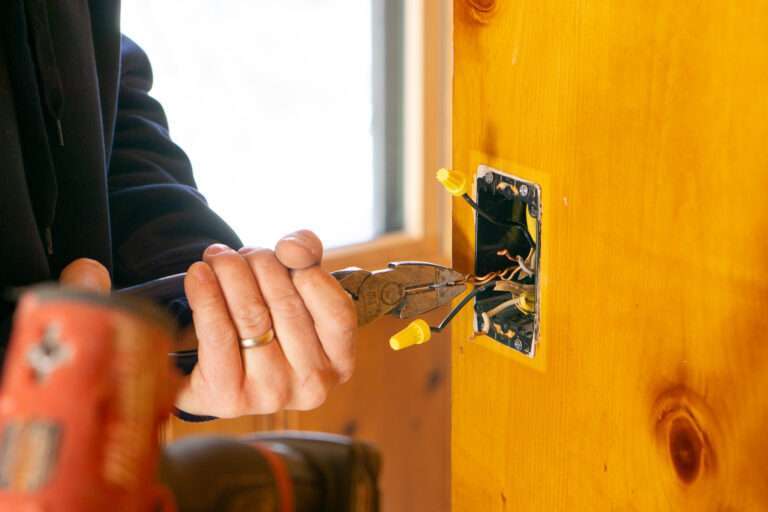
Switch loops. In a switch loop, power arrives at the light fixture first. A two-conductor cable runs down to the switch carrying the hot leg and the return. The neutral stays up at the fixture. You see a black and a white wire in the box, but the white one is being used as a switched leg, not as a neutral. Re-identifying a white conductor for that purpose is restricted under the 2023 NEC, which Wisconsin adopted through SPS 316 in September 2026, and that is one reason the arrangement is no longer the default in new work.
Knob and tube or early cloth-insulated wiring. Older systems often have no ground in the box either, which limits device choices further and sometimes points to a wider rewiring conversation.
Three-way and multi-location switching. Two switches controlling one light complicates matters. Some smart switch families need a neutral at the primary location and a traveler or wireless companion at the second.
A neutral is there but bundled. Sometimes a white bundle is tucked behind the device, capped and pushed to the back of the box. It looks like no neutral until the box is inspected properly.
Why no-neutral switches misbehave. A no-neutral switch has to pass a tiny current through the bulb to keep its radio alive. With old incandescent bulbs that current went nowhere visible. With LEDs, which can light faintly on milliamps, it often shows up as a dim glow when the light is supposed to be off, a flicker, or a faint buzz. Some manufacturers supply a bypass capacitor that is wired in at the fixture to absorb that current. Whether a bypass is needed depends on the fixture, the bulb, and the box, which is why this is better judged in person than from a product listing.
What is safe to check yourself, and what is not
Safe to do: read the box. Turn the circuit off at the breaker, confirm the light will not turn on, remove the cover plate screws, and look at the wires without touching, pulling or unwrapping anything. Count the conductors, note the colors, and note whether a bare copper or green ground is present. If you see a capped white bundle, that is useful information. Take a photo and stop there.
Also safe: checking what you already own. Read the switch’s instruction sheet for “neutral required.” Read the bulb’s listing for dimmable or non-dimmable. Note how many switches control the fixture.
Not safe, and not a homeowner job: making any connection, re-identifying a conductor, running a new neutral through a wall or ceiling, opening a fixture canopy to install a bypass, or anything at all behind a panel cover. Turning the main breaker off does not de-energize everything: the service conductors feeding the panel and the line-side lugs on the main breaker stay energized. Only the utility, usually by pulling the meter, or a separate service disconnect ahead of the panel, can take those dead.
If the breaker trips when you restore power, push it firmly to OFF and back to ON once. If it trips a second time, leave it off and have it inspected. And if you ever notice a burning or hot-plastic smell, scorch marks, discoloration, buzzing or crackling at a switch, fixture or panel, stop using that circuit or device, leave the breaker off, and call an electrician. Do not touch the device to judge how hot it is. Smell, sight and sound tell you what you need to know.
Planning more than one or two switches is worth treating as a wiring project rather than a shopping list, and whole-house smart home wiring is usually cheaper to do in one coordinated visit than one room at a time.
Not sure what is in your switch box?
A licensed electrician opens it, tells you whether there is a true neutral, and says what the switch you want will actually need.
Licensed master electrician. 12-month workmanship warranty.
When it points to a bigger problem
A missing neutral is normal. Some of what turns up alongside it is not. Where lights on that circuit also keep tripping the breaker, or an outlet nearby has stopped working, the switch box is a symptom rather than the problem.
- No equipment ground in the box. Common in pre-1960s wiring. It limits device selection and may indicate circuits that deserve a broader look.
- Aluminum branch-circuit conductors. Solid aluminum branch wiring from the late 1960s and 1970s requires listed connectors and specific terminations. It is not a place to improvise.
- Cloth, brittle or crumbling insulation. If insulation flakes when a conductor moves, adding a device will not be the only work needed.
- A box crammed full. Boxes have a fill limit based on volume and conductor count, set by NEC 314.16 under the 2023 code Wisconsin now works to. Adding a bulky smart switch to a box already at capacity is not a legal fix, and the answer is a larger box or a different device location.
- Neutrals shared between circuits in ways that confuse a smart device. Multiwire branch circuits and borrowed neutrals can cause odd behavior and, in some configurations, real heating.
- Repeated tripping, warm switch plates, or lights that dim when an appliance starts. Those are circuit symptoms, not smart switch symptoms, and they should be diagnosed before any automation is added.
Work installed before September 1, 2026 was done under the 2017 NEC as Wisconsin adopted it. Wisconsin SPS 316 now adopts the 2023 NEC, in effect since September 1, 2026, and that is what a permitted alteration is held to today. Existing installations are not required to be brought up to the new edition unless they are altered, so the practical question is what the new work touches.
What an electrician does about it
The visit starts with the box, not the product. An electrician confirms the circuit is de-energized, identifies which conductor is doing which job, checks for a ground, measures box fill, and confirms how many locations control the fixture. From there, the realistic paths are:
- Use the existing neutral if one is present and simply unused. Fastest outcome.
- Pull a neutral to the switch box where the wall, attic or basement access allows it. Cleanest long-term result, and it keeps every future device option open.
- Install a no-neutral switch, with a bypass at the fixture if the bulbs and fixture need it.
- Move the smarts to the fixture with an in-canopy relay or module, so the wall switch stays conventional.
- Use smart bulbs where only on, off and color matter and the switch itself can stay dumb.
A permit comes from your municipality, Milwaukee, Wauwatosa, Waukesha or whichever town you are in, and that municipality enforces Wisconsin SPS 316. For multi-room projects, a well-planned smart lighting layout decides scene control, three-way locations and dimmer compatibility before anything is wired, which avoids buying switches twice.
Lehmann Electrical & Design is led by master electrician Jacob Lehmann and rates 4.9 stars on Google, and our work carries a 12-month workmanship warranty. If you have opened a switch plate and found no white wire, or you want a smart lighting plan that actually works with the wiring you have, request an estimate or call 414-207-0109.
Why homeowners call Lehmann Electrical & Design
- Led by licensed master electrician Jacob Lehmann
- A+ rating with the BBB and 4.9 stars on Google
- 12-month workmanship warranty on the work we do
- Permits pulled and inspections scheduled as part of the job
- Milwaukee, Wauwatosa and Waukesha County, from 12012 W Fairview Ave, Wauwatosa
Want your smart switches wired properly?
Tell us the age of the house and which rooms you want switched.
Licensed master electrician. 12-month workmanship warranty.
Frequently asked questions
▾Do all smart switches need a neutral wire?
No. The majority of Wi-Fi, Zigbee, Z-Wave and Thread switches do, because their radios run continuously and need a complete circuit. A smaller category of no-neutral switches gets by on a tiny current passed through the connected light. Those work well in some installations and cause faint glow, flicker or buzzing in others, particularly with LED bulbs.
▾Why do smart switches require a neutral wire?
Because they consume power even when the light is off. A standard switch is just a gate in the hot leg and uses nothing. A smart switch has a radio, a processor and a status light that need a continuous low-voltage supply. Current has to flow in and back out, and the neutral is the return path to the panel. Without it there is no complete circuit for the electronics.
▾Do all switches have a neutral wire?
No. Plenty of switch boxes, especially in older homes, contain only the hot leg and a switched return, with the neutral left up at the light fixture. That arrangement is called a switch loop and it was standard practice for decades. It was never wrong, it simply predates the idea that a wall switch might need to power itself.
▾How do smart switches work without a neutral?
They leak a very small current through the light fixture to keep their electronics alive. The load acts as the return path. With incandescent bulbs this was invisible. LED bulbs can illuminate on very little current, so the result is sometimes a dim glow when the light should be off. A bypass device wired in at the fixture absorbs that current and usually solves it.
▾Can a neutral be added to an existing switch box?
Often yes, depending on access. An electrician may be able to run a new cable from the fixture or a nearby box through an attic, basement or accessible wall cavity. Where walls are closed and finished, running a neutral means opening and patching drywall, so an in-fixture module or a no-neutral switch may be the more sensible route.
Next step
Get your switches wired
Tell us the age of the house and which rooms.
Licensed master electrician12-month warranty4.9 on Google
Milwaukee, Wauwatosa and Waukesha County. Prefer to talk? Call 414-207-0109