Licensed master electrician · Call 414-207-0109
An EV charger that keeps stopping, pausing or cutting out is usually reacting to one of a handful of things: heat, a ground fault, an overloaded or weak circuit, a communication drop, or the car itself ending the session. Several of these are protective responses, not failures. Knowing which one you are dealing with tells you whether it is a setting on the car, a network issue or an electrical fault that needs a licensed electrician.
A charger that keeps stopping is usually protecting itself: heat, a ground fault, a circuit at its limit, a lost signal to the car, or the car ending the session itself. The pause is the safety system working. Which of those caused it is what matters, because only some are electrical faults.
- A session that always stops at the same charge level is usually the car’s own setting.
- Stopping that gets worse as the unit warms up points at heat or a loose connection.
- A ground fault or a repeated breaker trip is an electrical fault, not a nuisance.
- Check the charger’s app and the car’s screen: they often disagree, and that is a clue.
If the charger, its cable or the outlet smells hot, buzzes or shows scorch marks, stop charging, leave that breaker off and call an electrician today.
Why an EV Charger Keeps Turning Off or Pausing
| Cause | What you notice | Likely source |
|---|---|---|
| Heat protection | Charger restarts after cooling down | Unit in direct sun or an unventilated space |
| Overloaded circuit | Charger cuts out when other loads run | Circuit too small for the charger’s draw |
| Loose or corroded connection | Intermittent charging, burning smell | Worn outlet, loose breaker or wire terminal |
| Ground-fault trip | Charger shows a fault, or a GFCI outlet or breaker trips | Current leaking out of the circuit |
| Vehicle battery management | Charging slows or stops near full | Normal car behavior, not a charger fault |
| Wi-Fi or app drop | Charger shows “offline” in the app | Router distance, firmware glitch or server outage |
Ground faults. A GFCI (ground fault circuit interrupter) cuts power when current leaks out of the circuit by any path, including water, a damaged cord or a person. The personnel type trips at 4 to 6 milliamps, the UL 943 Class A range. Listed Level 2 chargers also carry their own ground-fault protection evaluated to UL 2231: a charge circuit interrupting device (CCID20) with a 20-milliamp threshold. Repeated trips from either mean a real problem needs finding.
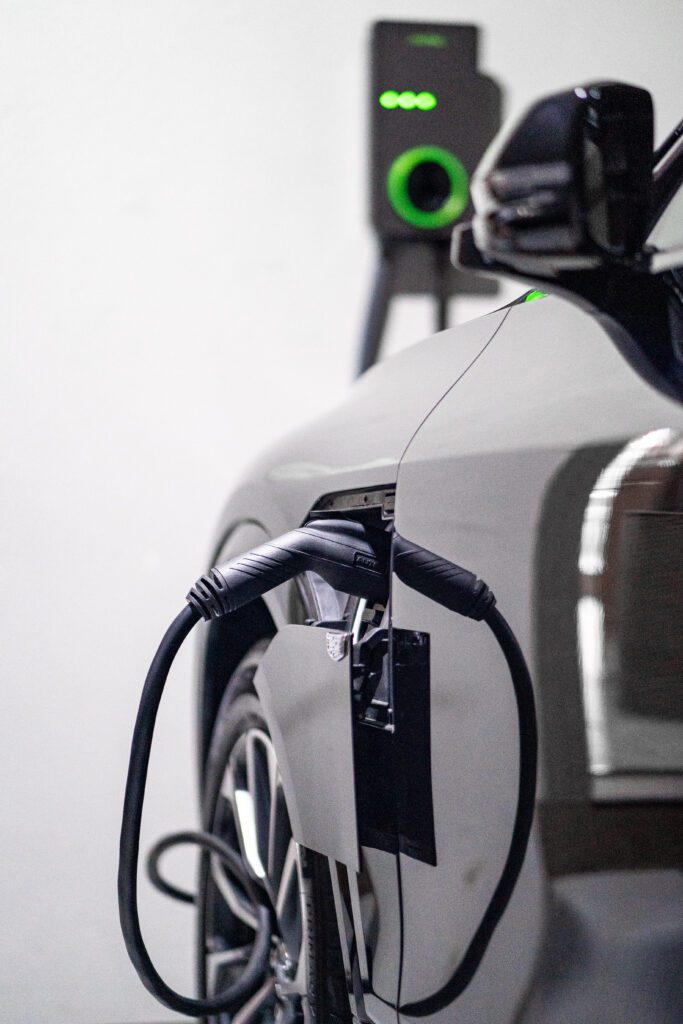
Check the car first. Several stops come from the vehicle, not the charger: the charge limit has been reached, a schedule is holding the session for off-peak hours, the charge port latch did not fully engage, or the car is preconditioning its cabin or battery. In some vehicles, a weak 12-volt accessory battery can also interrupt charging. The car’s screen or app usually shows which.
Cold weather changes the picture. In a Wisconsin winter, many EVs heat their battery before or during charging, so a session can pause or start slowly. In an unheated or detached garage the effect is stronger, and a long wire run to a detached garage adds voltage drop under load.
Safe Checks When an EV Charger Keeps Stopping
You can safely check:
- The charge handle and the car’s charge port, for damage, debris or moisture.
- The charger’s status lights or app. Most manufacturers publish a fault-code guide.
- A tripped GFCI outlet or breaker. Reset it once: press Reset on the outlet, or push the breaker firmly to OFF, then back to ON. If it trips again, leave it off until it is inspected.
- Whether it is a communication drop: if the app shows the charger offline, see whether it still charges when you simply plug in.
- Warning signs at the charger or its outlet: a burning smell, discoloration, scorch marks or buzzing. Look and listen; do not touch. If you notice any of them, stop charging and call an electrician.
Do not do these yourself:
- Open the breaker panel. The main lugs and service conductors stay live even with every breaker off, and only the utility can switch them off, usually by pulling the meter.
- Open a hardwired charger or the wiring behind it, even with its breaker off. A mislabeled breaker can leave the circuit live, and only an electrician with a tester can confirm it is dead.
- Replace a breaker that keeps tripping. One that trips with nothing plugged in more often points to a wiring fault than a worn breaker, and swapping it without a diagnosis can hide the real problem.
- Attempt any repair that needs a permit. In the Milwaukee area, permits for new circuits and charger installations come from your municipality, which enforces Wisconsin SPS 316 (the 2023 NEC, in effect since September 1, 2026).
Checked all that and it still cuts out?
A licensed electrician tests the circuit under load, checks every termination from the panel to the charger, and confirms whether the unit’s own protection is doing the stopping.
Licensed master electrician. 12-month workmanship warranty.
When a Charger That Keeps Cutting Out Points to a Bigger Problem
Repeated GFCI trips mean the device is detecting real leakage every time, from a deteriorating cord, moisture in a garage outlet or a wiring fault, or that the GFCI itself has failed. Resetting through it is not a safe workaround.
A breaker that smells of burning plastic, looks discolored or buzzes is not behaving normally, although one carrying a charger for hours can run mildly warm. Those signs usually mean a loose connection, a fault, or a charger drawing more than its circuit was sized for, for example after its current setting was raised. Stop charging and call an electrician.
Voltage sag is invisible without a meter. Undersized wire, a long run or a loose connection lets the voltage drop under load until the charger’s undervoltage protection ends the session.
Limited panel capacity. In older Milwaukee-area homes, a 100-amp service can leave little room for a 40- to 60-amp charger circuit. A load calculation shows what the panel can support. Sometimes a load management system that slows the charger while other big loads run avoids an upgrade; otherwise a panel upgrade may have to come first.
If the charger stops at a consistent time or charge level and you have ruled out the car’s own settings, the problem is most likely electrical, and worth an electrician’s visit rather than another restart.
What an Electrician Does About an EV Charger That Keeps Stopping
A licensed electrician confirms the circuit is correctly sized for the charger’s rated amperage (the current it draws), measures voltage at the connection under load, inspects every termination at the breaker and the charger, and tests the ground-fault protection.
Correct sizing follows Wisconsin SPS 316, which adopts the 2023 NEC. A charger is a continuous load, so its circuit must be sized at no less than 125 percent of the charger’s maximum current (NEC 625.41). That is why a 24-amp charger needs a 30-amp circuit, a 32-amp charger a 40-amp circuit and a 48-amp charger a 60-amp circuit. A Level 2 charger also needs a dedicated circuit (NEC 625.40), and its current setting must never be raised above what the circuit was sized for.
If a correctly sized breaker still trips, the fix is never a larger breaker: the breaker protects the wire, so the remedy is finding the fault. If the circuit is undersized, a new dedicated circuit is run from the panel.
Why homeowners call Lehmann Electrical & Design
- Led by licensed master electrician Jacob Lehmann
- A+ rating with the BBB and 4.9 stars on Google
- 12-month workmanship warranty on the work we do
- Permits pulled and inspections scheduled as part of the job
- Milwaukee, Wauwatosa and Waukesha County, from 12012 W Fairview Ave, Wauwatosa
Ready to have it looked at?
Send the charger brand, when in the session it stops and what the car reports. The electrician arrives knowing what to test.
Licensed master electrician. 12-month workmanship warranty.
Frequently Asked Questions
▾Why does my EV charger keep disconnecting from the car?
Likely causes include a worn charge handle, a dirty or damaged charge port, or a communication fault between the charger and the car. If you use a portable charging cable, try another one. If the handle clicks in firmly and the car still shows a disconnect, have an electrician check the circuit voltage and the charger’s wiring connections.
▾Why does my EV charger keep going offline in the app?
Smart chargers need a stable Wi-Fi connection. A distant router, a charger that supports only 2.4 GHz on a network mixing 2.4 and 5 GHz under one name, or a stalled firmware update can take it offline. Move the router closer or check for a firmware update. If it keeps dropping, the charger may have a hardware fault.
▾Do electric cars stop charging when full?
Yes. The car’s battery management system stops accepting charge at the limit you set, so the session ends or the power draw drops to near zero. That is normal, not a charger fault. Charging also slows as the battery nears its limit, which protects the battery’s long-term health.
▾Should I leave my EV plugged in all the time?
Check your owner’s manual, but for most EVs it is fine: the battery management system controls what actually flows into the battery, and some cars use the connection to manage battery temperature. The bigger concern is the outlet or circuit: a loose or worn outlet that stays energized for long periods is a heat and fire risk whether or not a car is drawing current.
▾Can I leave my EV plugged in overnight?
Yes. A charger on a properly installed circuit is designed for sustained overnight use. If your electricity plan has time-of-use pricing, schedule the session for off-peak hours, and set a departure time so the battery reaches your target shortly before you leave rather than sitting full for hours.
▾How do I stop EV charging and unplug safely?
End the session from the car or the charger’s app first, then wait for the car to show that charging has ended. Press the release on the handle and pull it straight out. Never force a handle that feels locked; some cars lock it while the car is locked. Do not use the breaker as an on/off switch: it is a protective device, and repeated cycling wears it.
▾Should I keep my EV fully charged?
It depends on the battery chemistry. For many EVs with nickel-rich lithium-ion (NMC or NCA) batteries, manufacturers suggest a daily target of 80 percent and a full charge only before long trips, because sitting full speeds up capacity loss. Some LFP (lithium iron phosphate) models are designed to charge to 100 percent routinely. Your owner’s manual gives the right figure.
Next step
Tell us when it stops
Send the charger brand, how far into the session it cuts out and what the car reports. The electrician arrives knowing what to test.
Licensed master electrician12-month warranty4.9 on Google
Milwaukee, Wauwatosa and Waukesha County. Prefer to talk? Call 414-207-0109