Licensed master electrician · Call 414-207-0109
A kitchen rewire replaces the circuits that feed the room, not just the outlets you can see, and national averages put it at roughly $3,000 to $8,000. What moves the figure is how many circuits the kitchen needs in order to meet current requirements, and how much wall and ceiling has to come open to reach them.
Reviewed for 2026. Wisconsin adopted the 2023 National Electrical Code on 1 September 2026 through SPS 316, and a kitchen rewire permitted from that date is inspected against it. Dollar figures here are national averages, not Lehmann Electrical quotes.
Kitchen rewiring might sound intimidating, but understanding the costs helps you make smart decisions about your home’s electrical future. Whether you’re upgrading an old house or modernizing your cooking space, knowing what you’ll pay and why is the first step toward a safer, more functional kitchen.
What follows is what the work actually covers, what drives the price up or down, and the questions worth asking before you accept a quote.

What Does a Kitchen Rewire Actually Involve?
A kitchen rewire isn’t just swapping out a few outlets. It’s a comprehensive electrical upgrade that ensures your kitchen can safely handle modern appliances and keeps your family protected.
Replacing Old Wiring and Outlets
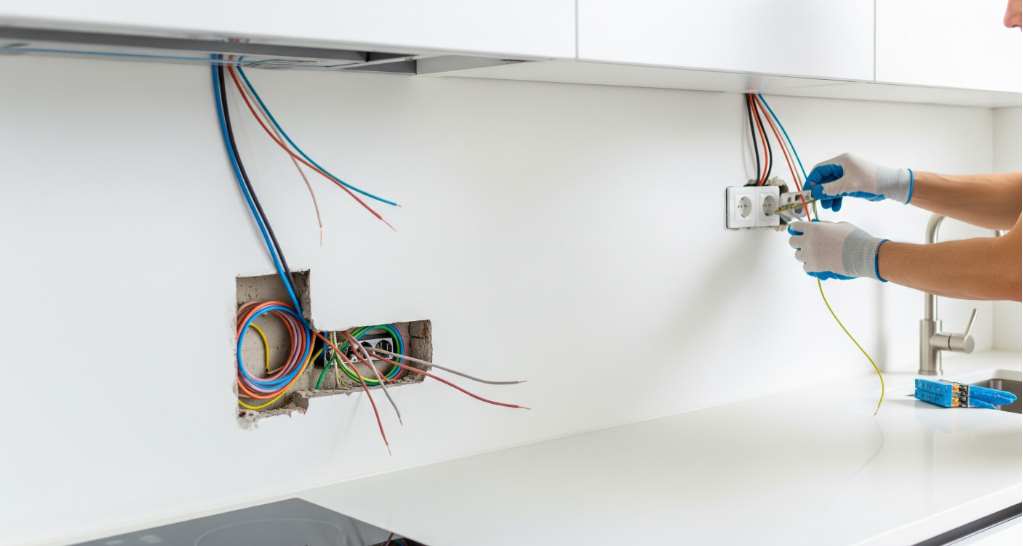
Most kitchen rewires start with replacing outdated wiring that may be decades old. Over time, insulation cracks, connections weaken, and the wire itself deteriorates. Your electrician will pull new copper wire through your walls, install modern outlets that meet current safety codes, and ensure proper grounding throughout the space.
This process typically includes adding new outlets in convenient locations - often more than your old kitchen had - so you’re not overloading circuits with extension cords. Modern kitchens often require dedicated circuits for refrigerators, dishwashers, and countertop appliances, all of which get their own protected lines.
Upgrading Your Electrical Panel
Your electrical panel is the “brain” of your home’s power system. Older panels often lack the capacity to handle today’s electrical demands. A kitchen rewire frequently includes either upgrading your main panel or adding a sub-panel specifically for kitchen circuits. This upgrade is essential for safety and prevents nuisance breaker trips.
Average Kitchen Rewiring Costs (2025)
Let’s talk numbers. Kitchen rewiring typically ranges from $3,000 to $8,000, though complex projects can exceed $10,000. The variation comes down to what you’re starting with and what you need at the finish line.
Budget Breakdown by Project Scope
A basic rewire (addressing existing outlets and switches without panel upgrades) costs approximately $3,000–$5,000. This option works well if your electrical panel has capacity and only your kitchen wiring is outdated.
A standard rewire with panel upgrades runs $5,000–$8,000. This is the most common approach and includes new wiring, modern outlets, circuit breakers, and any necessary permits.
A comprehensive rewire with significant panel work costs $8,000–$12,000 or more. This applies when your entire home’s electrical system needs modernization or your kitchen is being substantially expanded.
Regional Pricing Variations
Your location matters. Urban areas typically charge 15–25% more than rural regions due to higher labor costs and local code complexity. If you’re in the Milwaukee area, Lehmann Electrical & Design can provide specific estimates for your neighborhood.
Key Factors That Affect Your Final Price
Understanding what drives costs helps you anticipate your final invoice and spot fair pricing.
Kitchen Size and Layout
A 150-square-foot galley kitchen costs less to rewire than a 400-square-foot open-concept space. Larger kitchens need more wire, more outlets, and more labor time. Complex layouts with islands, multiple appliances, or unusual wall configurations also increase costs.
Existing Wiring Condition
If your kitchen has knob-and-tube wiring or aluminum wiring, expect higher costs. These materials are outdated and potentially dangerous. Removing them safely and installing modern copper wiring takes extra time and care. Finding unexpected issues - like buried wiring, water damage, or animal damage inside walls - can add surprise costs.
Code Compliance and Permits
Building codes change over time. Your rewire must meet current standards, including ground fault circuit interrupter (GFCI) outlets near sinks and additional safety measures. Permits ensure inspections happen and your work meets code. Permit costs typically range from $50–$300 depending on your city. Skipping permits might save money short-term but creates problems when you sell your home.
Not sure what your wiring needs?
A site visit tells you what is behind the walls and what the work would involve.
Licensed master electrician. 12-month workmanship warranty.
Signs Your Kitchen Needs Professional Rewiring
Don’t wait for an electrical disaster. Watch for these warning signs that it’s time to call a professional.
Frequent breaker trips when multiple appliances run suggest outdated circuits can’t handle the demand. Flickering lights or outlets that don’t work reliably indicate aging wiring or loose connections. Burning smells, scorch marks, or hot outlets are serious red flags requiring immediate professional attention. Outdated outlets (two-prong instead of three-prong grounded outlets) mean your kitchen isn’t fully protected.
If your home was built before 1980, there is a fair chance the kitchen circuits were never designed for the number of appliances a kitchen now carries. An inspection is what turns that from a guess into a list, and it regularly finds things a homeowner had no way of seeing: circuits shared between the counter and the fridge, outlets with no ground, and connections that were never meant to carry today’s loads.
DIY vs. Hiring a Professional Electrician
When to Call an Expert
Rewiring a kitchen is not a typical DIY project. Electrical work requires state licensing and years of training for good reasons - improper installation can cause fires, electrocution, and code violations.
Professional electricians understand building codes, know how to work safely inside walls, ensure proper grounding and load calculations, and pull permits with inspections. They also carry insurance, so you’re protected if something goes wrong.
A licensed electrician like those on the Electrical Remodeling Services team ensures your kitchen meets code, works reliably, and protects your family. The cost of hiring a professional is far less than dealing with fire damage or a home that fails inspection when you sell.
How to Get Accurate Quotes and Avoid Overpaying
Getting multiple quotes helps you understand fair pricing and avoid overcharging.
What to Ask Your Electrician
When calling for estimates, provide specifics: kitchen size, current wiring type, what you want included, and your timeline. Ask whether the quote covers permits, inspection fees, and cleanup. Request a breakdown of labor versus materials. Ask about licensing, insurance, and warranties.
Contact at least three electricians. This reveals pricing variations and helps you spot outliers. The cheapest option isn’t always best - choose based on reputation, transparency, and professionalism.
Our Electrician Services Milwaukee team provides detailed written estimates with no hidden costs, so you know exactly what you’re paying for.
Why homeowners call Lehmann Electrical & Design
- Led by licensed master electrician Jacob Lehmann
- A+ rating with the BBB and 4.9 stars on Google
- 12-month workmanship warranty on the work we do
- Permits pulled and inspections scheduled as part of the job
- Milwaukee, Wauwatosa and Waukesha County, from 12012 W Fairview Ave, Wauwatosa
Ready to get your wiring looked at?
Tell us the age of the house and what you have noticed, and we will come and look.
Licensed master electrician. 12-month workmanship warranty.
FAQ: How much to rewire a kitchen
How long does a typical kitchen rewire take?
Most projects take 3–7 days, depending on complexity and whether the electrician works alone or with a team. Some complex jobs extend to two weeks.
Do I need a permit for kitchen electrical work?
Yes. Permits ensure inspections happen and your work meets code. Skipping permits can create liability and problems when selling your home.
What’s the difference between rewiring and upgrading my electrical panel?
Rewiring replaces the actual wires and outlets throughout your kitchen. Panel upgrading increases your home’s capacity to handle more power. Most kitchen rewires include at least some panel work.
Can I use my kitchen while the electrical work is happening?
You’ll need to avoid using kitchen appliances during the rewire. Your electrician will turn off power to work safely, so plan accordingly.
Will my homeowner’s insurance cover kitchen rewiring costs?
Insurance typically doesn’t cover preventive rewiring. However, if faulty wiring caused a fire, you’d file a claim. Ask your agent whether outdated wiring affects your coverage or premiums.
Next step
Get your wiring checked
Tell us the age of the house and what you have noticed.
Licensed master electrician12‑month warranty4.9 on Google
Milwaukee, Wauwatosa and Waukesha County. Prefer to talk? Call 414-207-0109