Licensed master electrician · Call 414-207-0109
An EV charger that keeps tripping usually points to one of three things: a circuit running at or past its limit, a loose or aging connection between the panel and the charger, or a fault that a safety device is catching before something worse happens. None of these should be ignored, and most need a licensed electrician to fix safely.
A charger trips its breaker when the protection on that circuit sees too much current, or current leaking where it should not. The usual causes are a circuit at its limit, a loose or aging connection between the panel and the charger, or a genuine fault being caught early. One trip can be a fluke; repeated tripping is not.
- Reset the breaker once only. If it trips again, leave it off.
- A charger set above what its circuit was built for will keep tripping.
- Tripping that started after a storm or nearby work suggests damaged wiring.
- Heat at the breaker, the outlet or the charger means stop and call today.
If the charger, its cable, the outlet or the panel smells hot, buzzes or shows scorch marks, stop charging, leave that breaker off and call an electrician today.
What Usually Causes an EV Charger to Trip the Breaker
The circuit is overloaded
A Level 2 home charger typically draws 24 to 48 amps for hours at a time, which the electrical code treats as a continuous load. Under Wisconsin SPS 316, which adopts the 2023 NEC (in effect since September 1, 2026), the breaker and wire must be sized at no less than 125 percent of the charger’s maximum load. That is why a 24-amp charger belongs on a 30-amp circuit, a 32-amp charger on a 40-amp circuit and a 48-amp charger on a 60-amp circuit.
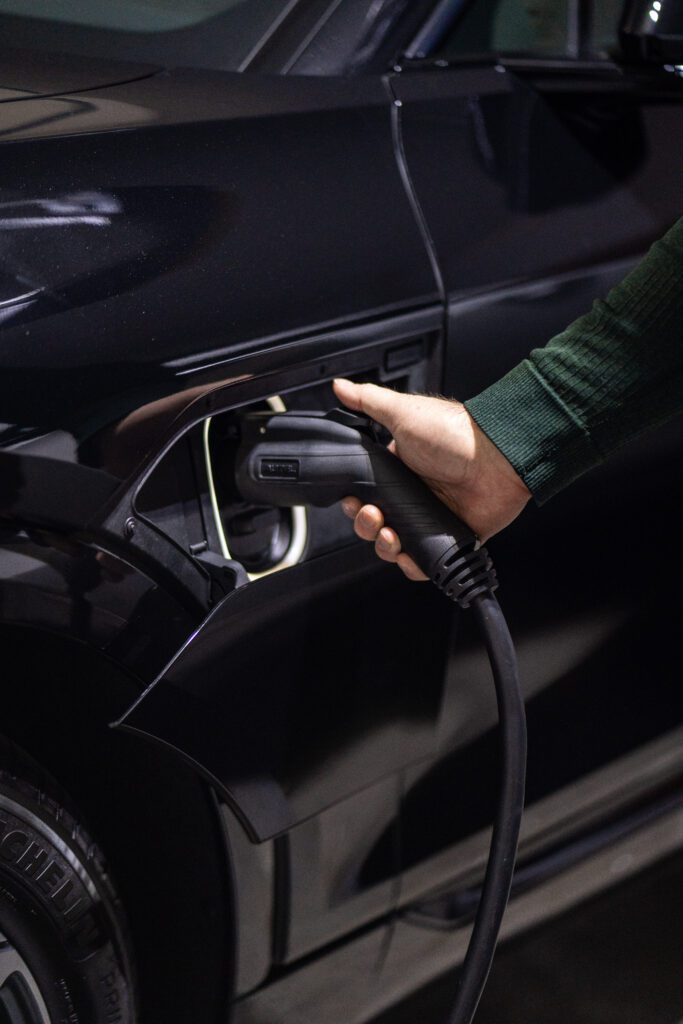
The 125 percent rule sets the sizing; it is not what trips the breaker. A breaker trips when current runs above its own rating, within seconds for a large overload or after many minutes for a small one, following its trip curve. Overload trips happen when a charger draws more than its circuit was built for, such as a 40-amp setting on a 30-amp circuit.
Undersized wire is a different hazard: it can run hot without tripping anything, which is why an electrician checks the wire and its connections, not just the breaker. A Level 2 charger also needs a dedicated circuit (NEC 625.40), so anything else wired onto it should be corrected.
A connection is failing
Loose connections at the breaker, a junction box or the charger generate heat, and where that heat reaches the breaker it can cause trips even when the load is within spec. A breaker that trips with nothing plugged in more often points to a wiring fault, such as a short or ground fault, than to the breaker itself, so an electrician rules out the wiring before replacing the breaker.
A ground fault is being detected
Two layers of protection can be involved. A GFCI trips when current leaks out of the circuit by any path, including through a person or damp material; the personnel type trips at 4 to 6 milliamps, the UL 943 Class A range. Listed Level 2 chargers also carry their own protection evaluated to UL 2231, a charge circuit interrupting device (CCID20) with a 20-milliamp threshold, which usually shows as a fault light on the charger rather than a tripped breaker.
A GFCI gets one reset, too. If it will not hold, there is a real leakage fault, such as a damaged cable or moisture, or a failed device.
Why a home charger keeps tripping: plug-in or hardwired
A plug-in home charger, one that plugs into a 240-volt outlet such as a NEMA 14-50, adds two things a hardwired unit does not have. The outlet’s contacts can wear and overheat with daily use. And a NEMA 14-50 receptacle installed for EV charging needs GFCI protection under the 2023 NEC (Section 625.54), from a GFCI breaker or at the receptacle, which trips at a lower leakage threshold (4 to 6 milliamps) than the charger’s own 20-milliamp protection. A hardwired charger relies on its built-in protection, so when it keeps tripping its breaker, the cause is more likely the circuit, a connection or the charger itself.
The panel is undersized for the total load
If your panel is already close to capacity, a 40- or 60-amp charger circuit can push the total beyond what it handles comfortably. You may notice lights dimming when the charger starts, or other circuits tripping at the same time. A load calculation shows whether the charger fits, or whether a panel upgrade has to come first.
Safe Checks When an EV Charger Keeps Tripping
| Task | Safe for a homeowner? | Why |
|---|---|---|
| Look over the charger, cable and outlet for damage, scorching or a burning smell | Yes | Look only; do not touch wiring. |
| Check that the connector is fully seated in the car, and a plug-in charger’s plug in its outlet | Yes | Look for scorching first; a loose plug in a worn outlet is a job for an electrician. |
| Reset the breaker once to rule out a fluke | Yes, once only | Push firmly to OFF, then ON; not if there is a burning smell, scorching or buzzing. If it trips again, stop. |
| Open the panel or tighten breaker terminals | No | Leave it to an electrician: the service conductors and line-side lugs stay live even with the main breaker off. |
| Replace a breaker or add a new circuit | No | Leave it to an electrician: it is energized panel work that also needs a permit from your municipality, which enforces Wisconsin SPS 316. |
| Repair the charger’s internal components | No | Leave it to the manufacturer or an electrician; the warranty may require it. |
Still tripping after one reset?
A licensed electrician measures the circuit under load, checks the breaker rating against the charger’s setting, and inspects every connection between the panel and the charger.
Licensed master electrician. 12-month workmanship warranty.
When EV Charger Tripping Points to a Bigger Problem
A single trip that does not repeat is often a one-off. Tripping every session, or tripping that starts after months of normal operation, is different. If there is a burning smell, buzzing or scorch marks, do not wait: leave the breaker off, stop charging and call an electrician.
Signs of heat. A breaker carrying a charger for hours can run mildly warm, but a hot-plastic smell, discoloration or buzzing is not normal. Look and listen from where you stand; do not touch.
The tripping started with cold weather. In a Wisconsin winter an EV charges longer at a stretch, and many cars heat their battery while plugged in. A marginal connection that coped all summer can start tripping in January.
Other circuits trip at the same time. That suggests a panel-level issue rather than a problem with the charger circuit alone.
The timing of the trip. A trip after a long stretch of charging suggests an overload or a heating connection. An immediate trip points to a ground fault or short that the protection catches right away.
The tripping started after a storm, a surge or nearby construction. Voltage spikes and disturbed conduit can damage wiring insulation in ways you cannot see.
Your home has older wiring. The charger circuit itself is normally new copper wire; the concern is the older panel and wiring it connects to, such as a pre-1950 Milwaukee bungalow still on a 60-amp service or a detached garage fed by one small circuit that was never sized for a charger.
Any of these is worth an electrician’s visit rather than another reset.
What an Electrician Does About an EV Charger That Keeps Tripping
When master electrician Jacob Lehmann or a member of the Lehmann team diagnoses a tripping EV charger, the inspection works from the charger back to the panel: the charger itself, the outlet or hardwired connection, the wire run, the breaker and the tightness of its terminals, and the panel’s spare capacity.
If a breaker has failed, it is replaced. If the wire is undersized for the charger, the run is replaced. If the panel is genuinely at capacity, the electrician explains the options before any work begins.
Why homeowners call Lehmann Electrical & Design
- Led by licensed master electrician Jacob Lehmann
- A+ rating with the BBB and 4.9 stars on Google
- 12-month workmanship warranty on the work we do
- Permits pulled and inspections scheduled as part of the job
- Milwaukee, Wauwatosa and Waukesha County, from 12012 W Fairview Ave, Wauwatosa
Ready to have it looked at?
Send the charger brand, its amperage setting and what was running in the house when it tripped. The electrician arrives knowing what to test.
Licensed master electrician. 12-month workmanship warranty.
Frequently Asked Questions
▾Why does my EV charger trip the breaker but only sometimes?
Intermittent tripping usually points to a connection working loose, a breaker beginning to fail, or a load sitting right at the edge of the circuit’s capacity. Heating and cooling slowly loosen a marginal connection, so it causes trouble on some days and not others. An electrician can narrow it down with a thermal (infrared) inspection and a load test.
▾Why does my EV charger fuse keep tripping?
Fuses blow rather than trip, but the meaning is the same: an overload or a fault. Replace a blown fuse only with one of the same rating, never a larger one, because the fuse is sized to protect the wire. If the same fuse blows again, leave that circuit off and call an electrician. An older fused service may not have the capacity for a Level 2 charger; a load calculation will show.
▾Why does my EV charger keep tripping the RCD?
RCD (residual current device) is the UK and European name. In a US home the same job is done by a GFCI outlet or breaker, or by the charger’s own ground-fault protection, so you will see a tripped GFCI or a fault light instead. Repeated trips can mean degrading charger components, damaged insulation or moisture in an outdoor outlet. Reset once at most.
▾Can you overcharge an electric car?
No, and the same goes for the battery itself. The car’s battery management system, not the charger, decides when current stops flowing into the battery, and it stops at the limit you set. The real electrical risk is not the battery but undersized or deteriorating wiring and connections, especially on a circuit that carries a long charging session every night.
▾Why does my electric keep tripping even when the EV is not charging?
The issue is likely at the panel rather than the charger circuit. A panel near its total capacity can trip several circuits under heavy use, and lights that brighten and dim can mean a loose service neutral, a service-side problem rather than a charger fault, which needs an electrician urgently. If the whole house goes dark and neighbors have lost power too, report the outage to We Energies or your utility. Otherwise, have an electrician inspect the panel.
Next step
Tell us when it trips
Send the charger brand, its amperage setting and what was running in the house at the time. The electrician arrives knowing what to test.
Licensed master electrician12-month warranty4.9 on Google
Milwaukee, Wauwatosa and Waukesha County. Prefer to talk? Call 414-207-0109