Licensed master electrician · Call 414-207-0109
A fishy or urine-like smell coming from an outlet is almost always overheating plastic, not anything that came from a kitchen. Flame retardants in outlet bodies, wire insulation and switch housings give off a distinctly fishy odor when they get hot. The smell means a connection inside that box is running hot enough to cook the plastic around it. Stop using the outlet, switch off the breaker that feeds it, and have a licensed electrician inspect it.
Yes, electrical components really can smell fishy. The odor comes from brominated and phosphate-based flame retardants used in the thermoplastic body of a receptacle, in wire insulation, and in the plastic housings of switches and dimmers. Those chemicals are there deliberately so that a hot fault resists catching fire, and when they heat up they release a fishy, ammonia-like, sometimes slightly sweet smell long before anything visibly burns.
That is the useful part. The fish smell is an early warning, which is why it deserves a fast response rather than a shrug.
If you smell fish, hot plastic, or burning at an outlet, switch, or light fixture: unplug what is in it, turn off the breaker for that circuit, leave it off, and call a licensed electrician. Do not plug anything back in to test it, and do not put your hand on the outlet or the breaker to judge how hot it is. Smell, discoloration, scorch marks, buzzing and crackling are the signs that matter, and none of them require touching anything.
What is usually causing it
Heat at an outlet comes from electrical resistance somewhere it should not be. Current squeezing through a poor connection turns into heat, the heat cooks the surrounding plastic, and the smell follows. The underlying causes tend to fall into a short list.
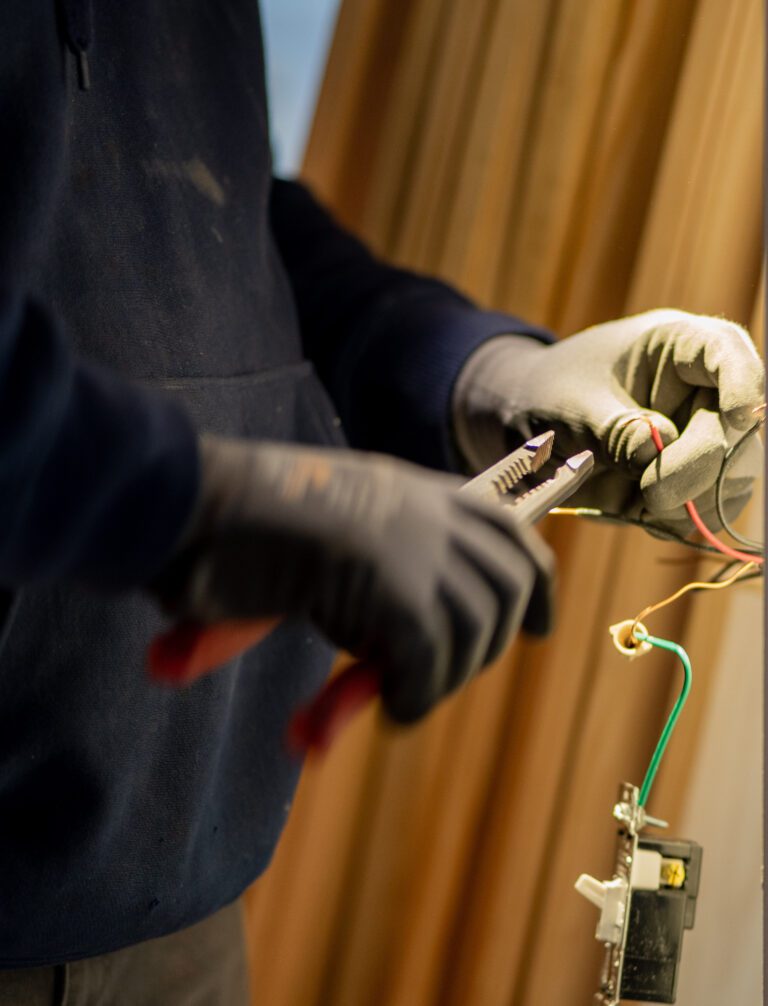
A loose connection. Wires terminate on an outlet either under a screw or pushed into a spring-loaded hole on the back (a “backstab” connection). Backstabs and screws both loosen over time, especially after years of thermal cycling. A loose termination makes a high-resistance joint that heats up every time the circuit is loaded.
An overloaded or overworked circuit. Space heaters, window air conditioners, hair dryers and microwaves pull a lot of current for long stretches. Branch circuits are sized so that a continuous load, meaning three hours or more at maximum current, takes up no more than 80 percent of the breaker rating. A 15 A circuit is comfortable carrying about 12 A continuously. Pile two heaters onto one bedroom circuit and the weakest connection in that circuit becomes the hot spot.
A worn-out receptacle. The brass contacts inside a receptacle lose their grip after enough plug insertions. A plug that wiggles or falls out of its own weight is arcing slightly every time the load changes.
Aluminum branch-circuit wiring. Houses wired in the mid-1960s through the mid-1970s sometimes have aluminum branch wiring, which expands, contracts and oxidizes differently from copper and is known for loosening at terminations. It needs proper listed connectors, not a retightened screw.
Damaged cord or plug. Sometimes the smell is the appliance, not the outlet. A cracked cord, a bent plug blade, or a cheap power strip with a melted interior produces the same odor.
Water intrusion. Exterior receptacles and garage outlets corrode. Corroded contacts are resistive contacts.
| What you notice | What it usually points to | What to do |
|---|---|---|
| Fishy or hot-plastic smell, no marks | Hot connection inside the box | Breaker off, electrician |
| Brown or yellow stain around a slot | Sustained heat or past arcing | Breaker off, electrician |
| Plug falls out, outlet feels loose | Worn receptacle contacts | Receptacle replacement |
| Buzzing or crackling from the wall | Active arcing | Breaker off immediately, electrician |
| Warm only while a heater runs | Circuit worked near its limit | Load review, likely a new circuit |
| Smell follows one appliance | Appliance cord or plug | Stop using that appliance |
What is safe to check yourself, and what is not
Safe for a homeowner: using your eyes, nose and ears, and switching a breaker off.
You can look for discoloration, soot, melted plastic or a sagging faceplate. You can note whether the smell appears only when a particular appliance is running. You can check whether the same smell shows up at a second outlet on the same wall, which hints at the problem being upstream in the circuit rather than at one device. You can unplug everything and see whether the odor fades. And you can go to the panel, read the directory, and turn off the breaker feeding that room.
Not safe, and not legal to do as unlicensed work in most cases: removing the faceplate and probing inside the box, replacing the receptacle, retightening terminals, or opening the panel cover. Wire that has been overheated is often brittle and shortened, the box may be crowded, and the neutral and ground terminations matter as much as the hot. Work behind a panel cover is its own category entirely: with the main breaker off, the service conductors feeding the panel and the line-side lugs of the main breaker remain energized. A homeowner cannot de-energize those. Only the utility can, usually by pulling the meter, or a separate service disconnect ahead of the panel if one is fitted.
One more boundary worth naming. If the breaker for that circuit has tripped, reset it once at most: push it firmly to OFF, then to ON. If it trips again, leave it off until the circuit has been inspected. A breaker that trips with nothing plugged in usually means a wiring fault, a short or a ground fault, rather than a tired breaker. Never fit a larger breaker to stop tripping. The breaker is there to protect the wire, and a bigger one simply lets the wire get hotter before anything intervenes.
Still smelling it after the power is off?
A licensed electrician opens the device safely, finds the connection that is overheating and checks every other outlet on the circuit for the same damage.
Licensed master electrician. 12-month workmanship warranty.
When it points to a bigger problem
A single scorched receptacle is a small repair. The fish smell matters because it sometimes marks the first visible symptom of something structural.
Watch for these patterns:
- More than one hot outlet on the same circuit. Suggests the circuit is routinely loaded beyond what it was designed for, or that a shared connection in a junction box or a daisy-chained receptacle is failing.
- Repeat failures after a replacement. If a new receptacle browns within a year, the receptacle was never the fault. The feed, the neutral, or the load is.
- Smell at a receptacle that also feeds others downstream. Receptacles are often wired in series through their own terminals. One failing device can overheat and intermittently feed everything past it.
- Aluminum branch wiring or cloth-insulated, ungrounded two-wire circuits. These call for an assessment of the whole wiring system rather than a device swap.
- Breaker warm plus outlet warm plus flickering lights on the same circuit. Points toward a connection problem at the panel end.
- Any smell at the panel itself, or buzzing from it. That is a stop-work situation. Leave the area, do not open the cover, and call for service.
Older Milwaukee and Waukesha County housing stock is frequently running modern loads on circuits laid out for 1950s appliances. That is not a defect, it is just arithmetic, and the honest answer is sometimes an additional circuit rather than a repair. A hot outlet is a good moment to get an electrical repair diagnosis that looks at the circuit as a whole rather than one box.
What an electrician does about it
The work is diagnostic first, replacement second. A licensed electrician turns off and verifies the circuit is dead, pulls the device, and reads the evidence: which terminal is discolored, whether the heat came from the hot side, the neutral or the ground, whether the conductor insulation is damaged back into the cable, and whether the box shows heat staining.
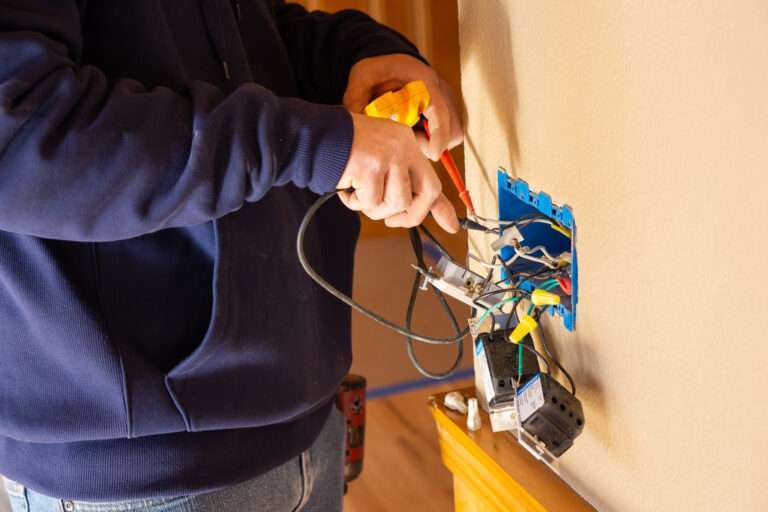
From there the scope is clear. If the damage stops at the device, the receptacle and any compromised wire ends are replaced and the terminations made up on screw terminals rather than backstabs. If the conductor is burned back, the cable may need splicing in an accessible box or a new run. If the circuit is simply carrying more than it should, the fix is a dedicated circuit for the heavy appliance, because that is the only fix that actually removes the heat. If the fault is at the panel end, that work happens with the panel properly isolated and, where the municipality requires it, under permit.
Local permitting is handled by your municipality, Milwaukee, Wauwatosa, Waukesha and the rest, each enforcing Wisconsin SPS 316, which adopts the 2023 NEC and has been in effect since September 1, 2026. Work permitted before that date was done under the 2017 NEC, and an existing installation does not have to be brought up to the new edition unless it is being altered. Where a replacement receptacle falls in a location the current code treats as requiring ground-fault protection, that gets addressed as part of the repair. GFCI protection, short for ground-fault circuit interrupter, trips on 4 to 6 milliamps of current escaping the circuit by any route, including through a person or damp material, so no metal contact is needed for it to do its job.
Typical repairs of this kind are same-visit work. Diagnosing and replacing one overheated receptacle is usually under an hour. Tracing an intermittent fault across a circuit, or chasing a connection problem in a finished wall, takes longer and is sometimes a return visit once the path is known. Running a brand-new dedicated circuit from the panel to a room, or adding exterior receptacles, is normally a half-day to a day depending on access and the route. An electrician can give you a scope and a timeline on site, before anything is opened up.
If the conversation turns from repair to “while you are here”, that is normal. Homeowners frequently ask about adding an outlet outside on the back of the house once an electrician is already on the job, and an exterior receptacle needs weather-resistant devices, an in-use cover, and ground-fault protection to be done properly.
Lehmann Electrical & Design is led by owner and master electrician Jacob W. Lehmann, holds a 4.9-star rating on Google, an A+ rating with the BBB, and backs its work with a 12-month workmanship warranty. We handle repair and troubleshooting across Milwaukee and Waukesha County, including homeowners looking for an electrician in West Allis.
If an outlet in your house smells like fish, turn the breaker off and book an estimate for the repair, or call 414-207-0109.
Why homeowners call Lehmann Electrical & Design
- Led by licensed master electrician Jacob Lehmann
- A+ rating with the BBB and 4.9 stars on Google
- 12-month workmanship warranty on the work we do
- Permits pulled and inspections scheduled as part of the job
- Milwaukee, Wauwatosa and Waukesha County, from 12012 W Fairview Ave, Wauwatosa
Ready to have it checked today?
Tell us which room, what is plugged in and whether anything looks discoloured.
Licensed master electrician. 12-month workmanship warranty.
Frequently asked questions
▾Why is my outlet warm to the touch?
A receptacle should be at room temperature. Slight warmth while a heavy appliance like a space heater or window AC is running can come from the appliance’s own heat traveling down the cord, but warmth with nothing plugged in, or warmth plus any smell, means heat is being produced inside the box by a loose or failing connection. Do not keep testing it by hand. Turn the breaker off and have it inspected.
▾Why do my outlets get hot?
Three reasons account for most cases: a loose termination making a high-resistance joint, a worn receptacle whose contacts no longer grip the plug blades tightly, or a circuit carrying a continuous load close to its limit. Each one converts current into heat at a single point. A heater drawing 12.5 A on a 15 A circuit is within spec electrically, but only if every connection along that circuit is tight.
▾Can electrical outlets really smell like fish?
Yes. The plastics used in receptacles, switches and wire insulation contain flame retardant compounds, and when those compounds are heated they give off a fishy, ammonia-like odor. It is one of the more recognizable warning signs in residential wiring, and it typically appears before any visible scorching. Treat it exactly as you would a burning smell: stop using the circuit and get it looked at.
▾How much electrical service do I have, and how much do I need?
Your service size is the main breaker rating in your panel, commonly 100 A or 200 A in area homes. How much you need comes from a load calculation, an arithmetic exercise an electrician performs using your home’s square footage, heating and cooling equipment, appliances and any planned additions. A hot-outlet call is a reasonable time to ask for one, since the answer determines whether the fix is a repair or a new circuit.
▾How long do electrical repairs take?
Replacing one damaged receptacle and making up clean terminations is typically under an hour once the circuit is isolated. Tracing an intermittent fault inside a wall, or finding a failing splice in a junction box, can take a few hours and occasionally a second visit. Adding a new dedicated circuit is usually a half-day to a full day. You should get a scope and time estimate before work begins.
Next step
Get it checked today
Tell us which outlet it is and what you can smell.
Licensed master electrician12-month warranty4.9 on Google
Milwaukee, Wauwatosa and Waukesha County. Prefer to talk? Call 414-207-0109