Licensed master electrician · Call 414-207-0109
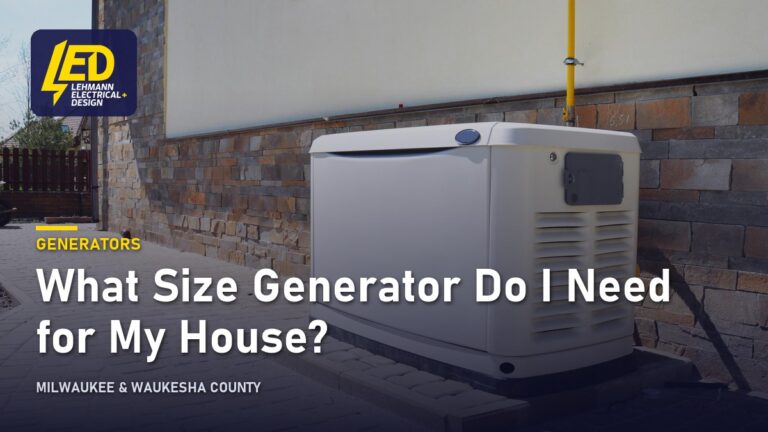
Most homes in Milwaukee and Waukesha County land on a standby generator between 14 kW and 26 kW, but square footage is not what decides it. The correct size comes from a load calculation: a tally of the specific circuits you want running during an outage, with the largest motor loads (central air, well pump, furnace blower) measured at their startup draw, not just their running draw. A 1,300 sq ft ranch with central air and an electric range can need more generator than a 2,800 sq ft home heated with gas and no AC.
What the job actually involves
Sizing a generator is the first third of the work. The rest is getting fuel, a transfer switch, and your existing electrical service to agree with each other.

A whole-home standby generator installation breaks down into a few distinct pieces:
- A load calculation. An electrician inventories the loads you want backed up, separates continuous loads from intermittent ones, and adds the surge (locked rotor) current that air conditioner compressors, well pumps and sump pumps pull for the first second or two when they start. That surge is why a 5-ton AC unit that runs at roughly 20 amps can briefly demand three to five times that.
- A transfer switch. This is the device that disconnects your house from the utility before connecting it to the generator. It is not optional and it is not a convenience item. Without it, generator output can backfeed onto utility lines and injure a lineworker restoring power. An automatic transfer switch does this within seconds of detecting an outage; a manual switch requires you to operate it.
- Whole-house versus managed coverage. A whole-house approach backs up the entire panel. A managed approach backs up a selected set of circuits, often with load management modules that temporarily shed the AC compressor or the electric water heater when the generator is near capacity. Load management lets a smaller unit cover more of the house.
- Fuel. Natural gas means a gas line sized and run to the unit, which often means a plumber and sometimes a meter upgrade from the gas utility. Propane means a tank, a pad, and a delivery arrangement.
- The pad and setback. The generator sits on a concrete or composite pad, outdoors, a listed minimum distance from windows, doors, vents and the property line per the manufacturer’s installation instructions.
- Connection to the service. Tying the transfer switch into the service entrance (the point where utility power enters the building) and the panel is permitted, inspected work on the line side of your main disconnect. That is licensed electrician territory, full stop.
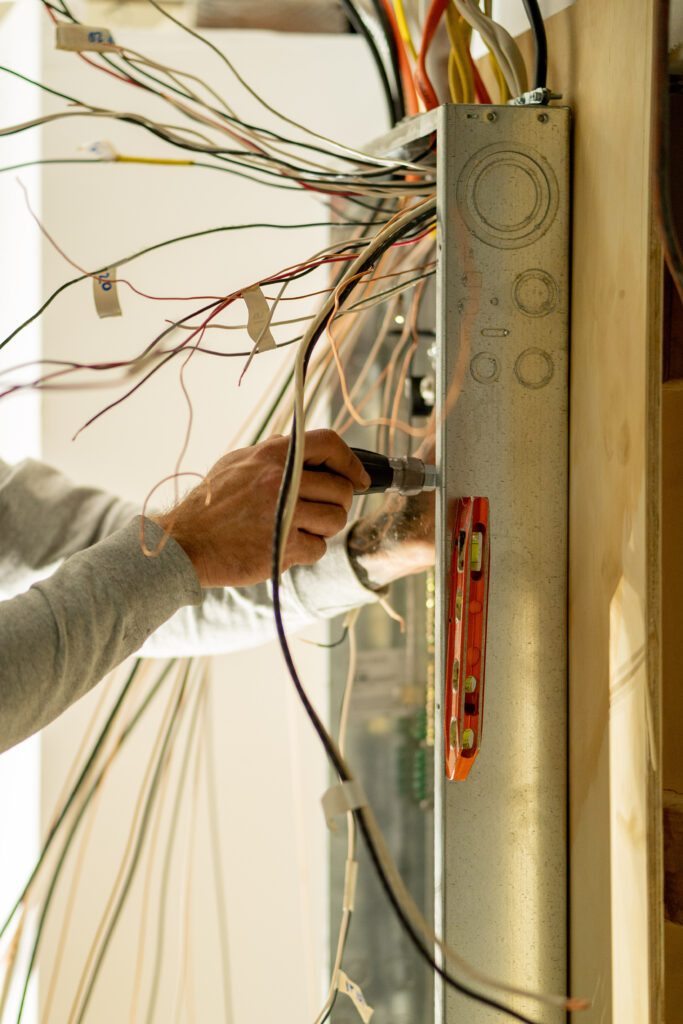
One honest note about the panel: with the main breaker switched off, the service conductors feeding the panel and the line-side lugs of the main breaker remain energized. A homeowner cannot de-energize them. Only the utility can, usually by pulling the meter, or a separate service disconnect if one is fitted ahead of the panel. That is the plain reason generator tie-ins are not a weekend project.
How to tell if you need it, and what size
Start with what you want to keep running, not with the house. Here is the practical hierarchy most homeowners work through:
Tier 1, the outage essentials. Furnace blower or boiler controls, sump pump, refrigerator, a few lighting circuits, internet, garage door, and the well pump if you are on a well. This tier is modest. Many homes cover it with 10 kW to 14 kW.
Tier 2, essentials plus comfort. Everything above plus central air or a heat pump, a second refrigerator or freezer, and a couple of 120-volt kitchen circuits. Central air is the single biggest step up in generator size for a Wisconsin home, because the compressor’s starting surge sets the floor for the whole unit. This tier usually starts at 18 kW.
Tier 3, run everything. Electric range, electric dryer, electric water heater, and two AC compressors all available at once, with no load shedding. This is where 22 kW to 26 kW and above lives, and where the honest answer is sometimes “a smaller generator with load management will serve you better for less.”
A sizing chart, with the caveat that matters
Homeowners search for a generator size chart constantly, so here is one. Read it as a starting range, not an answer. Two homes of identical size can be two sizes apart.
| What you want backed up | Typical standby range | What usually drives it up |
|---|---|---|
| Heat, sump, fridge, lights, internet only | 10 to 14 kW | Deep well pump, two sump pumps |
| Above, plus one central AC unit (2 to 3 ton) | 16 to 20 kW | AC starting surge, electric water heater |
| Above, plus electric range or dryer | 20 to 24 kW | Both electric appliances running together |
| Entire panel, no load shedding, 4 to 5 ton AC | 24 kW and up | Second AC compressor, electric heat, hot tub |
Notice that “1,300 sq ft” appears nowhere in that table. A 1,300 sq ft home with gas heat, gas water heat and no central air may sit comfortably at 10 to 12 kW. The same 1,300 sq ft home with a heat pump, an electric range and an electric dryer can need 20 kW. Square footage tells an electrician almost nothing; the appliance nameplates tell them everything.
If you want to narrow the range before anyone visits, our generator sizing tool walks you through the same load categories an electrician would ask about and produces a working estimate you can sanity-check against quotes.
> A generator is sized to the circuits you back up, not to the house that contains them. The number that matters is the sum of your running loads plus the largest single starting surge on the system, usually the air conditioner compressor. This is why two identical floor plans on the same street can need generators two sizes apart: one is heated with gas and the other has a heat pump and an electric range.
Signs a standby generator is worth pricing out
- Outages at your address last hours, not minutes, and recur seasonally.
- You have a finished basement protected by a sump pump. A dead sump during a summer storm is the most expensive kind of outage.
- Someone in the home depends on powered medical equipment, or on consistent heating or cooling.
- You keep a freezer full of food, run a home office with real deadlines, or work from home on video.
- You are on a private well, which means no power equals no water at all, including no toilets.
- You are already running extension cords from a portable unit through a window. That setup is a carbon monoxide and fire risk, and it cannot run a furnace or a well pump.
What decides the price
We cannot publish a price for your home, because the cost swing between two addresses is genuinely large. What we can do is tell you honestly which variables move the number, so you can read a quote intelligently.
Generator capacity. The single biggest factor. Each step up in kW is a different machine with a different engine and alternator.
Transfer switch type and size. An automatic transfer switch costs more than a manual one. A service-rated switch that sits ahead of the panel costs more than one downstream of it. A 200 amp switch costs more than a 100 amp switch.
Whole-house versus managed circuits. Backing up the whole panel with no load shedding needs a bigger unit. Adding load management modules costs money up front and often saves more on generator capacity than it costs.
Fuel work. Natural gas usually means a gas line run from the meter to the pad, correctly sized for the generator’s demand on top of everything else in the house. If the existing meter cannot supply it, the gas utility is involved. Propane means a tank, a pad and permitting. This line item surprises people more than any other.
Distance and routing. Every foot between the generator pad, the gas supply and the panel is conduit, wire and labor. A unit twenty feet from the meter costs less to install than one on the far corner of the lot.
Site conditions. Pad construction, grading, trenching through a driveway, rock, or restoring landscaping.
Panel and service condition. If your existing panel or service equipment cannot safely accept the tie-in, that work has to happen first. An electrician will tell you that during the site visit, not after the generator is on the pad.
Permit and inspection fees. Set by your municipality.
For a plain description of what is included in an installation and how we scope one, see our whole-home standby generator services.
How long it takes and what is disrupted
A straightforward residential standby generator installation is typically a two to three day job on site, spread across a project timeline of several weeks.
Here is the realistic sequence:
- Site visit and load calculation. One to two hours in your home. An electrician photographs the panel, reads appliance nameplates, measures distances and asks what you want backed up.
- Proposal and equipment order. Lead time on the generator and transfer switch varies by model and by season. After a widespread regional outage, lead times stretch.
- Permit application. Filed with your municipality. Turnaround varies by city.
- Pad and fuel. Pad set and cured, gas line run. Sometimes a separate trade and a separate day.
- Install day. Generator set, conduit run, transfer switch installed, connections made.
- Startup and commissioning. The unit is started, the automatic weekly exercise cycle is programmed, and a live transfer test is run so you see the handoff happen.
- Inspection. The municipal inspector signs off.
What is actually disrupted: power is off while the transfer switch is tied in, generally a few hours in one block rather than all day. You will know the date in advance. There is excavation if a gas line or conduit is trenched, so expect disturbed lawn. There is noise from a concrete saw or compactor if the pad requires it. Driveway access may be limited for part of a day.
What is not disrupted: your drywall, in most cases. The majority of this work happens outdoors and in the immediate area of the panel.
How long will a whole-house generator run?
A natural-gas standby generator will run as long as the gas utility keeps supplying it, which in practice means for the entire outage, days if necessary. There is no tank to refill. The real limit is maintenance, not fuel: manufacturers specify an oil and filter interval measured in run hours, commonly in the 100 to 200 hour range depending on the model, and a unit running continuously for a week will reach it. Check your specific unit’s manual.
Propane is finite. A 500 gallon tank at roughly 80 percent usable capacity, feeding a 22 kW unit under moderate load, commonly lasts on the order of a week, less under heavy load and in deep cold. Plan a refill contact before storm season, not during.
If a generator shuts down mid-outage or never starts, the cause is more often a controller fault, a dead starting battery or a fuel supply problem than the engine itself. Our walkthrough of why a standby unit fails to start covers what to check and what to leave alone.
Working out what size you actually need?
A licensed electrician measures what your house really draws rather than estimating from square footage, which is what decides the size.
Licensed master electrician. 12-month workmanship warranty.
Permits and inspection
Generator installation requires a permit, and the permit is issued by your local municipality, Milwaukee, Wauwatosa, Waukesha, Brookfield, New Berlin and so on, each enforcing the state electrical code.
That code is Wisconsin SPS 316, which adopts the 2023 NEC and has been in effect since September 1, 2026. Wisconsin previously used the 2017 NEC and skipped the 2020 cycle entirely. Work permitted before September 2026 was inspected under the 2017 edition, and existing installations do not have to be brought up to the new edition unless they are altered.
A few sizing rules that follow from that code and affect your generator:
- A continuous load, one drawing maximum current for three hours or more, may occupy no more than 80 percent of its breaker’s rating. Put another way, the circuit is sized at 125 percent of the continuous load. This matters for how backed-up circuits are grouped behind the generator.
- Manufacturer installation instructions are enforceable. Setback distances from windows, doors and vents are not suggestions.
- The transfer switch must be listed for the application and must positively prevent the generator and the utility from being connected at the same time.
The inspection is a feature, not a hurdle. An inspector’s sign-off is independent confirmation that the transfer switch cannot backfeed the utility, that conductors are sized correctly, and that the unit is sited where its exhaust will not reach a bedroom window.
Choosing an electrician
Ask for the load calculation. An electrician who quotes a generator size from your square footage over the phone has not done the work, and the two failure modes that follow are both expensive: an undersized unit that nuisance-trips every time the AC starts, or an oversized unit you paid thousands extra for.
Questions worth asking any contractor you are considering:
- Will you do a written load calculation, and may I see it?
- Is the AC compressor’s starting surge included in the sizing?
- Is load management part of the proposal, and would it let me use a smaller unit?
- Who pulls the permit, and in which municipality?
- Who runs the gas line, and is it in this quote or a separate bill?
- Is the transfer switch automatic or manual, and is it service-rated?
- What happens at startup and commissioning, and do you run a live transfer test with me present?
- What does the workmanship warranty cover and for how long?
Lehmann Electrical & Design is led by Jacob Lehmann, master electrician, works out of Wauwatosa, holds an A+ rating with the BBB, and carries a 4.9 star rating on Google. Our work is backed by a 12-month workmanship warranty.
Why homeowners call Lehmann Electrical & Design
- Led by licensed master electrician Jacob Lehmann
- A+ rating with the BBB and 4.9 stars on Google
- 12-month workmanship warranty on the work we do
- Permits pulled and inspections scheduled as part of the job
- Milwaukee, Wauwatosa and Waukesha County, from 12012 W Fairview Ave, Wauwatosa
Want the load calculated properly?
Tell us what you want running in an outage, and whether you have central air or a well pump.
Licensed master electrician. 12-month workmanship warranty.
Frequently asked questions
▾Is there a generator calculator I can use before I call anyone?
Yes, and it is a sensible first step. A good calculator asks for the appliances you want backed up and their nameplate ratings rather than your square footage, then adds the largest motor starting surge on top of the running total. Treat the result as a range to verify, not a purchase decision. An on-site load calculation is still what determines the final size, because nameplates, panel capacity and gas supply all get checked in person.
▾What size generator do I need with central air?
Central air is usually the deciding load. A 2 to 3 ton system typically pushes a home into the 16 to 20 kW range, and a 4 to 5 ton system into 22 kW and above, once the rest of the house is included. The reason is the compressor’s starting surge, which can be several times its running current for a second or two. A soft starter on the AC unit or a load management module can sometimes let a smaller generator do the job.
▾What size generator runs everything in a house with no load shedding?
For a typical Milwaukee area home with one central AC unit, gas heat and a gas water heater, running everything with nothing shed generally means 22 kW to 26 kW. Add electric range, electric dryer, electric water heater or a second AC compressor and the requirement climbs from there. Before you commit to that size, ask what load management would cost, because shedding the water heater for ninety seconds while the AC starts is rarely a hardship.
▾What size generator do I need for a 1,300 sq ft house?
Square footage does not answer this. A 1,300 sq ft home with gas heat, gas water heat and no central air may be well served by 10 to 12 kW. The same house with a heat pump, electric range and electric dryer can need 20 kW. What matters is which appliances you own, which ones are electric, and which you want available during an outage.
▾What size generator do I need just for an emergency?
If “emergency” means heat, water, a working sump pump, a refrigerator and some lighting, most homes cover that with 10 kW to 14 kW, and a permanently installed unit on that tier with an automatic transfer switch will start on its own and handle the furnace blower and well pump that a portable unit with extension cords cannot. If you also want air conditioning during a summer outage, you are no longer in the emergency tier.
Get an actual number for your house. We will do a load calculation on site, tell you what each tier of coverage would take, and give you a written quote with the gas work and permit included rather than bolted on later. Request a generator estimate or call 414-207-0109.
Next step
Get the load calculated
Tell us what you want running in an outage.
Licensed master electrician12‑month warranty4.9 on Google
Milwaukee, Wauwatosa and Waukesha County. Prefer to talk? Call 414-207-0109