Licensed master electrician · Call 414-207-0109
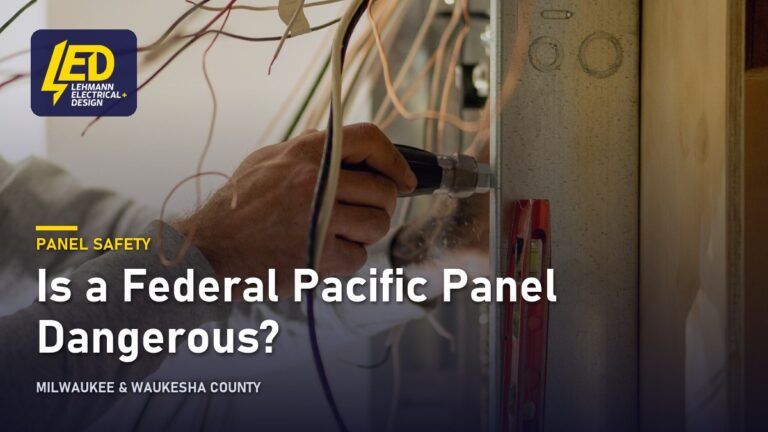
A Federal Pacific Electric (FPE) panel with Stab-Lok breakers is a real concern, because its breakers may not trip when a circuit is overloaded. The U.S. Consumer Product Safety Commission’s own testing found these breakers failed certain UL calibration tests, yet it closed its investigation in 1983 without a recall or a ruling on their safety. No rule forces you to remove one, but replacing it is the sensible plan.
Federal Pacific panels were installed in American homes for decades, and they still turn up in Milwaukee and Waukesha County houses built in the middle of the last century. The difficulty is that a Stab-Lok panel rarely announces a problem. A breaker that will not trip looks exactly like one that will, right up until the moment it matters.
How to tell if you have a Federal Pacific panel
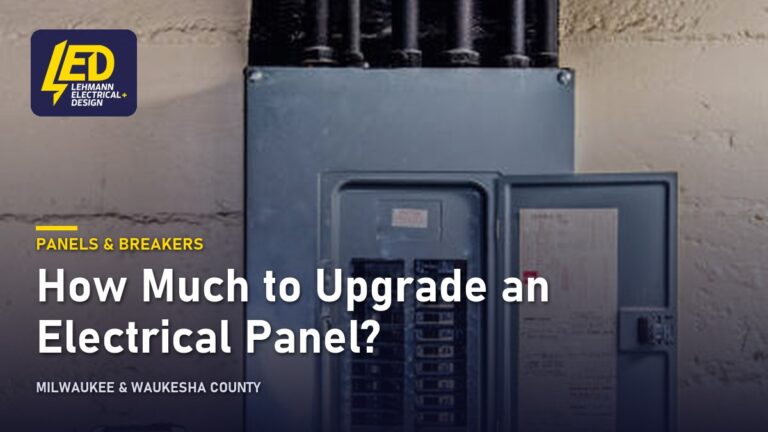
You can usually tell from the labels on the panel door and inside it, without touching anything electrical. Open the hinged door that covers the breaker handles and look for these markings:
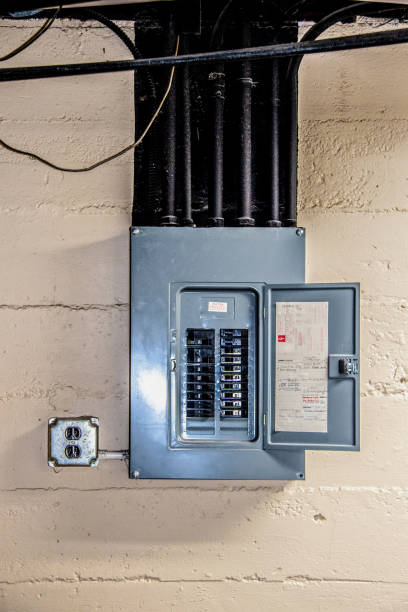
- “Federal Pacific Electric” or “FPE” on the outside of the door or on the label inside it.
- “Stab-Lok” printed on the label, which names the breaker line the federal investigation covered.
- A label you cannot read, because it has been painted over, torn off or faded.
Opening the door to read the label is fine. Do not unscrew or remove the panel cover behind it, the metal plate the breaker handles poke through. Even with the main breaker off, the service conductors and the main breaker’s line-side connections behind that plate stay energized, and only the utility can shut those off.
| What you find | What it suggests |
|---|---|
| “Federal Pacific Electric” or “FPE” on the door or label | A Federal Pacific panel |
| “Stab-Lok” on the label | The breaker type the CPSC investigated |
| No label, or one that cannot be read | Unknown; have an electrician identify it |
| A different brand name | Not FPE, though some other older brands carry their own questions |
If the label is missing or you are not sure, an electrician can identify the panel and its breakers in a few minutes during a visit.
What the concern with Stab-Lok breakers actually is
The concern is that Stab-Lok breakers may fail to trip when they should, which removes the protection the panel exists to provide. A circuit breaker has one job: to switch a circuit off when more current flows through it than the wire is built to carry, or when there is a short circuit. Current is measured in amps, or amperage, and every breaker is rated for a specific number of amps that matches the wire it protects.
To earn a UL listing, a residential breaker has to pass what are called calibration tests. These check two things: that the breaker holds its rated current without tripping, and that it trips within set time limits once the current climbs past that rating. According to the CPSC, its own testing confirmed that FPE breakers failed certain of those calibration requirements. The investigation focused mainly on two-pole breakers, the double-width breakers that feed 240-volt appliances such as a dryer or a range, made before 1979.
> The worry with a Federal Pacific panel is not that it is about to catch fire on its own. It is that its breakers may not do their one job when something else goes wrong: a damaged cord, a failing appliance, or a circuit asked to carry too much. When a breaker trips as designed, that becomes a nuisance and a dark room. When a breaker does not trip, the wire keeps heating inside the walls with nothing to stop it.
That is why the panel does not need to show symptoms to be worth replacing. Some signs, though, change it from a plan into a job for today. If you smell burning or hot plastic, see scorch marks or discoloration on the panel or a breaker, or hear buzzing or crackling, stop using the affected circuits, leave the breaker off and call an electrician. The same goes for a breaker that runs hot or one that trips repeatedly. Reset a tripped breaker once at most: push it firmly to OFF, then back to ON. If it trips again, leave it off until it is inspected.
Were Federal Pacific panels recalled?
No. Federal Pacific panels and Stab-Lok breakers were never recalled, and the federal investigation ended without a finding either way.
The CPSC opened its investigation in June 1980, after Reliance Electric, which owned FPE at the time, reported that many FPE breakers did not fully comply with UL requirements. On March 3, 1983, the Commission announced it was closing the investigation because the data available to it did not establish that the breakers posed a serious risk of injury. Its release said staff had insufficient data to accept or refute the manufacturer’s position that the breakers were safe in household use, and that gathering that data would have cost several million dollars it chose not to spend.
In 2011 the CPSC revised that release to add a note for electricians, homeowners, home inspectors and real estate agents. It says the Commission closed the matter “without making a determination as to the safety” of FPE breakers. In other words, the absence of a recall is not a clean bill of health. It means the question was left open.
Are Federal Pacific panels illegal? No. It is not unlawful to have one in your house, and no recall requires its removal. Wisconsin SPS 316, which adopts the 2023 NEC (in effect since September 1, 2026), does not require an existing installation to be brought up to the newer edition unless it is altered. That means an FPE panel can stay in service legally. It does not mean it is a good idea.
Insurance, inspections and selling the house
A Federal Pacific panel tends to come up when money changes hands: when you insure a house, sell it or buy one.
Home inspectors look at the panel brand as a matter of routine, and an FPE Stab-Lok panel is the kind of finding that appears in a report. If you are buying, it is one of the items covered in what a home inspection looks for, and it can become part of the negotiation. If you are selling, expect the buyer’s inspector to name it.
Insurers may also ask what panel is in the house. Some insurers may decline a new policy, raise questions at renewal, or ask for the panel to be replaced when the answer is Federal Pacific. Policies differ, so the useful step is to ask your own insurer rather than assume. Replacing the panel before a sale or a policy change removes the question entirely.
Think you have a Federal Pacific panel?
Send us a photo of the panel label and breakers, and we will tell you what you have and what replacing it involves.
Licensed master electrician. 12-month workmanship warranty.
What to do if you have one
If you have a Federal Pacific panel and no warning signs, you do not need to treat it as an emergency, but you should plan its replacement rather than live with it indefinitely. Until then:
- Do not add load. Avoid adding new circuits or large appliances to the panel. A new EV charger, hot tub or heat pump is a reason to replace the panel first, not to squeeze another breaker in.
- Respect a tripped breaker. Reset it once, then leave it off if it trips again, and find out why.
- Watch for the warning signs. A burning smell, scorch marks, discoloration, buzzing or crackling means stop using the circuit, leave the breaker off and call an electrician.
- Have it evaluated. An electrician can confirm the panel and breaker type, check their condition, and look at whether your electrical service is big enough for the house as it is used today.
Can you just replace the breakers? Breakers marketed as replacements for Stab-Lok panels exist, but swapping breakers leaves the panel’s own design, its age and the condition of everything else inside it unchanged, and it does not settle the question the CPSC left open. Do not attempt a breaker swap yourself; it is work inside the panel, and our advice is to replace the panel rather than its parts.
What replacing it involves
Replacing a Federal Pacific panel is a standard panel replacement, carried out by a licensed electrician under a permit from your municipality.
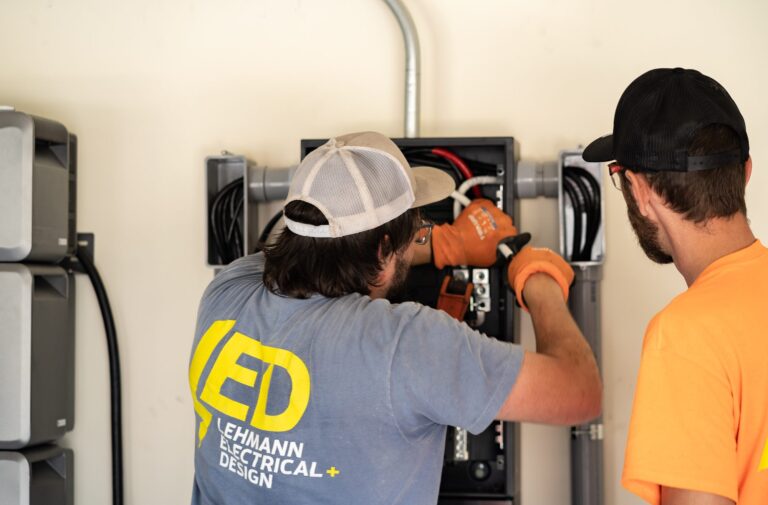
The electrician applies for the permit for a panel replacement and coordinates with the utility, which disconnects power at the meter. Shutting off the main breaker does not make the panel safe to work on: the service conductors and the main breaker’s line-side connections stay energized, and only the utility can shut those off. The old panel comes out, a new panel and breakers go in, and each circuit is reconnected and labeled. The municipality’s inspector then checks the work. Expect the power to be off for part of the day while the panel is changed.
A replacement is also the right moment to ask whether the panel should simply be swapped or upgraded. A house old enough to have an FPE panel may have been built with 60-amp or 100-amp service, long before central air, an induction range or an electric vehicle. A load calculation, which adds up what the house actually uses, settles whether 100-amp service is enough or whether the service should grow at the same time. The circuits reconnected to the new panel are also reviewed against the current edition, and your electrician will explain which ones need AFCI or GFCI protection as part of the job. AFCI stands for arc fault circuit interrupter, a breaker that detects the arcing a damaged wire produces; GFCI stands for ground fault circuit interrupter, which cuts power when current leaks by any path, including through a person.
Our electrical panel upgrade service covers both a straight replacement and a larger service. When you request a quote, the useful details are the panel brand, your current service size, and anything you plan to add in the next few years.
Lehmann Electrical & Design is led by Jacob W. Lehmann, a Wisconsin master electrician, license 1283316, working under Wisconsin electrical contractor license 1492849. The company holds an A+ rating with the BBB, 4.9 stars on Google, and backs its work with a 12-month workmanship warranty.
Found an FPE label on your panel? Take a photo of the label and the breakers, and request a quote or call 414-207-0109. We work across Milwaukee and Waukesha County.
Why homeowners call Lehmann Electrical & Design
- Led by licensed master electrician Jacob Lehmann
- A+ rating with the BBB and 4.9 stars on Google
- 12-month workmanship warranty on the work we do
- Permits pulled and inspections scheduled as part of the job
- Milwaukee, Wauwatosa and Waukesha County, from 12012 W Fairview Ave, Wauwatosa
Ready to retire the old panel?
We handle the permit, the utility disconnect and the inspection, and size the new panel for the house you live in now.
Licensed master electrician. 12-month workmanship warranty.
Frequently asked questions
▾Are any Federal Pacific panels safe?
There is no official list of safe and unsafe Federal Pacific panels. The CPSC confirmed that FPE Stab-Lok breakers failed certain UL calibration tests and then closed its investigation without deciding whether they are safe. Because no one can tell from the outside whether a particular breaker will trip when it should, we treat every Stab-Lok panel the same way and recommend replacing it.
▾Are Federal Pacific panels illegal?
No. It is not illegal to have a Federal Pacific panel, and they were never recalled. Wisconsin SPS 316, which adopts the 2023 NEC, does not require existing installations to be brought up to the current edition unless they are altered. The panel can legally stay, but that is a statement about the law, not about how well its breakers protect the house.
▾Are Federal Pacific panels insurable?
Sometimes. Insurers set their own rules, and some may decline a new policy or ask for the panel to be replaced when they learn it is a Federal Pacific. Others may insure the house as it is. The only reliable answer comes from your own insurer, so ask before a renewal or a purchase. Replacing the panel removes the issue for every insurer.
▾Should I replace my Federal Pacific panel?
Yes, plan to. The breakers’ ability to trip on an overload was never confirmed, and the panel is decades old. Replace it sooner if you see warning signs, are adding a large load such as an EV charger, are buying or selling the house, or your insurer raises it. An electrician’s evaluation can also tell you whether to upgrade the service at the same time.
▾Is Federal Pacific still in business?
Not as the maker of these panels. Federal Pacific Electric was acquired by Reliance Electric in 1979, according to the CPSC, and Stab-Lok panels are no longer installed in new homes. Breakers marketed as replacements are still sold for existing panels, but swapping breakers leaves the old panel itself in place, which is why replacing the whole panel is the usual recommendation.
Next step
Get your panel checked
Tell us the panel brand and your service size.
Licensed master electrician12‑month warranty4.9 on Google
Milwaukee, Wauwatosa and Waukesha County. Prefer to talk? Call 414-207-0109