Licensed master electrician · Call 414-207-0109
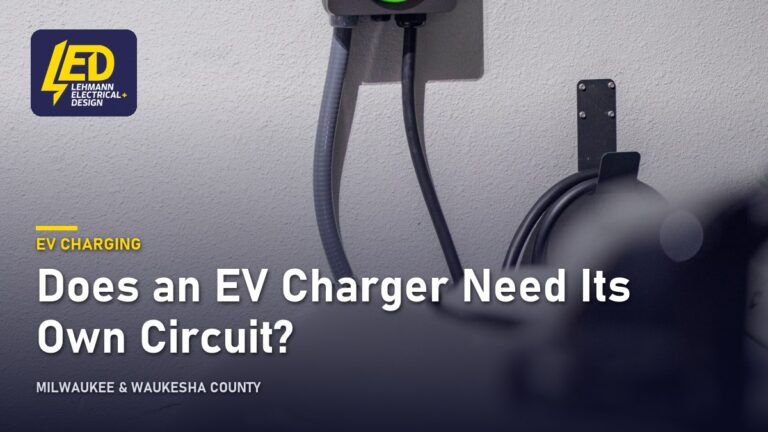
Yes. A Level 2 home EV charger must be on its own dedicated circuit, serving nothing else, with no other outlets or lights sharing it. That requirement comes from NEC Article 625, which Wisconsin enforces through SPS 316, the state electrical code that adopts the 2023 NEC and has been in effect since September 1, 2026. Sharing a circuit with a dryer, a receptacle, or a garage lighting run is not permitted and is not safe.
A Level 2 charger (240 volts, the type almost every EV owner ends up installing at home) draws a large current steadily for hours. The National Electrical Code defines a continuous load as one where the maximum current is expected to continue for three hours or more, and NEC 625.41 requires EV supply equipment loads to be considered continuous. That is why the sizing math below always applies, even to a driver who only tops off for an hour.
Two terms worth defining before we go further. Amperage is the rate of electrical flow, measured in amps, and it is what determines wire size and breaker size. A dedicated circuit is one breaker feeding one piece of equipment, with no other device on that wire.
> A Level 2 EV charger must have a dedicated branch circuit with no other loads on it. The breaker and wire are sized at 125 percent of the charger’s continuous current, which is the same as saying the charger may draw no more than 80 percent of the breaker’s rating. A 32 amp charger therefore belongs on a 40 amp circuit, and a 48 amp charger on a 60 amp circuit. A correctly paired charger and breaker will not trip in normal use.
Here is how that pairing works out in practice:
| Charger output | Minimum breaker | Where it fits |
|---|---|---|
| 24 A | 30 A | Older homes, tight panels, slower but entirely usable |
| 32 A | 40 A | Very common residential choice, good balance |
| 40 A | 50 A | Needs real spare capacity in the panel |
| 48 A | 60 A | Hardwired only, requires the most capacity |
Conductor size is deliberately left out of that table. The right wire depends on the run length, the installation method, the conductor material, the temperature rating of the terminations at both ends, and the charger’s listed instructions. Two 60 amp circuits in two different houses can legitimately call for different wire. That is one of the reasons this is a permitted, inspected job rather than a weekend project.
You may also see 20 amp, 16 amp Level 2 units advertised. In practice they are rare in houses and rarely worth the install, because the labor to run a dedicated 240 volt circuit is much the same whether it lands on a 20 amp breaker or a 40 amp one.
What amperage your house can actually support depends on what the existing panel has left over, not on what charger you would prefer. Nobody can promise you a specific charge rate before looking at the panel and running the numbers.
What is usually causing it
If you are asking this question because something went wrong, the cause is usually one of a short list.
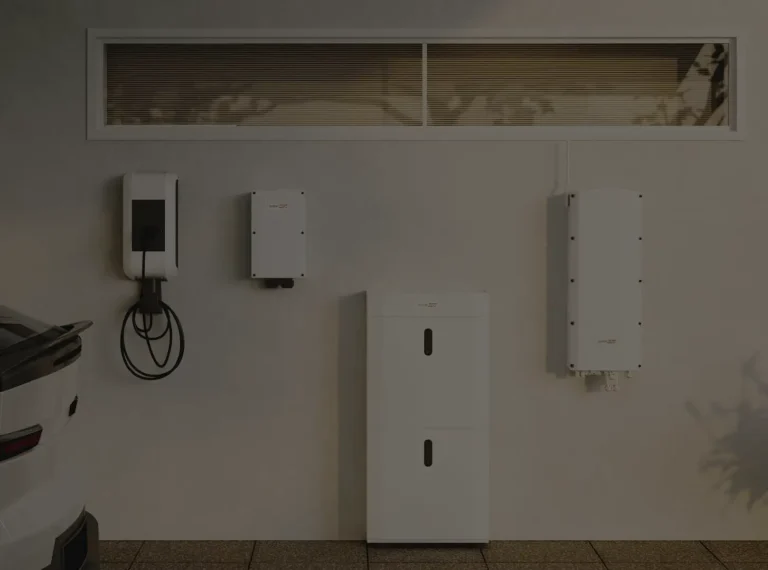
A charger plugged into a shared 240 volt outlet. The dryer outlet is the classic case. A dryer circuit was sized for a dryer, and a splitter or switch device sold online does not change what the wire and breaker were designed to carry. Even where such a device is listed, the underlying circuit was not calculated for an EV.
A charger on a general-purpose 120 volt circuit. The 120 volt cord set that came with the car (often called Level 1) is a different animal, but it still wants a circuit that is not shared with a freezer, a shop vacuum, and a space heater. Plugged into a busy garage circuit, it will trip the breaker, and the trip is the system working.
A charger set to the same amperage as its breaker. Many chargers let you select an output. Set to 40 amps on a 40 amp breaker, the charger is drawing 100 percent of the breaker’s rating on a load the code treats as continuous. The circuit is then sized wrongly for that load: NEC 210.20(A) requires the overcurrent device to be rated not less than the noncontinuous load plus 125 percent of the continuous load, which is the installer’s calculation rather than anything the owner’s app controls. It may hold, or it may trip: a thermal-magnetic breaker sitting at exactly 100 percent in a warm enclosure can go either way, which is the whole problem with relying on it. The real problem is that the breaker and the conductors are being worked right at their limit, with no margin for a warm garage, a loose lug, or an aging breaker. The fix is to reduce the charger’s output setting or install a larger circuit, never to install a larger breaker. The breaker protects the wire, so a bigger breaker on the same wire removes the protection and leaves the overload in place.
Voltage drop on a long run. A detached garage at the far end of a lot needs a larger conductor than the same charger ten feet from the panel. Undersized wire on a long run means heat and poor performance.
A panel with no room and no spare capacity. This is where the conversation changes, and we cover it below.
If you notice a burning or hot-plastic smell, scorch marks, discoloration, buzzing, or crackling at the outlet, the charger, or the panel, stop using that circuit, leave the breaker off, and call a licensed electrician. Do not touch the device to judge how hot it is. Use smell, sight, and sound.
What is safe to check yourself, and what is not
What a homeowner can tell an electrician before the visit, without touching anything:
- The charger’s output in amps, which is on its label or in its app.
- The rating on the main breaker, usually 100, 150, or 200 amps, and what the panel directory lists.
- Whether anything else appears to share the circuit.
- Whether there is buzzing, discoloration or scorching, noticed from a normal standing distance.
- Whether a breaker has tripped, and whether it trips again with nothing plugged in. A breaker that trips on an empty circuit usually points to a wiring fault rather than a worn-out breaker, and that is a job for an electrician rather than a second reset.
- If the charger’s own ground-fault protection trips, reset it once at the unit. If it will not hold, stop using the charger and have it inspected. Repeated trips mean a genuine leakage fault or a failed device, not a device being cautious.
Not safe, and not homeowner work:
- Removing the screwed-on panel cover.
- Adding, moving, or swapping a breaker.
- Running the 240 volt branch circuit for the charger.
- Anything on the service conductors, the meter, or the line side of the main breaker.
That last point deserves plain language. Turning the main breaker off does not make the panel safe to work inside. The service conductors coming in and the main breaker’s line-side lugs stay energized with the main off. A homeowner cannot de-energize them. The utility can, usually by pulling the meter, and so can a separate service disconnect if one is fitted ahead of the panel.
Can I install an EV charger myself? A new 240 volt circuit needs a permit and an inspection, and most municipalities here expect licensed work for it. A miswired or undersized charger circuit is a shock and fire risk, and a failed inspection or an insurance dispute after a fire is a slow, expensive way to find out. The qualification for this work is licensure through the Wisconsin Department of Safety and Professional Services as a journeyman or master electrician, plus manufacturer commissioning on some units. Lehmann Electrical & Design is led by master electrician Jacob Lehmann, and our home EV charger installation work is permitted and inspected.
Not sure what your panel will carry?
A licensed electrician runs the load calculation, checks the spare capacity and puts the options in writing before anything is bought.
Licensed master electrician. 12-month workmanship warranty.
When it points to a bigger problem
Sometimes the dedicated circuit is not the obstacle. The panel is. A charger sharing a circuit tends to announce itself by tripping the breaker long before anything else goes wrong, and where the panel itself is the limit, what a panel upgrade costs and involves sets out the next step.
Signs the problem is larger than one circuit:
- No empty breaker spaces, and the panel is not listed for tandem breakers in the positions you would need. A tandem breaker, which fits two circuits into one slot, is fine where the panel label permits it in that spot and not fine otherwise.
- A 100 amp service already carrying an electric range, electric dryer, central air, and electric water heating. A load calculation, the arithmetic an electrician performs to total a home’s demand, may show little headroom for a 48 amp charger. A great many Milwaukee and Wauwatosa homes built in the 1920s through the 1940s are still on 100 amp services, so this comes up regularly in our area.
- Aging or recalled panel equipment where new breakers are not available or not trustworthy.
- Evidence of heat at the bus: discoloration behind a breaker, a scorched label, a persistent buzz.
- Knob and tube or cloth-insulated wiring elsewhere in the house, which often signals a service that was never designed for modern loads.
None of that means a charger is impossible. The code anticipates exactly this situation. NEC 220.83 gives an optional method for calculating an existing dwelling’s load when a load is added, and NEC 625.42 lets an EV charger be sized on an adjustable setting or, under 625.42(B), governed by an energy management system that holds total demand within the service’s capacity. In plain terms: a load management device that tells the charger to back off while the dryer and the range are running is a code-recognized path, not a workaround. Often the honest answer is “here is what the panel supports,” which might be a 32 amp charger instead of a 48 amp one. A charger that charges a little slower overnight is usually invisible to the owner, because most overnight sessions replace a day’s driving rather than a full battery.
One Wisconsin wrinkle worth knowing: in winter, a cold battery accepts energy more slowly at first and the car spends some of the incoming power warming itself, so an unheated detached garage in January will show lower charging speed and lower range than the same car in July. That is normal battery behavior, not a fault in the circuit, and it is another argument for sizing the circuit with some margin rather than at the bare minimum.
What an electrician does about it
The job is straightforward when it is done properly, and it follows the same sequence whether you drive a Tesla, a Bolt, an F-150 Lightning, or an Ioniq.
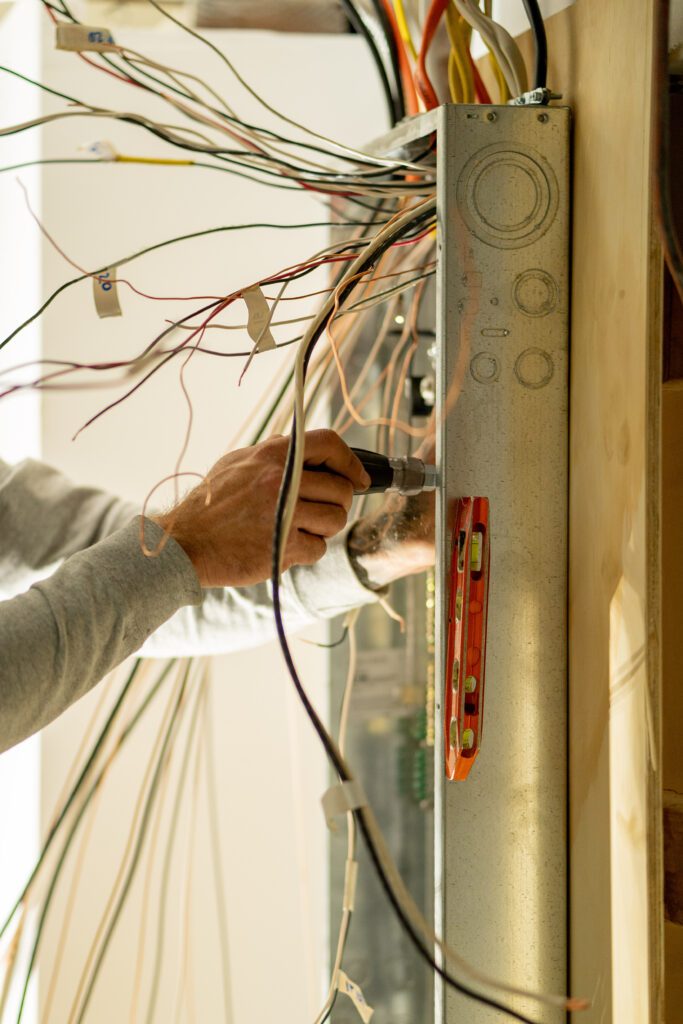
- Look at the panel and the service. Main breaker rating, available spaces, bus condition, grounding and bonding.
- Run a load calculation. This decides the maximum charger amperage the house can support, and whether load management belongs in the plan.
- Pick the charger amperage and breaker together, at 125 percent of the continuous draw.
- Pull the permit with your municipality, whether that is Milwaukee, Wauwatosa, Waukesha, Brookfield, or a neighboring community. The municipality enforces Wisconsin SPS 316, which adopts the 2023 NEC and has been in effect since September 1, 2026. SPS 316 generally applies to new installations and alterations, and municipalities vary in how they handle existing work, so an existing circuit is not usually forced up to the new edition unless it is being altered.
- Run the dedicated circuit in the correct conductor for the length and installation method, terminate at a hardwired charger or a listed receptacle, and torque every connection to the manufacturer’s specification.
- Test and certify, then get it inspected. The installer tests the circuit and signs off on their own work, and then an independent municipal inspector approves it. Both steps happen.
Most single-charger installs are a half-day to a full day of work once the permit is in hand, assuming a reasonable run from the panel and spare capacity in it. A long run through finished space, a detached garage, trenching, or load management hardware pushes it longer. We can tell you which category your house falls into after seeing the panel.
For Tesla owners there is one extra wrinkle: the Wall Connector is hardwired and has its own commissioning steps, which is worth raising when you book with a Tesla charger installer.
If you want to know what your panel will actually support before you buy a charger, that is a conversation worth having first. Tell us about your EV charger install or call 414-207-0109, and we will look at the panel, run the calculation, and give you the real options.
Why homeowners call Lehmann Electrical & Design
- Led by licensed master electrician Jacob Lehmann
- A+ rating with the BBB and 4.9 stars on Google
- 12-month workmanship warranty on the work we do
- Permits pulled and inspections scheduled as part of the job
- Milwaukee, Wauwatosa and Waukesha County, from 12012 W Fairview Ave, Wauwatosa
Ready to get the circuit quoted?
Send the charger model, the main breaker rating and where the car parks.
Licensed master electrician. 12-month workmanship warranty.
Frequently asked questions
▾Do you need a special charger for an electric car?
You need EV charging equipment, yes, but not one specific to your car brand. Almost every EV sold in the US uses either the J1772 or NACS connector, and adapters bridge the two. What matters more is the charger’s amperage, whether it is hardwired or plug-in, and whether it is listed for outdoor use if it lives outside. More on choosing equipment sits with our EV charger installation work.
▾How do home EV chargers work?
A Level 2 home charger is really a smart switch and safety device, not a charger. The actual charger is built into the car. The wall unit confirms the connection is safe, tells the car how much current it may draw, and then passes 240 volt AC through to the vehicle’s onboard converter. It also contains ground-fault protection, a CCID20 device per UL 2231 that cuts power at about 20 mA of leakage. If that protection trips repeatedly, stop and have it inspected.
▾How long does an EV take to charge at home?
It depends on the circuit, the car’s onboard charger, and how empty the battery is. As a rough conversion from power to miles, a 32 amp circuit delivers about 7.7 kW, which works out near 25 miles of range per hour, and a 48 amp circuit delivers about 11.5 kW, closer to 35. Level 1 on a 120 volt outlet adds roughly 3 to 5 miles per hour. Cold weather lowers all of these figures.
▾Do you need a permit to install an EV charger in Wisconsin?
Yes. A new 240 volt branch circuit is permitted work, and the permit comes from your local municipality, which inspects against Wisconsin SPS 316 and the 2023 NEC it adopts. The permit is not red tape for its own sake. It is the reason an independent inspector looks at the wire size, the breaker, and the terminations before the circuit lives behind your wall for the next thirty years.
▾How long does an EV charger last?
Treat a hardwired Level 2 unit as a 10 year plus appliance. The parts that fail first are usually the cord and the connector, from being dropped, driven over, or left in standing water, and on many units those are replaceable. The branch circuit behind it, if properly sized and installed, outlasts the charger by decades. Our 12-month workmanship warranty covers the installation work.
▾Do I actually need a home charger, or can I just use public charging?
Public charging works, and some drivers get by on it entirely. It is slower to live with, since you have to go somewhere and wait rather than plug in where you already park. If you drive under 30 miles a day and have an accessible, lightly loaded 120 volt outlet near where you park, the cord set that came with the car may genuinely be enough, and an honest electrician will tell you that before selling you a circuit.
Next step
Get the circuit quoted
Send the charger model and your main breaker rating.
Licensed master electrician12-month warranty4.9 on Google
Milwaukee, Wauwatosa and Waukesha County. Prefer to talk? Call 414-207-0109