Licensed master electrician · Call 414-207-0109
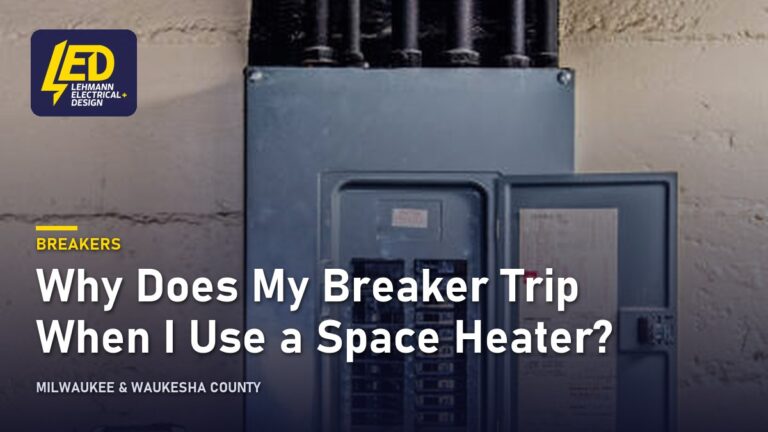
A 1,500-watt space heater on a 120-volt circuit draws 12.5 amps. That is 83 percent of a 15-amp breaker all by itself, so almost anything else on the same circuit pushes the total past the breaker’s rating and the breaker opens. It is doing its job. The fix is not a bigger breaker, because the breaker protects the wire. The fix is either a lighter load on that circuit or a dedicated circuit run by a licensed electrician.
Before anything else: if you smell burning or hot plastic, see scorch marks or discoloration at the outlet or panel, or hear buzzing or crackling, stop using that circuit and that heater, leave the breaker off, and call an electrician. Do not touch the outlet, plug, or panel to judge how hot it is.
What the Job Actually Involves
The job is diagnosis first, then a targeted repair. An electrician starts by finding out what is actually on the circuit the heater is plugged into, because almost nobody knows. Circuit directories in older Milwaukee and Waukesha County homes are often wrong or blank, and a single 15-amp bedroom circuit can feed two bedrooms, a hallway light, and a bathroom receptacle that somebody added in 1988.
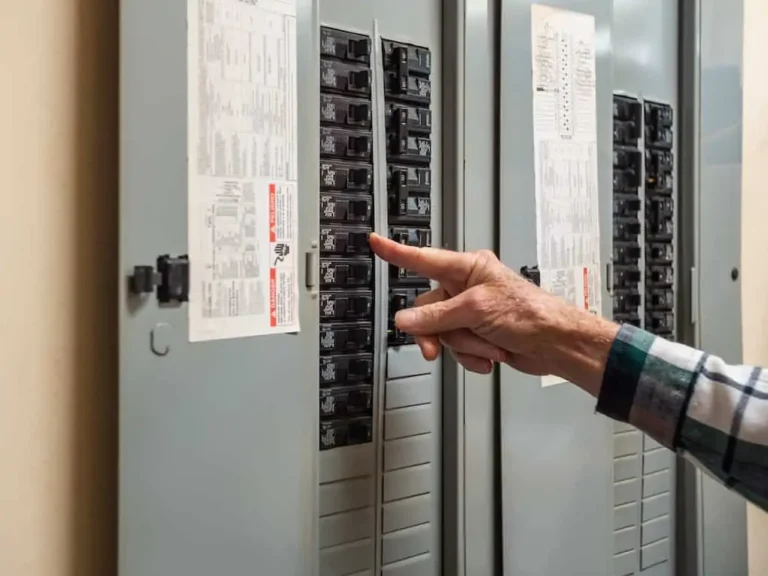
From there the work usually goes one of three ways.
Load problem. The circuit is simply carrying more than it can. The electrician measures actual current draw with the heater running and documents what else is fed by that breaker. The answer is to move load off the circuit or install a new dedicated circuit for the heater location, which means running cable from the panel to a new receptacle and landing a new breaker. That is work behind the panel cover, on energized equipment, and it belongs to a licensed electrician on a permit.
Connection problem. The breaker trips on a load that the arithmetic says it should handle, or the plug and outlet run hot. That usually points to a loose terminal, a worn receptacle, a back-stabbed connection that has lost tension (where the wire was pushed into a hole in the back of the receptacle instead of wrapped under its screw), or a damaged cord. CPSC’s winter heater guidance is direct on this: if a plug or outlet is hot, stop using the heater and have a qualified electrician check and replace the plug or the faulty wall outlet. Replacing the receptacle and correcting the terminations is a short visit.
Device or fault problem. The breaker trips with nothing plugged in, or it trips instantly rather than after several minutes. Most standard residential breakers are thermal-magnetic, meaning they have a heat-sensitive strip that responds to a sustained overload and a magnetic coil that responds to a short circuit. An instant trip with no load usually means a short or a ground fault in the wiring, not a tired breaker. That gets traced before anything is replaced.
Reset a tripped breaker once at most: push it firmly to OFF, then back to ON. If it trips again, leave it off and get it looked at. Repeated resetting of a breaker that keeps opening is how a loose connection becomes a scorched one.
How to Tell if You Need It
You need an electrician if the pattern is anything other than “I plugged in a heater on a circuit that already had a lot on it, and it tripped once.”
Signs that point to a load problem you can manage yourself for now:
- The breaker trips only when the heater and something else substantial run together, such as a microwave, a hair dryer, or a second heater.
- It takes several minutes to trip, not a second.
- Moving the heater to a circuit with less on it solves it.
- Nothing is warm, discolored, or noisy.
Signs that need a licensed electrician:
- The breaker trips with the heater alone on the circuit.
- The plug, the cord, or the face of the receptacle gets hot.
- You see brown discoloration or melted plastic on a plug or outlet.
- There is a burning or hot-plastic smell near a receptacle, switch, or the panel.
- You hear buzzing or crackling from the outlet or the panel.
- The breaker trips the instant you push it to ON, with nothing plugged in.
- You have to use an extension cord or power strip to reach an outlet, which CPSC says never to do with a space heater. Needing one is itself the symptom: the room does not have enough receptacles.
- Lights dim or flicker elsewhere in the house when the heater cycles on.
> A space heater is one of the few appliances in a house that runs near the full rating of a 15-amp circuit for hours at a time. That sustained draw is what exposes every weak connection on the circuit. A loose terminal that has been fine for twenty years with a lamp and a phone charger on it will heat up under 12.5 amps, and heat at a connection is how electrical fires start. The tripping breaker is the early warning, not the problem.
Anyone needing troubleshooting and electrical repair for a circuit that keeps tripping should have it traced before the winter load gets heavier, not after something has already overheated.
How Many Space Heaters on One Circuit
One. That is the practical answer for a standard 1,500-watt unit, and here is the arithmetic.
| Heater setting | Watts | Amps at 120 V | Share of a 15 A breaker | Share of a 20 A breaker |
|---|---|---|---|---|
| Low | 750 | 6.3 | 42% | 31% |
| Medium | 1,000 | 8.3 | 56% | 42% |
| High | 1,500 | 12.5 | 83% | 63% |
| Two units on high | 3,000 | 25.0 | over rating | over rating |
No common 120-volt receptacle circuit in a house is built to carry two 1,500-watt heaters: 25 amps is over the rating of a 20-amp breaker and over the continuous-load allowance on a 30-amp one.
Two heaters on high draw 25 amps. That trips a 20-amp breaker and badly overloads a 15-amp one. Even on a 20-amp circuit, one heater on high at 12.5 amps leaves about 7 amps of headroom, which a vacuum on the same circuit can eat through.
There is a sizing rule behind this that matters for anything running for hours. A branch circuit’s breaker must be rated at no less than the non-continuous load plus 125 percent of the continuous load, which is the same as saying a continuous load should occupy no more than 80 percent of the breaker’s rating. A continuous load means three hours or more at maximum current, and a space heater running all evening qualifies. Eighty percent of 15 amps is 12 amps, and a 1,500-watt heater draws 12.5, so a heater on high is more than a 15-amp circuit is meant to carry for hours on end. That is a design rule rather than a trip threshold: a healthy breaker holds its rating. When a heater alone opens a 15-amp breaker with nothing else running, the usual causes are an aged breaker, a loose connection somewhere on the circuit, or a load on that circuit nobody knew about.
Wisconsin SPS 316, which adopts the 2023 NEC, has been in effect since September 1, 2026, and the sizing rule above is unchanged from the prior edition. Existing circuits in your house are not required to be rewired to the new edition, but new work and alterations are done to it.
What Decides the Price
Four things, roughly in order of weight.
Which repair it turns out to be. Replacing a worn receptacle and re-terminating a connection is a short visit. Running a new dedicated 20-amp circuit from the panel to a bedroom is a much bigger job, and that difference dwarfs everything else on this list.
Distance and route from the panel to the outlet. A new circuit to a basement wall adjacent to the panel is simple. A new circuit to a second-floor bedroom in a 1920s Milwaukee bungalow with plaster walls, balloon framing, and no accessible chase is not. Fishing cable through finished walls is the single biggest variable in cost on this kind of work.
Panel condition and available space. The electrician needs a place for the new breaker. Where a panel is listed for tandem (twin) breakers, a tandem is a legitimate way to free a slot. Where it is not, or where the panel itself is in poor condition, that becomes a separate conversation.
Wiring type and age. Knob and tube, old two-wire circuits with no ground, or aluminum branch circuit wiring all change the scope. Any of those found during diagnosis get discussed before work proceeds, not after.
We do not publish price figures for this work, because the honest answer depends on what the diagnosis finds. What we will do is tell you which of the four repairs above applies and what it involves before anyone commits to anything.
How Long It Takes and What Is Disrupted
Diagnosis is usually under two hours, on the jobs we see. Identifying everything on a circuit means plugging a tester into outlets room by room while someone works the breaker, which involves walking through the house and interrupting power to a few circuits briefly. Nothing is opened up at this stage beyond removing a cover plate or two.
A receptacle replacement or a connection repair is typically the same visit, with that one circuit off for a short period.
A new dedicated circuit is most often a single day where the run is reasonably accessible. The main breaker goes off while the new breaker is landed, which de-energizes the bus the breaker clips onto and takes the whole house down for that window. Where cable has to be fished through finished walls, there may be small access holes in plaster or drywall that need patching afterward, and we will tell you where those will be before we cut anything.
One thing worth stating plainly: turning the main breaker off does not make the whole panel safe. The service conductors feeding the panel and the main breaker’s line-side lugs stay energized. A homeowner cannot de-energize those. Only the utility can, usually by pulling the meter, or a separate service disconnect ahead of the panel if one is fitted. That is the core reason this is not homeowner work, and why an electrician plans the panel portion of the job carefully rather than improvising.
Breaker tripping on a heater every evening?
Tell us which room and which breaker. We will trace what is actually on that circuit before quoting anything.
Licensed master electrician. 12-month workmanship warranty.
Permits and Inspection
A new branch circuit requires an electrical permit from your local municipality. Milwaukee, Wauwatosa, Waukesha, Brookfield, and the surrounding municipalities each issue their own permits and run their own inspections, enforcing Wisconsin SPS 316, which adopts the 2023 NEC and has been in effect since September 1, 2026.
Replacing a failed receptacle or repairing a loose connection on an existing circuit is generally maintenance and handled differently, but that call belongs to the inspecting municipality, and we confirm it with them rather than guessing.
What this means for you in practice:
- The permit is pulled by the licensed contractor, not by you.
- The inspector looks at the new work, not at everything else in the house.
- Inspection is scheduled after the work is complete and typically adds a short visit at a later date, not extra days of disruption.
- Permitted work creates a record that a buyer’s inspector can see later, which matters at resale.
Skipping the permit on a new circuit is a real risk, not a paperwork technicality. Unpermitted electrical work shows up during a home sale and can become an insurance question after a loss.
Choosing an Electrician
Ask the three questions that separate a diagnosis from a parts swap.
Will you trace the circuit before quoting? Anyone who quotes a new circuit over the phone without knowing what is on the existing one is guessing. The circuit map is the whole basis of the recommendation.
What is your license number? Lehmann Electrical & Design works under Wisconsin electrical contractor license 1492849, and Jacob W. Lehmann holds Wisconsin master electrician license 1283316. A contractor who hesitates on this question is telling you something.
Who pulls the permit? The answer should be the contractor, every time, with no hedging about whether this particular job “really needs one.”
Lehmann Electrical & Design holds an A+ rating with the BBB and 4.9 stars on Google, and backs its work with a 12-month workmanship warranty. If you are in West Allis, the same diagnosis and repair work is covered on our electrical repair in West Allis.
Get a tripping circuit diagnosed before winter load builds. Request an estimate and tell us which room and which breaker, or call 414-207-0109.
Why homeowners call Lehmann Electrical & Design
- Led by licensed master electrician Jacob Lehmann
- A+ rating with the BBB and 4.9 stars on Google
- 12-month workmanship warranty on the work we do
- Permits pulled and inspections scheduled as part of the job
- Milwaukee, Wauwatosa and Waukesha County, from 12012 W Fairview Ave, Wauwatosa
Want the heater on a circuit of its own?
Tell us the room and where your panel is, and we will price the run.
Licensed master electrician. 12-month workmanship warranty.
Frequently Asked Questions
▾Why do space heaters trip breakers?
Because they draw more current for longer than almost anything else you plug into a general-purpose outlet. A 1,500-watt heater pulls 12.5 amps at 120 volts, continuously, for hours. On a 15-amp circuit that is 83 percent of the rating with nothing else running. Add a lamp, a TV, and a phone charger, or a second heater, and the total exceeds the breaker’s rating. The breaker opens as designed.
▾How many space heaters can run on a 20-amp circuit?
One 1,500-watt unit, with a little room to spare. That heater draws 12.5 of the 20 amps, leaving about 7 amps for everything else on the circuit. Two heaters on high draw 25 amps and will trip a 20-amp breaker. If you need heat in two rooms at once, they need to be on two separate circuits, and you should confirm which breaker feeds each outlet rather than assuming.
▾Can I run a space heater and a humidifier at the same time?
On separate circuits, yes. On the same circuit, it depends on the humidifier. An evaporative or ultrasonic humidifier with a small fan draws very little, often under 1 amp, and will usually coexist with a heater on a 20-amp circuit. A warm-mist humidifier that boils water is a heating element and can draw several amps, which will push a 15-amp circuit over the edge. Check the nameplate wattage on both.
▾Is a warm breaker a sign of a problem?
A breaker running mildly warm under a sustained load is normal. The warning signs to act on are not temperature but a burning or hot-plastic smell, discoloration or scorch marks, buzzing, or crackling. Do not touch the breaker or put a hand near the panel to test it. If you notice any of those signs, leave that breaker off and have the panel inspected before using the circuit again.
Next step
Get the circuit traced
Tell us which room and which breaker keeps tripping.
Licensed master electrician12‑month warranty4.9 on Google
Milwaukee, Wauwatosa and Waukesha County. Prefer to talk? Call 414-207-0109