Licensed master electrician · Call 414-207-0109
A transfer switch that will not move power from the utility to your generator is usually failing for one of five reasons: the generator itself is not producing usable power, the switch is still in a manual or test position, its control board has lost its 120-volt sensing feed, a breaker feeding the switch has tripped, or the contactor inside has worn out. Most of these need a licensed electrician to diagnose, because the work happens inside an enclosure with live utility conductors.
A transfer switch is a decision-maker, not a power source. Its only job is to watch the utility feed, and when that feed drops, to disconnect your house from the grid and connect it to the generator instead. When it “does not work,” the fault is almost always in one of three places: the generator, the signal that tells the switch to act, or the mechanical guts of the switch itself.
That distinction matters because of what you can safely investigate. If the generator never starts, you are troubleshooting a generator. If the generator runs fine but the house stays dark, you are troubleshooting a transfer switch, and that means you are standing in front of an enclosure with incoming utility conductors that stay energized no matter what you switch off inside your house. A homeowner cannot de-energize those. Only the utility can, usually by pulling the meter, or a separate service disconnect if one is fitted ahead of the panel.
If you smell burning or hot plastic near the switch or the panel, see scorch marks or discoloration, or hear buzzing or crackling, stop. Do not operate the switch. Leave the affected breaker off and call a licensed electrician. Those are signs of an arcing or overheating connection, and continuing to cycle the switch makes it worse, not better.
What is usually causing it
Below are the causes an electrician works through, roughly in the order they are checked.
The generator is not producing acceptable power. An automatic transfer switch will not transfer to a source it does not like. If the generator cranks but never reaches stable voltage and frequency, or if it starts and then shuts down on a fault, the switch correctly refuses to connect. On Generac and similar units the controller usually posts an alarm code. Low oil, a tripped generator main breaker, a closed fuel valve, a dead starting battery, or a cold-weather no-start all look identical from inside the house: nothing happens.
The switch is not in AUTO. Automatic switches have a manual override, a test position, and sometimes a padlockable handle. If someone exercised the system and left the handle in the manual position, or put the controller in OFF, the switch will sit there during a real outage and do nothing. This is genuinely the easiest thing to rule out, and it is also the one a homeowner can often see without opening anything.
The utility-sensing circuit has lost its feed. The control board inside the switch needs a small 120-volt feed to know whether the grid is present. That feed is typically protected by a fuse on the board or a dedicated breaker. If it blows, the switch may believe the utility is always present, so it never calls for the generator, or it may believe the utility is never present and refuse to transfer back.
A breaker feeding the switch or the generator has tripped. The generator has its own main breaker. The transfer switch may be fed through a breaker in your main panel. Either one can trip. Reset a tripped breaker once at most: push it firmly to OFF, then back to ON. If it trips again, leave it off and have it inspected. A breaker that trips with the load disconnected is pointing at a wiring fault, not at a tired breaker.
The contactor or mechanism has failed. Inside the switch is a mechanical assembly that physically moves the connection from one source to the other. It carries your whole house load, it is operated by a solenoid or motor, and it wears. Pitted contacts, a seized mechanism, a failed solenoid coil, or a cracked control board are all ordinary end-of-life failures. A switch that hums or chatters without completing the move is a classic symptom.
Loose or corroded terminations. Switches live in enclosures that go through Wisconsin winters. Moisture, insect intrusion, and connections that loosened through years of thermal cycling all cause intermittent operation, which is the most frustrating version of this problem because it works perfectly on the day the electrician visits.
| Symptom | Likely area | Who should handle it |
|---|---|---|
| Generator never starts during an outage | Generator start signal, battery, fuel, controller fault | Electrician or generator technician |
| Generator runs, house stays dark | Transfer switch mechanism or control board | Electrician |
| Transfers to generator, will not return to utility | Utility-sensing circuit, return-transfer timer, control fuse | Electrician |
| Switch hums or chatters, never completes | Contactor, solenoid, or mechanism | Electrician |
| Works sometimes, fails sometimes | Loose or corroded terminations, failing relay | Electrician |
| Nothing happens, handle is in MANUAL or OFF | Switch position | Homeowner can look, electrician should verify |
What is safe to check yourself, and what is not
Safe to check: the things you can see and read without removing a cover or a dead front.
- The generator’s own control panel and any alarm or fault code it is displaying.
- Whether the controller is set to AUTO rather than OFF or MANUAL.
- The generator’s fuel supply, if it runs on propane and has a shutoff valve.
- Whether a breaker in your main panel is in the tripped position, which you can see with the cover closed on most panels.
- Whether the generator’s exhaust or air intake is blocked by snow, leaves, or stored items.
- The date of your last service, and whether the unit exercises itself weekly as it should.
Not safe, and not legal for an unlicensed person in most of the work we are describing: anything behind the cover of the transfer switch or the main panel. That includes “just checking” the control fuse, reseating a plug on the control board, tightening a lug, or jumpering a sensing circuit to force a transfer. The incoming side of a transfer switch is connected to the service, and it stays energized whether or not your main breaker is off. There is no sequence of homeowner steps that makes that enclosure safe to open.
The same applies to the popular internet advice about “resetting” a transfer switch by operating the manual handle during an outage. On some models that is a documented procedure. On others it back-feeds, damages the mechanism, or puts the operator’s hands inches from live parts. Whether it is appropriate depends on the specific model and the specific fault, which is the kind of judgment call a licensed electrician makes on site. Our installation and service work for whole-home standby generator systems includes exactly this sort of diagnosis.
Permits for transfer switch work are issued by your local municipality, Milwaukee, Wauwatosa, Waukesha and the surrounding communities, which enforce Wisconsin SPS 316. SPS 316 adopts the 2023 NEC and has been in effect since September 1, 2026. Work permitted before that date was done under the 2017 NEC, and an existing installation does not have to be brought up to the newer edition unless it is altered.
Generator running but the house still dark?
A licensed electrician tests the transfer switch under load, checks the control wiring and confirms the utility and generator sides are both doing what they should.
Licensed master electrician. 12-month workmanship warranty.
When it points to a bigger problem
Sometimes the transfer switch is the symptom rather than the disease.
It will not transfer back to utility. If the generator keeps running after the power comes back, the switch is not seeing a stable utility feed. That can be a blown control fuse, a failed sensing relay, or a genuinely unstable utility feed with a loose neutral or a service problem. A loose neutral on the service is serious: it causes voltage to swing high on one side of the panel and low on the other, which damages electronics. That is a utility and service-level issue, not a switch adjustment.
It transfers, then drops out under load. If the switch connects and then releases when the furnace or well pump starts, the generator is likely undersized for the circuits it is being asked to carry, or the starting surge is pulling voltage below the controller’s acceptable window. Sizing depends entirely on which circuits are backed up and their starting characteristics, not on the square footage of the house. Working out what a given set of loads actually requires is what a generator sizing tool is for, and a load calculation, meaning a formal tally of the connected loads and their demand, is how an electrician confirms it.
It fails repeatedly after repair. A switch that eats contactors is usually being asked to carry more than it was selected for, or it is in a wet or corrosive location, or the feeders into it are undersized. Replacing the same part a third time is a sign that the original design needs revisiting.
Repeated nuisance faults across the whole system. Generators that fail to start on cold mornings, batteries that die every eighteen months, and switches that chatter often trace back to a system that was installed for a different house than the one that exists now, after additions, new HVAC, or new large appliances.
What an electrician does about it
An electrician starts by separating the generator from the switch. Does the generator produce clean, stable power at the correct voltage and frequency on its own? If it does not, the switch is behaving correctly and the generator gets the attention.

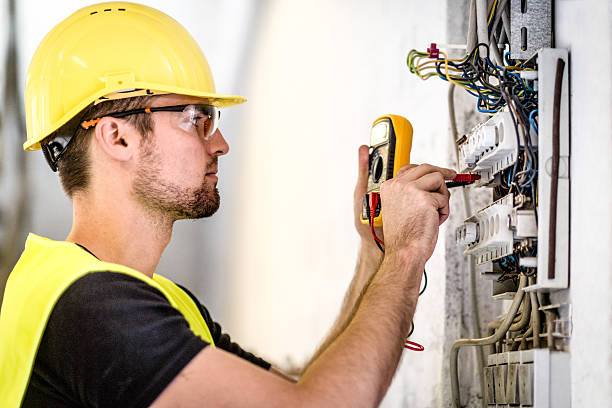
If the generator is healthy, the electrician verifies the control circuit: is the sensing feed present, is the control fuse intact, is the board commanding a transfer, does the solenoid energize? Then the mechanism itself gets inspected for pitted contacts, binding, and heat damage, and every termination gets checked for torque and corrosion. Finally the whole system is load-tested, meaning the generator is made to carry real household load while voltage is monitored, because a switch that passes a no-load test can still fail when the air conditioner starts.
From there the outcome is one of four things: a control component replaced, the switch replaced, the generator serviced, or a system that was never sized or wired for the loads it now carries, which means redesign. Honest diagnosis tells you which, and it tells you before parts get bought. If you are weighing a new standby system rather than repairing an aging one, our standby power options cover both Generac and comparable equipment.
Lehmann Electrical & Design is led by master electrician Jacob Lehmann and serves Milwaukee and Waukesha County. We hold an A+ rating with the BBB and 4.9 stars on Google, and our work carries a 12-month workmanship warranty. If your transfer switch is not doing its job, request an estimate or call 414-207-0109 and we will diagnose it properly.
Why homeowners call Lehmann Electrical & Design
- Led by licensed master electrician Jacob Lehmann
- A+ rating with the BBB and 4.9 stars on Google
- 12-month workmanship warranty on the work we do
- Permits pulled and inspections scheduled as part of the job
- Milwaukee, Wauwatosa and Waukesha County, from 12012 W Fairview Ave, Wauwatosa
Ready to have the switch checked?
Send the generator model, what the switch does when the power drops and whether it ever transfers back.
Licensed master electrician. 12-month workmanship warranty.
Frequently asked questions
▾Why is my automatic transfer switch not engaging?
Three causes dominate. The generator may not be producing power the switch considers acceptable, so the switch correctly refuses to connect. The control board may have lost its 120-volt utility-sensing feed, usually through a blown control fuse. Or the contactor mechanism itself has failed, which often shows up as humming or chattering without completing the move. All three need the enclosure opened by a licensed electrician.
▾How do I reset a Generac transfer switch?
There is no homeowner reset button. On most Generac systems you clear faults at the generator’s controller, not at the switch, and the controller must then be returned to AUTO. Operating the switch’s manual handle is a model-specific procedure that can damage the mechanism or expose live parts if done wrong. If the controller shows a fault that returns, the underlying problem has not been fixed and needs diagnosis.
▾Why will my transfer switch not switch back to utility?
The switch is not seeing a stable utility feed. Common reasons are a blown control fuse on the sensing circuit, a failed sensing relay, or a return-transfer time delay that has not expired yet, since many switches intentionally wait several minutes to confirm the grid is steady. A genuinely unstable service, such as a loose neutral, produces the same symptom and is a serious condition worth investigating promptly.
▾How long does it take to install a transfer switch?
For a straightforward replacement where the generator, feeders, and location all stay the same, the on-site electrical work is typically a single day with the power off for part of it. A new installation takes longer, because it involves permitting through your municipality, a load calculation, gas work, a concrete or composite pad, and inspection scheduling. We give a timeline after seeing the site, not before.
▾Why is my wall switch not working? Is that related?
No. A wall switch that has stopped controlling a light is an ordinary branch-circuit problem: a failed switch, a loose connection in the box, a tripped breaker, or a bad fixture. It has nothing to do with a generator transfer switch, which is a service-level device that moves your whole house between two power sources. Searches for phone and game console data transfers are a different topic entirely.
Next step
Get the transfer switch checked
Send the generator model and what the switch does when the power drops.
Licensed master electrician12-month warranty4.9 on Google
Milwaukee, Wauwatosa and Waukesha County. Prefer to talk? Call 414-207-0109