Licensed master electrician · Call 414-207-0109
Yes, flipping a breaker on or off is safe for a homeowner to do. Breaker handles are designed to be operated by hand, and the energized parts sit behind the panel cover. The safe practice is simple: stand to the side, keep the cover closed, use one firm motion, and dry hands. What is not safe is resetting the same tripped breaker over and over, or opening the panel cover to investigate.

Switching a breaker off, or resetting one that has tripped, is a normal homeowner task. The handle is the only part of the panel you should touch, and the only part engineered for you to touch.
> A tripped breaker gets one reset. Push the handle firmly all the way to OFF, then back to ON. If it holds, the circuit was simply overloaded and you can look at what was running. If it trips again, leave it off and have the circuit inspected. A breaker that refuses to stay on is telling you something is wrong downstream of it, and nothing about the second or third reset attempt fixes that.
Turning a breaker off is even safer than resetting one, and it is often the right first move. If an outlet is sparking, a light fixture is behaving strangely, or you smell hot plastic, switching that circuit off and leaving it off is exactly what you should do.
A few specifics worth stating plainly:
- Is it safe to touch a breaker? The handle, yes. The bus bars, lugs, and wiring behind the cover, no. Those are energized whenever the service is live.
- Is it safe to cover the breaker box? The panel’s own cover must stay on and stay closed. What you must not do is block it. The panel needs clear working space in front of it and must remain readily accessible, so a finished closet wall, a bookshelf, or a cabinet built over it is a problem. A decorative door that swings fully open is usually acceptable, but check with an electrician before you build anything in front of a panel.
- Is it safe to flip a breaker in the rain? If the panel is indoors and dry, rain outside changes nothing. The caution people are reaching for online is about standing in water, wet hands, a damp basement floor, or an outdoor panel with water visibly inside the enclosure. Those are genuine hazards. If there is water in or on the panel, or standing water at your feet, do not touch it. Call an electrician.
- Is it safe to flip the main breaker? Yes, and it is routine. But understand what it does and does not do, which is the next point.
The main breaker, and what stays live
Turning the main breaker off de-energizes the branch circuits in your house. It does not de-energize everything in the panel. The service conductors coming in from the utility and the line-side lugs on the main breaker itself stay energized. A homeowner cannot shut those off. Only the utility can, usually by pulling the meter, or a separate service disconnect ahead of the panel if one is fitted.
So flipping the main breaker off is safe and sometimes necessary, for example before a plumber works near wiring or during certain storm situations. It is not bad for the breaker to do this occasionally. But it is not a way to make the inside of a panel safe to work in, which is one reason panel work is licensed work.
Is it bad to flip the main breaker often? Mechanically, breakers have a finite number of operations, and a main breaker is not a light switch. Occasional use is fine. Using it daily, or using a branch breaker as an on/off switch for an appliance, wears out a device whose real job is protection.
What is usually causing it
If you are asking whether flipping breakers is safe, you are probably flipping one because it keeps tripping. The cause matters more than the reset.
| What you see | Likely cause | What it means |
|---|---|---|
| Trips when you add one more appliance | Overload: total current exceeded the breaker’s rating | The circuit is being asked to do too much |
| Trips instantly, every time, with nothing plugged in | Short circuit or ground fault in the wiring or a device | A real fault, not a worn breaker |
| Only a GFCI outlet or GFCI breaker trips | Current leaking off the circuit | A leakage fault or a failed GFCI device |
| Trips in one room after rain or a plumbing leak | Moisture in a box, fixture, or exterior outlet | Needs to be found and dried or repaired |
| Trips with a specific appliance only | Fault in that appliance or its cord | Stop using it until it is checked |
Two pieces of background help here. First, amperage is the rate of current flow, and a breaker is rated in amps. Standard household breakers are thermal-magnetic: a heat-sensitive strip handles sustained overload, and a magnetic coil handles a dead short. That is why an overload takes a minute or two to trip and a short trips instantly.
Second, breakers are sized so a continuous load (three hours or more at full current) sits at no more than 80 percent of the breaker’s rating, which is the same as sizing the circuit at 125 percent of the continuous load. A correctly matched load does not trip. A breaker trips above its rating, following its trip curve. If a device is drawing within its design range and the breaker still trips, the breaker or the wiring, not the device, is the suspect.
A GFCI (ground fault circuit interrupter) protects people. It trips when 4 to 6 milliamps of current leaks off the circuit by any path, including through a person or damp drywall. No metal contact is needed. An AFCI (arc fault circuit interrupter) looks for the electrical signature of arcing and protects 120-volt branch circuits in living areas. A GFCI also gets one reset. If it will not hold, there is a genuine leakage fault or the device has failed. It is not “working correctly” by tripping repeatedly.
What is safe to check yourself, and what is not
Safe for a homeowner, with the panel cover closed:
- Identify which breaker tripped. A tripped handle usually sits between ON and OFF.
- Unplug or switch off what was running on that circuit, then reset once.
- Note what was running. A space heater plus a hair dryer on one bedroom circuit is an overload, not a mystery.
- Press TEST then RESET on a GFCI outlet to confirm it works.
- Label breakers accurately as you learn what they feed.
- Check whether a tripped outlet is downstream of a GFCI elsewhere in the house, which is a common surprise in bathrooms and garages.
Not safe, and not legal for an unlicensed person in Wisconsin:
- Removing the panel cover for any reason.
- Replacing, adding, or swapping a breaker.
- Installing a larger breaker to stop nuisance tripping. The breaker protects the wire. A 15-amp circuit with a 20-amp breaker on it is a fire risk, not a fix.
- Anything on the service entrance, which is the conductors, meter, and main disconnect that bring utility power into the house.
- Touching a panel, outlet, or appliance to judge how hot it is. Use your nose, your eyes, and your ears instead.
Stop and call an electrician if you notice a burning or hot-plastic smell, scorch marks, browning or discoloration around a breaker or outlet, buzzing, or crackling. Stop using that circuit or device, leave the breaker off, and do not reset it. Those are the signs that matter, and none of them require touching anything.
Breaker tripping again after you reset it?
A licensed electrician measures what the circuit is actually carrying and finds the fault behind a breaker that will not stay on.
Licensed master electrician. 12-month workmanship warranty.
When it points to a bigger problem
One tripped breaker after a legitimate overload is routine. A pattern is different. These situations point past the breaker itself:
- The same circuit trips weekly even when you are careful about what is plugged in. The circuit is probably carrying loads it was never sized for, which is a case for adding a dedicated circuit rather than a bigger breaker.
- Several breakers trip across the house, or lights dim noticeably when a large appliance starts. That can point to the service capacity or to a connection problem upstream.
- The main breaker trips. This is not a nuisance trip to reset and forget. Have it looked at.
- The panel is full, with no space for a needed circuit, or it is already packed with tandem breakers. Tandem breakers are fine where the panel is listed for them, but a full panel limits what the house can do.
- Burning smells, scorch marks, buzzing, or crackling at the panel.
- The panel is an old or discontinued type with known reliability problems, or it is a fuse panel.
An important caution: none of these symptoms by themselves prove you need a bigger service. That is decided by a load calculation, a documented tally of the home’s connected loads against the service rating. If you want a rough sense of where you stand before calling anyone, our service size estimator walks through the same inputs an electrician uses, though it is a starting point, not a substitute for a field calculation.
What an electrician does about it
An electrician starts by separating “overloaded” from “faulted,” because the fixes are completely different.
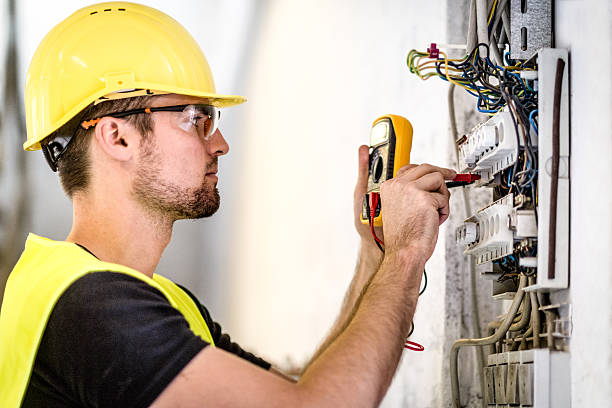
A typical visit: confirm what the circuit feeds, measure actual current draw under load, check the breaker’s condition and its connection to the bus, inspect accessible junction boxes, outlets, and fixtures on that circuit for heat damage or loose terminations, and test insulation resistance if a ground fault is suspected. For repeat GFCI trips, that means isolating sections of the circuit to find where the leakage is, not just swapping the device and hoping.
If the answer is overload, the fix is capacity: a new dedicated circuit for the heavy appliance, or redistributing loads across existing circuits. If the answer is a fault, the fix is repair. If the load calculation shows the service itself is undersized, or the panel has no room and no safe way to make room, then upgrading the service panel is the real answer.
Panel and service work requires a permit from your local municipality, Milwaukee, Wauwatosa, Waukesha, or wherever the home sits, which enforces Wisconsin SPS 316. SPS 316 adopts the 2023 NEC and has been in effect since September 1, 2026. Work permitted before that date was done under the 2017 NEC, and an existing installation does not have to be brought up to the new edition unless it is altered.
As for cost: panel upgrade pricing depends on the service size, the panel location, the condition of the service entrance, the utility’s requirements, and whether grounding and bonding need to be brought current. That is why a written estimate after an on-site look is worth more than any figure quoted over the phone.
Ready to stop resetting it?
If a breaker in your home keeps tripping, or you have seen discoloration, smelled hot plastic, or run out of space in the panel, Lehmann Electrical & Design can take a look. The company is led by master electrician Jacob Lehmann, holds an A+ rating with the BBB, is rated 4.9 stars on Google, and backs its work with a 12-month workmanship warranty. Call 414-207-0109 or request an estimate and we will work out whether you need a repair, a new circuit, or a load calculation.
Why homeowners call Lehmann Electrical & Design
- Led by licensed master electrician Jacob Lehmann
- A+ rating with the BBB and 4.9 stars on Google
- 12-month workmanship warranty on the work we do
- Permits pulled and inspections scheduled as part of the job
- Milwaukee, Wauwatosa and Waukesha County, from 12012 W Fairview Ave, Wauwatosa
Ready to have the panel looked at?
Tell us which breaker it is, what it feeds and how often it goes.
Licensed master electrician. 12-month workmanship warranty.
Frequently asked questions
▾Is it safe to reset a breaker myself?
Yes, once. Push the handle firmly all the way to OFF, then back to ON. If it holds, identify what overloaded the circuit and reduce the load. If it trips again, leave it off and have the circuit inspected. Repeated resets do not fix a fault and can let a short circuit or an overheating connection keep arcing behind a wall.
▾Is it dangerous to flip breaker switches on and off a lot?
Not dangerous, but not good for the breaker. Breakers are protective devices with a limited number of mechanical operations, not switches. Using a breaker as the daily on/off control for an appliance wears out the mechanism and can eventually leave you with a breaker that no longer trips when it should. Install a proper switch or disconnect for anything you cycle regularly.
▾Is it safe to turn a breaker off to work on something?
Turning the breaker off is the correct first step, and yes, it is safe. But a breaker alone is not proof a circuit is dead. Labels are wrong more often than people expect, and a single room can be fed by more than one circuit. Verify with a tester before touching conductors, or have a licensed electrician do the work.
▾Can I just switch to a bigger breaker so it stops tripping?
No. The breaker is sized to protect the wire behind it, not the appliance in front of it. Putting a 20-amp breaker on wiring rated for 15 amps lets the wire overheat inside the wall without ever tripping, which is how electrical fires start. The correct fix for a genuinely overloaded circuit is another circuit sized for the load.
▾Is it safe to build a cabinet or wall over my panel?
No. A panel must stay readily accessible with clear working space in front of it, so finished walls, shelving, and closet build-outs over a panel are a problem and will fail inspection. A door or removable access panel that opens fully is often workable. Ask an electrician before you frame anything, since relocating a panel afterward is far more expensive.
Next step
Get the panel checked
Tell us which breaker keeps going and what it feeds.
Licensed master electrician12-month warranty4.9 on Google
Milwaukee, Wauwatosa and Waukesha County. Prefer to talk? Call 414-207-0109