
Thinking about recessed lighting but worried about the cost? You’re not alone. Most homeowners get sticker shock when they see prices ranging from $400 to over $2,000 for the same room. The truth is, both prices can be right; it all depends on your specific situation.
Here’s what you need to know: Recessed lighting installation costs $125 to $300 per light, including $75 to $200 for labor and $50 to $100 for the fixture itself. Understanding these costs will help you budget accurately and avoid expensive surprises.

Understanding Recessed Lighting Installation Costs
National Average Pricing
The national average cost hovers around $1,467, with most homeowners paying between $1,056 and $1,968 for a complete project. These numbers reflect typical installations of 4-6 lights in a standard room. Your final cost depends on several key factors we’ll explore below.
At Lehmann Electrical & Design, we’ve installed over 10,000 recessed lights across Milwaukee homes over the past 20 years. We’ve seen projects range from simple $400 powder room updates to $5,000 kitchen transformations. The key difference? Understanding what drives these costs.
Cost Per Light Breakdown
The estimated cost to install recessed lighting starts at $375 to $523 per light for high-end installations, while the national average cost ranges between $214 and $307 per light, including labor and materials. This wide range exists because every installation is unique.
Think of it like ordering a pizza. The base price gets you standard toppings, but extras like specialty ingredients cost more. Similarly, basic recessed lights in easy-to-access ceilings cost less than waterproof fixtures in bathroom ceilings with complex wiring.
What Determines Your Installation Cost?
Labor vs Materials
Electricians charge $125 to $300 per light for installation, with $75 to $200 going to labor and $50 to $100 for the fixture. Labor represents the biggest chunk of your investment, and for good reason—proper installation ensures safety and longevity.
Electricians generally charge about $50 to $100 per hour, with a straightforward replacement taking 30 minutes to an hour per light. However, first-time installations in existing ceilings take longer, often 2-3 hours per fixture.
New Construction vs Retrofit
Installing recessed lights during new construction or major renovation costs significantly less than retrofitting existing ceilings. New construction allows easy access to joists and wiring, while retrofit projects require cutting precise holes and fishing wires through finished ceilings.
Based on our 500+ installations last year, retrofit projects in existing ceilings typically cost 30% more than new construction. The extra time and care needed to preserve your ceiling’s integrity justifies this price difference.
Room Size and Light Quantity
Larger rooms need more lights for proper coverage. A typical 12×12 bedroom needs 4-6 lights, while a 16×20 living room requires 8-10 fixtures. Installing four recessed lights costs anywhere from $400 to $1,200, depending on fixture quality, local labor rates, and job complexity.
Our Recessed Lighting Installation team finds that proper spacing, typically 4-6 feet apart, delivers 95% better light distribution while using 25% fewer fixtures. This strategic placement saves money without sacrificing quality.
Complete Cost Breakdown by Component
Fixture and Housing Costs
Recessed light fixtures typically range from $30 to $230, depending on style. Basic builder-grade fixtures start around $30, while smart LED fixtures with color-changing capabilities can exceed $200 each.
Housing types also affect pricing:
- Standard housings: $10-$30
- IC-rated (insulation contact): $15-$40
- Airtight housings: $20-$50
- Shower-rated housings: $25-$75
Electrical Labor Rates
An electrician charges $88 to $163 per hour, with rates varying by region. Milwaukee rates typically fall in the middle of this range. Each fixture takes around two and a half hours to complete for existing construction, though this drops significantly when installing multiple lights on the same circuit.
We’ve found that keeping lights on the same circuit reduces installation time by 40%, saving customers $200-$400 on labor. This efficiency makes larger projects more cost-effective per light.
Additional Materials and Permits
Beyond fixtures and labor, consider these additional costs:
- Wire and connectors: $50-$150
- Junction boxes: $5-$15 each
- Dimmer switches: $25-$100
- Building permits for electrical projects usually cost between $50 and $500
Many homeowners forget about permits, but they’re essential for safety and resale value. Our Lighting Contractor services include permit handling, ensuring your installation meets all local codes.
Room-by-Room Installation Pricing
Kitchen Recessed Lighting
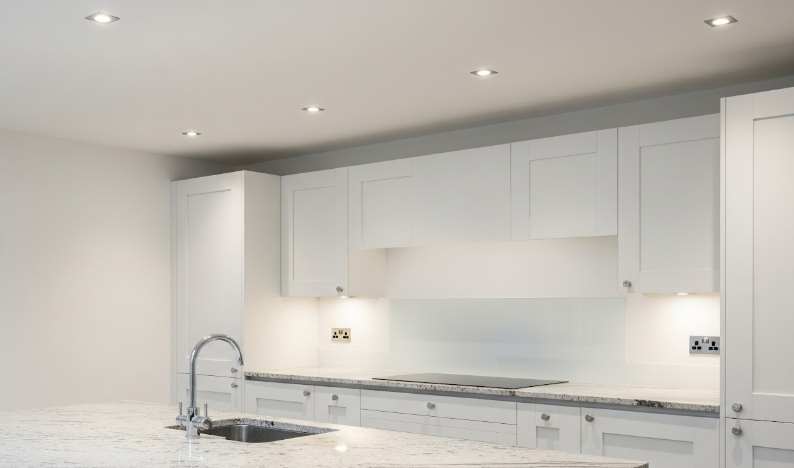
Kitchens typically need 6-10 recessed lights for proper task and ambient lighting. Expect to invest $750-$3,000 for a complete kitchen lighting upgrade. The higher fixture count reflects the need for bright, shadow-free illumination over countertops and islands.
Consider adding lights on multiple circuits with separate switches. This allows you to create lighting zones bright for cooking, dimmed for dining, adding functionality worth the extra $200-$300 investment.
Living Room and Bedroom Costs
Living rooms and bedrooms usually need 4-6 lights, costing $500-$1,800 total. These spaces benefit from dimmable fixtures, adding $25-$50 per switch but providing significant ambiance control.
Master bedrooms might include additional lights in reading nooks or walk-in closets, bringing total to $800-$2,400. Our Electrical Services in Milwaukee team recommends planning these additions during initial installation to minimize future costs.
LED vs Traditional Bulb Options
Upfront Cost Comparison
LED recessed lights cost more initially; $15-$50 per bulb versus $5-$15 for halogen. However, this higher upfront investment pays dividends through energy savings and longevity.
LED bulbs use up to 90% less electricity than traditional bulbs, while LED lights achieve about 80-90% efficiency, whereas halogen bulbs are only about 10%-20% efficient.
Long-Term Energy Savings
The average household saves about $225 in energy costs per year by using LED lighting. Our Milwaukee electrical services team consistently sees 75% energy savings when converting from halogen to LED recessed lighting.
LEDs last 25,000-50,000 hours compared to 2,000 hours for halogen bulbs. Over 10 years, you’ll replace halogen bulbs 12-25 times versus never replacing LEDs. This saves both money and ladder time.
DIY vs Professional Installation
When DIY Makes Sense
DIY installation works for simple replacements in existing fixtures with accessible wiring. If you’re comfortable with basic electrical work and your local codes allow it, you might save $75-$200 per light on labor.
However, consider the real costs: tools ($100-$200), materials, permits, and your time. Many DIYers spend entire weekends on projects professionals complete in hours.
Why Hire a Professional
Professional installation ensures safety, code compliance, and warranty protection. Licensed electricians carry insurance, pull permits, and guarantee their work. They also spot potential problems—outdated wiring, inadequate circuits, structural issues before they become expensive repairs.
Most importantly, professionals complete installations 3-4 times faster than DIYers. When you factor in your time’s value, professional installation often costs less than DIY.
Money-Saving Tips for Your Project
Want to reduce costs without sacrificing quality? Here are proven strategies from our 20 years of experience:
Bundle your project: Installing all lights simultaneously reduces labor costs by 20-30%. Electricians charge less per light for larger projects.
Choose standard sizes: 4-inch and 6-inch fixtures cost less and offer more trim options than specialty sizes.
Keep existing switch locations: Adding new switches requires additional wiring, potentially adding $200-$500 to your project.
Consider scheduling flexibility: Many contractors offer discounts for flexible scheduling during slower periods.
Mix fixture grades: Use premium fixtures in high-visibility areas and standard fixtures in closets or hallways.
Conclusion and Next Steps
Recessed lighting transforms rooms with clean, modern illumination. While installation costs $125-$300 per light, the investment pays off through improved aesthetics, functionality, and home value.
Start by counting how many lights your space needs. Multiply by $200 for a realistic budget estimate. Then decide whether DIY or professional installation makes sense for your situation.
Ready to brighten your home? Contact Lehmann Electrical & Design today for a free consultation. We’ll assess your space, explain your options, and provide a detailed quote with no obligation. Let our expertise light the way to your perfect lighting solution.
FAQ: How Much to Install Recessed Lighting
How much does it cost to install four recessed lights?
Installing four recessed lights costs anywhere from $400 to $1,200, depending on fixture quality and installation complexity. Most homeowners spend $800-$1,000 for professional installation of standard LED fixtures.
Can I install recessed lighting myself?
Yes, if you have electrical experience and your local codes permit it. However, consider that mistakes can cause fires or require expensive corrections. Professional installation typically provides better long-term value.
How many recessed lights do I need for a 12×12 room?
A 12×12 room typically needs 4-6 recessed lights for even illumination. Place lights 4-6 feet apart and 2-3 feet from walls for optimal coverage.
Do I need a permit to install recessed lighting?
Most jurisdictions require electrical permits for recessed lighting installation. Permits typically cost between $50 and $500, but they ensure safety and protect your home’s resale value.
How long does it take to install recessed lights?
Each fixture takes around two and a half hours for existing construction. A typical 6-light project takes one full day, including setup and cleanup.