Licensed master electrician · Call 414-207-0109
A breaker box, also called a breaker panel or panel box, that buzzes, hums or vibrates is worth taking seriously. A faint, steady hum can be normal, but a buzz from the panel itself often comes from a breaker that is overloaded, loosely connected or failing. If you smell burning or hot plastic, see scorch marks, or hear crackling or popping, stay back from the panel, do not touch it, and call an electrician right away, or 911 if you see smoke or fire.
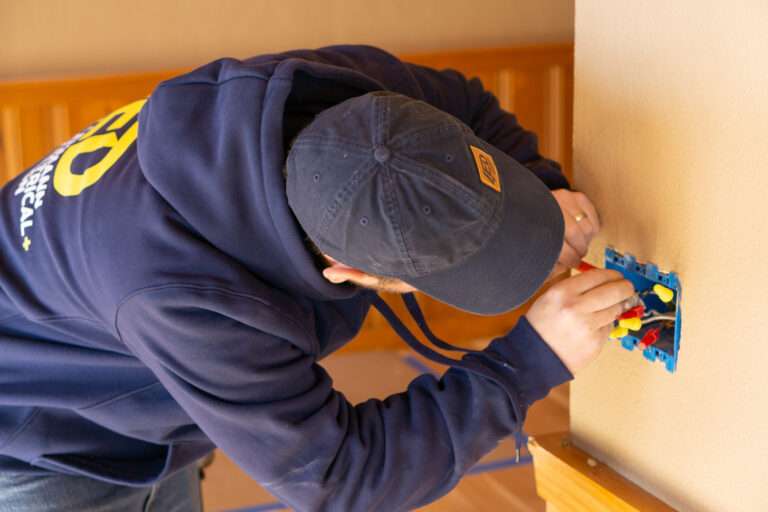
A faint, steady hum from a panel can be normal. A buzz, crackle or intermittent noise from the panel itself is not: it usually means a breaker carrying too much current, a loose connection or a worn breaker. Noise you can hear from a step away is worth an electrician’s visit rather than a wait.
- Crackling, popping or a burning smell means stay back and call today.
- Never open the panel cover. The service conductors stay live with the main off.
- A buzz that rises when a large appliance runs points at load or a loose terminal.
- A breaker that buzzes and never trips can still be overheating quietly.
If you smell burning or hot plastic, see scorch marks, or hear crackling or popping, stay back from the panel, do not touch it, and call an electrician right away, or 911 if you see smoke or fire.
What Usually Causes a Breaker Box to Buzz
Several things make noise inside a residential panel. Here they are from least to most serious:
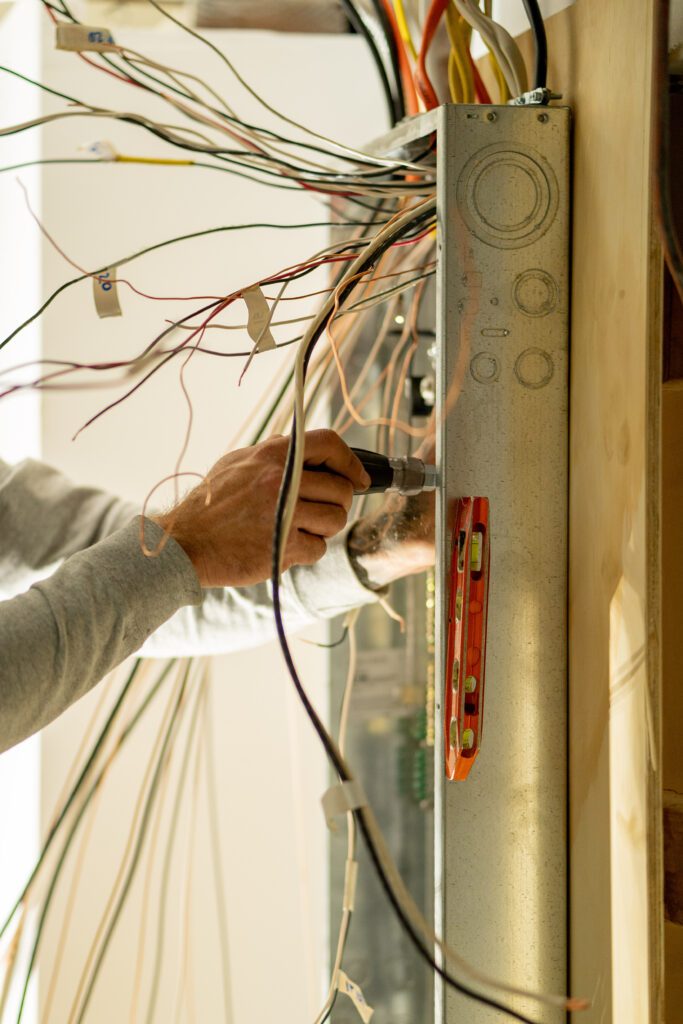
| Cause | Typical sound | What to do |
|---|---|---|
| Normal hum from the panel or nearby equipment | Faint, steady hum | Observe only |
| One breaker working hard near its limit | Soft hum from one breaker | Have it checked |
| Overloaded circuit | Louder buzz from one spot | Unplug or switch off what is running on that circuit; call an electrician |
| Loose wire connection inside the panel | Intermittent buzz or crackle | Call an electrician |
| Worn or failing breaker | Buzz with no obvious overload | Call an electrician |
| Arcing inside the panel | Crackling, popping, burning smell | Stay back and call right away |
Overloaded circuits. Most standard residential breakers are thermal-magnetic, with two trip mechanisms: a heat-sensitive strip that trips on a sustained overload and a magnetic coil that trips instantly on a very large current such as a short circuit. Heavy current can make a breaker’s magnetic parts, or a poor connection where it clips onto the bus bar (the metal bars inside the panel that feed the breakers), vibrate and buzz.
A space heater on an older bedroom circuit shows how quickly a circuit fills up: a 1,500-watt heater alone draws about 12.5 amps, just over the 12 amps (80 percent of the rating) a 15-amp circuit should carry for hours, and anything else on the circuit adds to that.
Loose connections. A wire not fully seated against its terminal creates resistance, which generates heat and can cause arcing (a small spark jumping a gap). Arcing concentrates intense heat at one point and can ignite surrounding material, which is why it is treated as a fire hazard. If you smell burning or hear crackling, leave that breaker off, stop using the circuit and call an electrician (see the NFPA’s electrical safety guidance).
Worn breakers. A breaker that buzzes may no longer trip reliably and cannot be assumed sound, even if nothing else seems wrong. Replacing one is a routine electrical repair, but not a do-it-yourself job.
Safe Checks for a Buzzing Breaker Box
Things you can observe without opening the panel:
- Stand a step back and listen. Is the buzz coming from one spot or the whole box?
- Look at the breaker handles. Has any breaker tripped, either to a middle position or fully to OFF?
- If a breaker has tripped and there is no buzzing, burning smell or scorching, you can reset it once: push it firmly to OFF, then back to ON. If it trips again, leave it off until an electrician inspects it.
- Check what is running on that circuit. A space heater, shop vac or microwave on the same circuit is a likely overload.
- Notice timing. Buzzing every few minutes often lines up with a motor cycling on and off, such as a refrigerator, sump pump or HVAC unit.
Things that need a licensed electrician:
- Removing the panel cover, or touching wiring, terminals or bus bars.
- Replacing a breaker, or dealing with one that buzzes. Never reset a buzzing breaker; the one-reset rule is only for a quiet tripped breaker.
- Inspecting the service entrance conductors, the large wires that bring power from the utility into the panel.
Even with the main breaker off, the service entrance conductors and the main breaker’s line-side connections stay energized, and a homeowner has no way to switch them off. Only the utility (We Energies in most of the Milwaukee area) can, usually by pulling the meter.
Panel still buzzing after those checks?
A licensed electrician opens the panel safely, measures the load on each circuit and checks every termination for the heat a loose connection gives off.
Licensed master electrician. 12-month workmanship warranty.
When a Buzzing Breaker Box Points to a Bigger Problem
A buzzing panel sometimes signals that the panel is undersized or outdated for today’s load. Many older Milwaukee-area houses were built with 60- or 100-amp service, long before central air, a home office or an EV, and some are now due for a panel upgrade. Mid-century Federal Pacific and Zinsco panels also deserve an electrician’s evaluation.
Signs of a capacity problem rather than one bad breaker:
- Several breakers hum, not just one.
- Breakers trip under normal use.
- Lights flicker when an appliance starts up.
- The panel is full and tandem (twin) breakers were added to make room. Tandems are fine where the panel is listed for them, but a panel packed with them has often outgrown the house.
A load calculation, the code method for comparing your home’s electrical demand with what the panel is rated for under Wisconsin SPS 316, which adopts the 2023 NEC (in effect since September 1, 2026), is the correct way to decide whether an upgrade is needed, and the reason a buzzing panel is worth an electrician’s visit. For a rough first read before an appointment, try Lehmann’s online panel upgrade calculator.
What an Electrician Does About a Buzzing Panel
A licensed electrician investigating a buzzing panel typically works in this order:
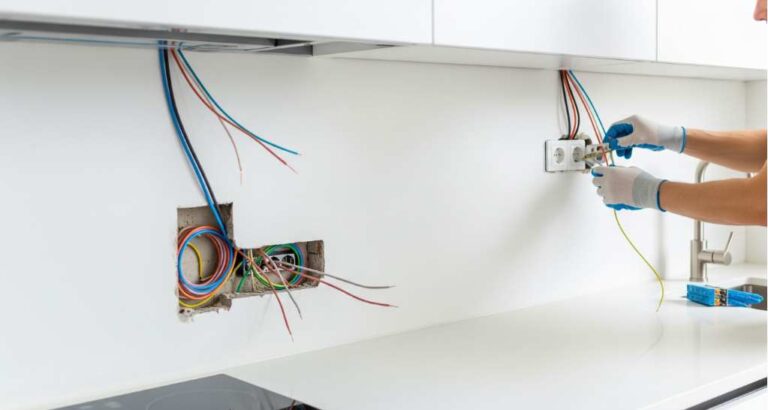
- Look with the cover on for scorch marks, discoloration or corrosion, and note any breakers in unusual positions.
- Remove the cover and inspect terminations for heat damage or arcing, and check each breaker’s rating against its circuit.
- Measure the load on suspect circuits with a clamp meter.
- Recommend a fix. A single failing breaker may be replaceable in one visit; a pattern of problems or a capacity shortfall leads to a conversation about the panel.
If one circuit is overloaded, adding a new circuit may be enough; if the whole panel is too small for current demand, a full upgrade is the right path.
Why homeowners call Lehmann Electrical & Design
- Led by licensed master electrician Jacob Lehmann
- A+ rating with the BBB and 4.9 stars on Google
- 12-month workmanship warranty on the work we do
- Permits pulled and inspections scheduled as part of the job
- Milwaukee, Wauwatosa and Waukesha County, from 12012 W Fairview Ave, Wauwatosa
Ready to have it looked at?
Send what the noise sounds like, where in the panel it comes from and what is running when it happens. The electrician arrives knowing what to test.
Licensed master electrician. 12-month workmanship warranty.
Frequently Asked Questions
▾Why is my breaker box humming but not buzzing?
A soft, steady hum that never changes is often normal vibration from the panel’s own parts or nearby equipment rather than a fault. If you can pin the hum to one breaker, or it has appeared recently, have an electrician inspect it. A long-standing, unchanging hum is lower priority than a new buzz.
▾Why is my breaker box buzzing every few minutes?
A buzz that repeats on a cycle often lines up with a motor turning on and off: a refrigerator, sump pump, furnace blower or air conditioner. Each start draws a surge, and if a connection is loose, that surge can make it buzz briefly. If the appliance has its own correctly sized circuit and the buzz continues, the breaker may be worn.
▾Why is my breaker box buzzing at night?
At night, and especially through a Wisconsin winter, heating runs longer cycles, and a quiet house makes a buzz easier to hear. A continuously running furnace or air conditioner can push a breaker toward its limit. A new night-time buzz is worth reporting to an electrician, particularly with flickering lights or a hot smell.
▾Why is my breaker box buzzing and lights flickering?
Buzzing plus flickering usually means an overloaded circuit or a loose connection. A large appliance starting up can pull voltage down for a moment, on the same circuit or, when the drop happens at the service or on a shared neutral, on others too. If it affects several circuits, the problem may be at the panel or service entrance and needs a professional diagnosis.
▾Why is my breaker box vibrating or ringing?
A panel cover that rattles, rings or vibrates may be picking up vibration from a humming breaker, a loose cover screw or nearby utility equipment. A high-pitched ring can also come from a loose connection inside. Do not take the cover off to look. Note when the sound happens and what is running, and have an electrician find the source.
▾Why is my electrical box buzzing?
“Electrical box” can mean the main panel or a smaller box behind a switch, outlet or fixture. A buzz at a switch, outlet or junction box usually means a loose connection or a failing dimmer or device. Stop using it. If it smells hot or looks scorched, switch off that circuit’s breaker if you can reach the panel safely, and call an electrician.
▾Why is my fuse box buzzing?
Fuse boxes buzz for the same reasons: an overloaded circuit, a loose connection or a fuse rated too high for the wire it protects (over-fusing). The fix is never a larger fuse, because the fuse is sized to protect the wire. Fuse panels also rarely have the capacity modern homes need, so ask an electrician whether a repair or a breaker panel makes more sense.
▾Is a buzzing breaker box dangerous?
It depends on the cause. A faint, steady hum is often harmless. Buzzing from an overloaded breaker, a loose connection or arcing is a real fire risk. You cannot tell which without opening the panel, and that takes training and tools, so the safe answer is to have a licensed electrician inspect it.
Next step
Tell us what the panel sounds like
Send what the noise sounds like, where in the panel it comes from and what is running when it happens. The electrician arrives knowing what to test.
Licensed master electrician12-month warranty4.9 on Google
Milwaukee, Wauwatosa and Waukesha County. Prefer to talk? Call 414-207-0109