Licensed master electrician · Call 414-207-0109
A three phase panel is a breaker panel fed by three energized conductors instead of one or two, which is how most commercial buildings in Milwaukee and Waukesha County receive power. It splits that incoming supply into branch circuits for lights, outlets and equipment. In Wisconsin you will usually find either 208Y/120 volts or 480Y/277 volts at the panel, and it is identifiable by its three main lugs and breaker spaces grouped in threes.

Think of electricity arriving at a building the way water arrives at a sprinkler system. A single phase service, the kind in a house, is one pulse of pressure rising and falling 60 times a second. A three phase service is three pulses, offset from each other, so power arrives in a smoother and steadier stream. That matters once a building has motors: elevators, air handlers, compressors, pumps, commercial refrigeration and shop machinery all start easier and run cooler on three phase.
The panel itself, sometimes called a panelboard, is the metal enclosure where that three phase supply gets divided up. Inside are three vertical busbars, one per phase, usually labeled A, B and C. Breakers clip onto those bars. On a wye service with a neutral, a single-pole breaker touches one bar and feeds a 120 volt or 277 volt circuit. A two-pole breaker bridges two bars for a 208 volt or 480 volt load. A three-pole breaker spans all three and feeds a three phase motor or a large piece of equipment.
> A three phase panel is not a “bigger” version of a house panel. It is a different shape of power. A residential panel has two energized bars and a neutral; a three phase panel has three energized bars, and the breaker you install depends on which bars it touches. That is why a breaker from a home panel will not simply drop into a commercial panelboard, and why the load has to be balanced across all three bars rather than just split down the middle.
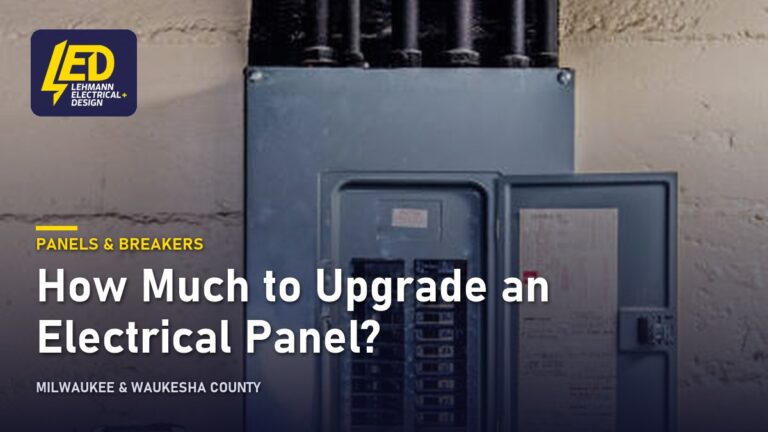
What does a three phase panel look like? From the outside, usually taller and deeper than a residential panel, often 20 inches or more wide, with a dead front cover screwed on rather than hinged shut. A dead front is the inner metal shield that leaves only the breaker handles exposed, and it stays on unless a licensed electrician removes it. The panel nameplate on the door or side lists the voltage, phase and main rating, which is the fastest way to tell what you have without opening anything. When an electrician does open it, what they see is three main lugs or a three-pole main breaker at the top instead of two, three busbars rather than two, and often separate ground and neutral bars instead of one shared bar. Breaker numbering runs 1, 3, 5 down the left and 2, 4, 6 down the right, and because of the three-bar arrangement, circuits 1, 7 and 13 typically sit on the same phase, though the exact bus arrangement varies by manufacturer.
What is usually causing it
If you are reading this because someone told you that you need a three phase panel, there is normally one of a handful of reasons behind it.

New equipment that requires it. A common trigger is a nameplate. A rooftop unit, a commercial oven, a CNC machine, a walk-in cooler compressor or an elevator motor arrives specifying three phase, and the building either has it or it does not.
A tenant build-out. A space that was retail becoming a restaurant, or warehouse becoming light manufacturing, often changes the load profile enough that the existing panel cannot serve it.
A full panelboard. Every breaker space is occupied, and the new circuits have nowhere to land.
Unbalanced phases. When far more load sits on phase A than on phase B or C, the service runs inefficiently, conductors heat unevenly and voltage can sag on the loaded leg. Rebalancing is often a matter of moving circuits between bars, which is panel-interior work.
Age and obsolescence. Panelboards from the 1960s and 1970s may use breakers that are no longer manufactured, which turns a simple circuit addition into a replacement conversation.
What voltage is a three phase panel?
Voltage is the part that causes the most confusion, and the answer depends on what the utility brought to the building.
| Service | Line to line | Line to neutral | Where you see it |
|---|---|---|---|
| 208Y/120 V, 3 phase, 4 wire | 208 V | 120 V | Small commercial, retail, offices, restaurants |
| 480Y/277 V, 3 phase, 4 wire | 480 V | 277 V | Industrial plants, large HVAC, warehouse lighting |
| 240 V delta, high leg, 3 phase | 240 V | 120 V on two legs, nominally about 208 V on the “high” or “wild” leg | Older buildings, farm shops |
| 120/240 V, single phase (not three phase, shown for comparison) | 240 V | 120 V | Houses and small storefronts |
In a 208Y/120 panel, a single-pole breaker gives you ordinary 120 volt outlets and lighting, and a three-pole breaker gives you 208 volts for equipment. In a 480Y/277 panel, single-pole breakers typically feed 277 volt high-bay lighting, and the 120 volt receptacles in the building come from a step-down transformer feeding a separate 208Y/120 panel downstream. If someone asks how many volts a three phase panel is and gets a single number, the answer is incomplete.
The high leg delta service deserves a warning. One of its three legs measures nominally about 208 volts to neutral instead of 120, and connecting a 120 volt load to it will destroy the equipment. On a 240 V delta service, a single-pole breaker landing on that leg does not give you 120 volts. Identification of that conductor in orange is required under Wisconsin SPS 316, which adopts the 2023 NEC and has been in effect since September 1, 2026. If your building has a high leg service, treat every circuit addition as an electrician’s job, not a maintenance task.
How does a three phase panel work?
Power enters at the main lugs or main breaker, which is where the service entrance, the conductors running from the utility into the building, terminates. From there the three phases run down three busbars. Each breaker taps whichever bars it touches and sends that power out on a branch circuit. The neutral bar carries return current from any 120 volt or 277 volt loads, and the ground bar provides a fault path back to the service.
A common-trip three-pole breaker works like three breakers mechanically tied together. If a fault on one phase trips it, all three poles open at once, which is essential for a motor. Losing a single phase while the other two stay energized is called single-phasing, and it will burn out a three phase motor in short order. Most residential-scale breakers are thermal-magnetic: a heat-sensitive strip that responds to sustained overload and a magnetic coil that responds to a short circuit. Many commercial three-pole breakers work on the same principle at larger current ratings, while larger frames and electronic trip units behave differently and often add adjustable trip settings.
One sizing rule carries over from houses. For a continuous load, meaning one that draws its maximum current for three hours or more, the overcurrent device is sized at no less than 125 percent of that load, per NEC 210.20(A). The practical version: a continuous load should not occupy more than 80 percent of the breaker’s rating. Commercial lighting runs, heaters and chargers all fall in this category. Wisconsin enforces this through SPS 316, which adopts the 2023 NEC and has been in effect since September 1, 2026. Assemblies listed for 100 percent operation exist, but they are the exception, not the design starting point.
What is safe to check yourself, and what is not
Safe, with the cover on:
- Read the panel schedule or directory on the inside of the door and note which circuits feed what.
- Read the nameplate on the panel for voltage, phase and main rating.
- Look at equipment nameplates to see whether a machine calls for single phase or three phase.
- Check whether a breaker handle has moved to the middle, tripped position.
- Reset a tripped breaker once. Push the handle firmly all the way to OFF, then to ON. If it trips again, leave it off and call an electrician. A breaker that trips with nothing running usually indicates a wiring fault, not a tired breaker.
- Use your nose, eyes and ears. A burning or hot-plastic smell, scorch marks, discoloration, buzzing or crackling means you stop using that circuit or device, leave the breaker off, and call an electrician. Do not touch the panel or the equipment to judge how hot it is.
Not safe without a licensed electrician:
- Removing the dead front cover. Behind it, three busbars are exposed, and so are the line-side lugs of the main and the service conductors feeding them. Depending on how the service is arranged, those may not be de-energizable from inside the building at all, which is the whole reason this work is restricted.
- Adding, moving or swapping breakers, including rebalancing circuits between phases.
- Any work on service conductors or on the line side of the meter.
- Tightening lugs or terminations.
- Wiring a three phase panel. People search for how to wire one, and we are not going to publish that, because 480 volts across three bars is not a learning exercise and the work requires a permit from your municipality. What to ask an electrician for instead: a load calculation for the equipment you are adding, a written scope with the panel voltage and main rating stated, a permit pulled in your municipality’s name, and the inspection sign-off when the work is done.
Turning the main breaker off does not make the panel safe. The service conductors feeding it and the line-side lugs of that main breaker stay energized. You cannot de-energize them from inside the building. The utility can, usually by pulling the meter, and a separate service disconnect ahead of the panel can, if one is fitted. On a 480 volt service the available fault energy makes an arc flash a genuine hazard, which is why licensed electricians wear rated protective equipment for work others assume is routine.
Not sure what service your building has?
A licensed electrician reads the panel and the service, confirms the voltage and tells you what the building can actually carry before equipment is ordered.
Licensed master electrician. 12-month workmanship warranty.
When it points to a bigger problem
Sometimes “I need a three phase panel” is really a symptom. On the single phase side the same question has its own answers: how many circuits a 200 amp panel carries covers capacity, and what a panel upgrade costs covers the job itself.
A building that does not have three phase at all. Many older commercial and mixed-use buildings were served as single phase. Bringing three phase in means working with the utility on a service upgrade, which is a longer project than a panel swap and involves a load calculation, the engineering step that totals up every load in the building to size the service correctly.
Lights dimming when a motor starts. This often points to an undersized service or badly unbalanced phases rather than a faulty panel.
Repeated nuisance tripping on one phase. Frequently a balancing problem, occasionally an equipment fault pulling more current than its nameplate suggests.
Breakers no longer available for the panel. This is the quiet one. If your panelboard takes obsolete breakers, the next failure is a replacement, not a repair, so it is worth knowing before the failure.
Heat, odor or discoloration at the panel. Stop using the affected circuit, leave the breaker off, and have it looked at. Loose terminations in a three phase panelboard can carry high current and get hot without ever tripping a breaker.
What an electrician does about it
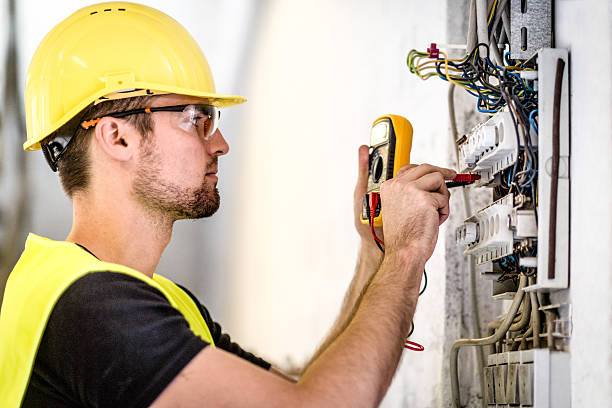
The work starts with measurement, not parts. A licensed electrician meters each phase to line and to neutral, reads the amperage, meaning the current in amps, on every leg under normal operating load, checks how far out of balance the panel is, inspects terminations for heat damage, and compares what is installed against the panel schedule, which is usually out of date. That tells you whether the answer is rebalancing circuits, adding a subpanel, replacing the panelboard, or working with the utility on the service.
From there the scope gets written against your building and your equipment nameplates, a permit is pulled from your municipality (Milwaukee, Wauwatosa, Waukesha and each other town issue their own), and the work is inspected against Wisconsin SPS 316, which adopts the 2023 NEC and has been in force since September 1, 2026. Under SPS 316, existing installations are generally not required to be brought up to the newly adopted edition unless they are altered, which is one reason a scope needs to be set carefully rather than guessed at.
Cost is the other question people ask, and it is the one nobody can answer honestly from a blog post. A three-pole breaker for an existing panel and a new 480 volt panelboard with utility coordination are different orders of magnitude. The variables are the voltage, the main rating, the number of circuits, whether the enclosure is surface or flush mounted, conductor lengths, and whether the service itself has capacity. That is why commercial work gets quoted from a site visit. Our commercial panelboard and circuit work covers panelboards, circuit additions and maintenance across Milwaukee and Waukesha County, and every quote starts with reading the actual panel.
Lehmann Electrical & Design is led by master electrician Jacob Lehmann and holds an A+ rating with the BBB and 4.9 stars on Google. Work is backed by a 12-month workmanship warranty.
If you have equipment on order and are not sure your panel can serve it, tell us what you are planning and we will take a look.
Why homeowners call Lehmann Electrical & Design
- Led by licensed master electrician Jacob Lehmann
- A+ rating with the BBB and 4.9 stars on Google
- 12-month workmanship warranty on the work we do
- Permits pulled and inspections scheduled as part of the job
- Milwaukee, Wauwatosa and Waukesha County, from 12012 W Fairview Ave, Wauwatosa
Planning equipment that needs three phase?
Send the panel nameplate, the main breaker rating and what you are installing.
Licensed master electrician. 12-month workmanship warranty.
Frequently asked questions
▾What is a three phase electrical panel in simple terms?
It is the breaker panel in a commercial building that receives three energized conductors from the utility instead of the one or two a house receives. Inside, three busbars distribute that power to branch circuits. It lets the building run three phase motors, which start more smoothly and run cooler than single phase motors of the same size.
▾What is a 3 phase breaker panel versus a panelboard?
In practice people use the terms interchangeably. Technically a panelboard is the internal assembly of busbars and breaker mounting hardware, and the panel is that assembly inside its enclosure with a dead front cover, the inner shield that leaves only breaker handles exposed. If someone says “3 phase panel board,” they mean the same thing as a three phase breaker panel.
▾How much is a three phase breaker or a three phase panel?
We do not publish prices, because the honest range is too wide to be useful. A three-pole breaker for an existing panel and a new 480Y/277 volt panelboard with utility coordination differ by orders of magnitude. Voltage, main rating, circuit count, mounting and conductor runs all move the number. A site visit produces a real figure; a web page produces a guess.
▾Can I add a breaker to my three phase panel myself?
No. Adding a breaker means removing the dead front cover and working beside three exposed busbars plus line-side lugs that stay energized even with the main breaker off. On a 480 volt panel the arc flash hazard is serious. It also needs a permit from your municipality and inspection against Wisconsin SPS 316, which adopts the 2023 NEC. Have a licensed electrician do it.
▾How do I know if my building has three phase power?
Read the panel nameplate, which lists voltage and phase. Three-pole breakers taking three adjacent spaces are another sign, as is any equipment labeled 208 V or 480 V three phase. If the nameplate is unreadable or the panel is old, an electrician can meter each leg and confirm it without you opening anything.
Next step
Get your service checked
Send the panel nameplate and what you are installing.
Licensed master electrician12-month warranty4.9 on Google
Milwaukee, Wauwatosa and Waukesha County. Prefer to talk? Call 414-207-0109