Licensed master electrician · Call 414-207-0109
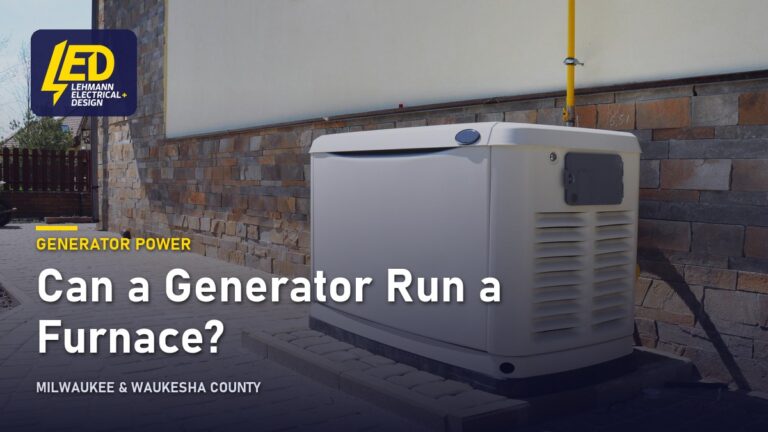
Yes. A generator can run a gas, propane or oil furnace, because those furnaces only need electricity for the blower, the draft or burner fan, the igniter and the controls. A portable generator of a few thousand watts can usually cover that. The catch is the connection: a hardwired furnace has to be fed through a transfer switch or a panel interlock, never an extension cord or a plug adapter. An electric furnace is a different case and needs a very large generator.
In a Wisconsin winter the furnace is the load that matters most during an outage. A refrigerator can wait a few hours; a house with no heat in January cannot. That is why “will my generator run the furnace” is usually the first question people ask once the lights go out, and why it is worth settling before the next storm rather than during it.
What a furnace actually draws
A gas or propane furnace draws far less power than people expect, because the fuel makes the heat and electricity only moves the air and runs the controls. The parts that need power are:
- The blower motor, which pushes warm air through the ducts. It is the largest electrical load in the furnace.
- The draft inducer fan, which vents combustion gases on most modern furnaces.
- The igniter, either a hot surface igniter or a spark, which runs briefly at the start of each cycle.
- The control board and thermostat circuit, which run continuously at a very small load.
- A condensate pump, on many high-efficiency furnaces that cannot drain by gravity.
An oil furnace adds a burner motor. A hot water boiler runs circulator pumps instead of a blower. Either way the electrical demand is modest and runs at 120 volts.
To find your furnace’s figure, look at its rating plate or installation manual, which lists the unit’s total amps or the blower’s full load amps. Multiply the amps by 120 to get approximate running watts. A rating plate showing 8 amps works out to roughly 960 watts.
Motors also draw a brief surge when they start, several times their running current for a moment. Older permanent split capacitor (PSC) blower motors surge more than the variable-speed (ECM) motors in many newer furnaces, which ramp up gently. A generator lists two figures, running watts and starting or surge watts, and the starting figure has to cover the blower kicking on while everything else connected is already running.
| Heating system | What needs power | What it means for a generator |
|---|---|---|
| Gas or propane furnace | Blower, draft fan, igniter, controls | Modest 120-volt load; a portable generator can carry it |
| Oil furnace | The above plus a burner motor | Similar to gas, slightly more |
| Hot water boiler | Circulator pumps, burner and controls | Modest 120-volt load |
| Electric furnace | Resistance heating elements at 240 volts | Many kilowatts; beyond portable generators |
| Heat pump | Compressor at 240 volts, plus electric backup heat | Large; usually a standby generator sized for it |
Can a 2,000-watt generator run a furnace? A small inverter generator may run a gas furnace by itself if the furnace’s running watts and blower start-up fit inside the generator’s ratings. It leaves almost nothing for the refrigerator, the sump pump or a few lights, so most households want more. Once you add those, it becomes a question of sizing a generator for the whole house rather than for the furnace alone.
Why the furnace’s control board cares about power quality
A modern furnace is run by electronics, and electronics are fussier about power than a light bulb. The control board, the variable-speed blower and the flame sensor all expect steady voltage and frequency, and some furnaces shut down on power that wanders.
Two things matter.
Clean, stable output. Inverter generators produce a steady, clean waveform that holds its voltage and frequency as loads switch on and off. Conventional open-frame generators vary more as the load changes. If your furnace manual says anything about generator power, the generator’s specification for clean power should meet it. A standby generator’s spec sheet states this as well.
A correct neutral and ground. A furnace proves its flame with a flame sensor that passes a tiny current, and that current depends on the furnace’s neutral being properly referenced to ground. Some furnaces also check that the hot and neutral are not reversed. Improvised cord connections are prone to getting both wrong, and the symptom is a furnace that lights, runs for a few seconds and shuts down. A properly installed inlet with a transfer switch or interlock connects the generator to the house’s own wiring, and the electrician matches the generator’s neutral arrangement to the transfer equipment, which decides both safety and whether the furnace will light.
> A generator can run a furnace when three things line up: enough starting watts for the blower, power clean enough for the furnace’s electronics, and a connection that feeds the furnace through the house wiring with the neutral and ground set up correctly. Miss the third and the generator can be big enough and still leave the house cold, because the furnace refuses to stay lit.
How a generator should connect to a furnace
A hardwired furnace should be fed from a generator through a transfer switch or a listed interlock on your main panel, with a weatherproof power inlet outside where the generator cord plugs in. Those are the arrangements that keep generator power inside your house and out of the utility lines.
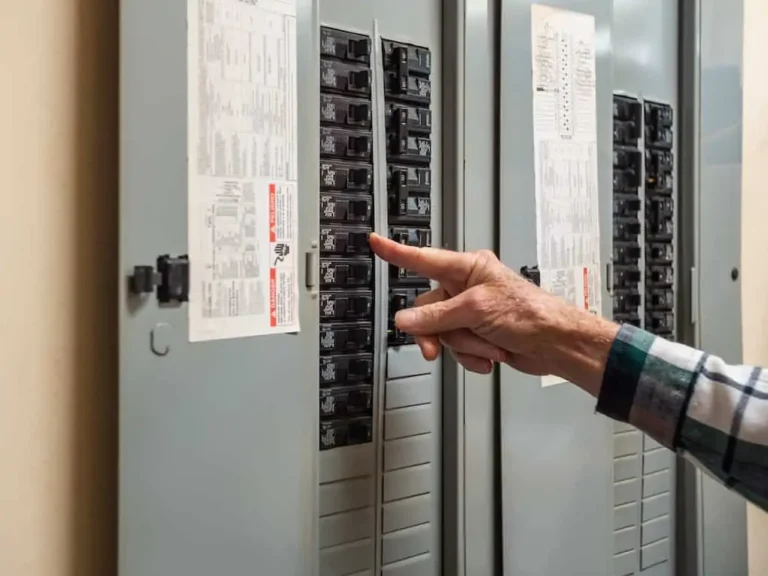
There are four sound ways to do it:
- Inlet and manual transfer switch. A small panel beside your main panel moves a chosen set of circuits, the furnace among them, from utility power to the generator.
- Inlet and panel interlock. A listed interlock kit on the main panel physically prevents the main breaker and the generator breaker from being on at the same time. Interlocks are made for specific panels, so the panel decides whether one is an option.
- Furnace-only transfer switch. A single-circuit switch beside the furnace lets one generator inlet feed only the furnace. It suits households that want heat and little else.
- Standby generator with an automatic transfer switch. The generator starts and takes over on its own when the power fails.
The choice between them, and what it takes to do each one properly, is covered in more depth in a transfer switch or interlock. Each involves work inside the main panel, needs a permit, and is a job for a licensed electrician.
Can you plug a furnace into a generator? Not by cutting the furnace’s hardwired connection and adding a plug. The furnace has to stay connected the way its listing and your inspector allow, and the clean version of “plugging the furnace in” is the furnace-only transfer switch above. Never backfeed the house through a dryer receptacle or any outlet with a cord that has plugs on both ends. It can energize the utility lines outside, putting line workers at risk, and it can overload wiring inside the house.
Where the generator sits matters as much as how it connects. Carbon monoxide from a running generator kills, and running one in a garage, basement or shed is never safe, even with the door open. A portable generator belongs outside, well away from windows, doors and vents, with its exhaust pointed away from the house, and working CO alarms belong inside. For a standby unit, the manufacturer’s clearances based on NFPA 37 call for at least 5 feet from openings in walls such as windows, doors and vents, according to Generac’s installation guidance. We cover placement in detail in where the generator sits.
If you smell burning or hot plastic at a generator inlet, cord or panel, or see scorch marks or discoloration, shut the generator down, stop using the circuit and call an electrician.
Portable, standby or battery: which fits
The right generator depends on how much of the house you want running in an outage and how much you want to do by hand at 2 a.m. in the cold.
| Type | Runs the furnace? | Trade-offs |
|---|---|---|
| Portable generator (gasoline, propane or dual fuel) | Yes, through an inlet and transfer switch or interlock | Manual start and refueling; must run outside, well away from the house |
| Inverter portable generator | Yes, with clean power for the furnace’s electronics | Quieter and steadier, but smaller output for the price |
| Standby generator (natural gas or propane) | Yes, automatically | Starts on its own; sized for the furnace and more; permanent installation |
| Battery generator (portable power station) | Yes, until its battery runs down | Quiet and emission-free, but runtime is set by its capacity |
Can a generator run a gas or propane furnace? Yes, and the fuel makes no difference to the generator. A propane furnace needs the same electricity as a natural gas furnace: blower, draft fan, igniter and controls.
Can a battery generator run a furnace? It can, if its inverter covers the blower’s start-up surge and its capacity lasts. The arithmetic is straightforward: a furnace that draws 600 watts while running and runs half of each hour averages 300 watts, so a 2,000 watt-hour unit would last under seven hours, less after its own conversion losses. It still needs the same proper connection as a fuel generator.
Can a generator run an electric furnace or a heat pump? Only a large one. Electric furnace elements and heat pump backup heat draw many kilowatts at 240 volts, more than a portable generator can sensibly carry. A standby generator can carry them if it is sized for that load, and some installations use load management to keep the backup heat from starting while other large loads run. For a starting point on size, our generator sizing calculator walks through the loads you want covered.
Want the furnace on generator power?
Send us your furnace rating plate and a photo of your panel, and we will tell you the connection it needs.
Licensed master electrician. 12-month workmanship warranty.
What decides the cost
What it costs to get a furnace onto generator power depends on the generator you choose and how it connects to the house, not on the furnace. We do not publish a figure, because the work ranges from one inlet and an interlock to a full standby installation.
| Factor | What it changes |
|---|---|
| Portable or standby | A standby unit adds a concrete pad, a fuel connection and an automatic transfer switch |
| Interlock, transfer switch or furnace-only switch | Different equipment and different work in or beside the panel |
| Your panel | Interlock kits fit specific panels; an older or full panel may need other arrangements |
| Inlet location | The distance from the inlet to the panel sets the length of the run |
| Generator size | Sized to the furnace alone or to the whole house |
| Fuel | A natural gas or propane connection for a standby unit is its own work |
| Permits and inspection | Required for transfer equipment and standby installations |
Whatever the setup, it starts with a list of what you want running when the power fails and a look at your panel. Generator installation is quoted from that list, the panel and where the generator can safely sit.
Want heat the next time the power goes out? Have your furnace’s rating plate details and a list of what else you want running, and request a quote or call 414-207-0109. We work across Milwaukee and Waukesha County.
Why homeowners call Lehmann Electrical & Design
- Led by licensed master electrician Jacob Lehmann
- A+ rating with the BBB and 4.9 stars on Google
- 12-month workmanship warranty on the work we do
- Permits pulled and inspections scheduled as part of the job
- Milwaukee, Wauwatosa and Waukesha County, from 12012 W Fairview Ave, Wauwatosa
Ready before the next outage?
We will set up the inlet, the transfer switch or interlock, and where the generator sits.
Licensed master electrician. 12-month workmanship warranty.
Frequently asked questions
▾Can a portable generator run a furnace?
Yes. A gas, propane or oil furnace needs electricity only for the blower, draft fan, igniter and controls, which a portable generator of a few thousand watts can carry. The furnace has to be connected through a generator inlet and a transfer switch or listed panel interlock, not an extension cord. The generator always runs outside, well away from windows, doors and vents.
▾How many watts does a generator need to run a furnace?
Start with the furnace’s rating plate. Multiply its amps by 120 for approximate running watts, so 8 amps is about 960 watts. The generator’s starting watts also have to cover the blower motor’s brief surge at start-up, on top of anything else already running. Add the refrigerator, sump pump and lights you want, and size the generator to the total.
▾Can a 2000W generator run a furnace?
Sometimes, on its own. If the furnace’s running watts and blower start-up fit inside a 2,000-watt generator’s ratings, it can keep the furnace going, preferably with an inverter generator for clean power. It leaves little or nothing for the refrigerator or sump pump, and the furnace still has to be connected through a transfer switch or interlock.
▾Can you plug a furnace into a generator?
Not by cutting the furnace’s hardwired connection and fitting a plug. The furnace has to stay connected the way its listing and your inspector allow. The safe equivalent is a furnace-only transfer switch, installed by an electrician, that lets a generator inlet feed the furnace. Never use a cord with plugs on both ends to backfeed through an outlet.
▾Can a generator run an electric furnace?
Only a large standby generator sized for it. Electric furnaces heat with resistance elements that draw many kilowatts at 240 volts, more than a portable generator can sensibly carry. A whole-house standby unit can carry one if it is sized for that load, often with load management so the heating elements and other large loads do not all start at once.
▾Can a battery generator run a furnace?
Yes, until its battery runs down. A portable power station can run a gas furnace if its inverter handles the blower’s start-up surge, and its runtime follows from its capacity: a 2,000 watt-hour unit feeding a furnace that averages 300 watts lasts under seven hours before conversion losses. It needs the same proper connection as any generator.
Next step
Get your generator hookup quoted
Tell us your furnace and your generator.
Licensed master electrician12‑month warranty4.9 on Google
Milwaukee, Wauwatosa and Waukesha County. Prefer to talk? Call 414-207-0109