Licensed master electrician · Call 414-207-0109
An electrical emergency is any situation where electricity is creating an immediate risk of fire, shock, or injury: smoke or a burning plastic smell from an outlet, switch, or panel; visible scorch marks or melted plastic; buzzing, crackling, or sizzling from a panel or receptacle; sparks; a downed or damaged service wire; water contacting wiring or a panel; or a shock from an appliance, faucet, or wall plate. These need the power off and a licensed electrician, not a wait-and-see.

Not every electrical problem is an emergency, and treating every flicker as one wastes money. The dividing line is simple: if electricity is producing heat, light, sound, or smell where it should not, or if a person has been or could be shocked, stop using it and treat it as an emergency. Everything else is a repair you can schedule.
Here is a practical sort:
| Situation | Treat it as | Safe first move |
|---|---|---|
| Burning or hot-plastic smell from a panel, outlet, or switch | Emergency | Turn off that circuit’s breaker, stop using it, call |
| Scorch marks, discoloration, or melted plastic on a device | Emergency | Leave breaker off, do not use the device |
| Buzzing, crackling, or sizzling from the panel or a receptacle | Emergency | Keep away from the panel, call |
| Sparks, arcing, or a visible flash | Emergency | Breaker off if you can reach it safely, call |
| Shock or tingle from an appliance, faucet, or switch plate | Emergency | Stop using it, breaker off, call |
| Water in or near a panel, or a flooded basement with outlets | Emergency | Do not enter standing water, call the utility and an electrician |
| Downed, sagging, or damaged overhead service wire | Emergency, utility first | Stay back, call the utility, then an electrician |
| Breaker trips once and resets cleanly | Normal | Note what was running, watch it |
| Breaker that trips again right after a reset | Urgent, not necessarily tonight | Leave it off, book a visit |
| Partial outage with no smell or noise, neighbors unaffected | Urgent | Call, usually next business day |
| One dead outlet, a GFCI that resets and holds | Routine | Schedule |
| Lights flickering across the whole house | Urgent | Call, this one escalates |
That last row is the one homeowners underrate. Whole-house flickering, lights that dim and brighten in step with each other, or 240-volt appliances misbehaving can point to a loose neutral in the service entrance, the point where the utility’s wires land at your house. It is not dramatic to look at and it can damage every electronic thing you own.
What is usually causing it
Behind most true electrical emergencies is one of a short list of physical failures.
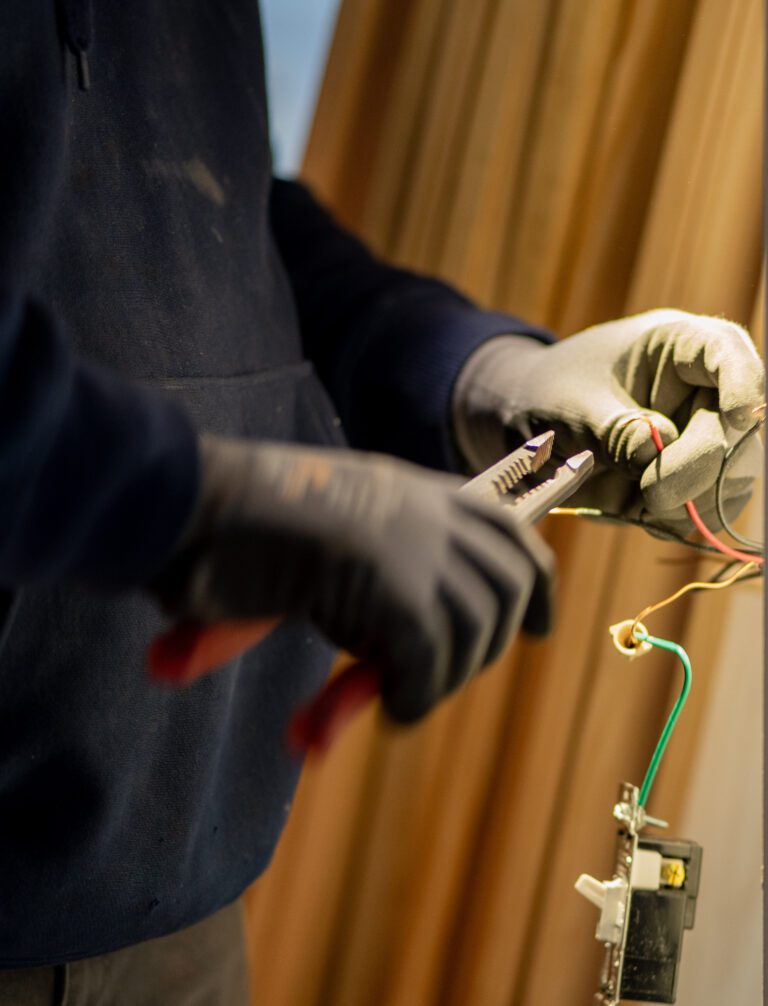
A loose or corroded connection. Electricity moving across a loose screw terminal or a corroded splice generates heat. Heat discolors plastic, then chars it, then ignites whatever is near it. This is why the smell matters more than the sight: insulation and thermoset plastics smell distinctly bad well before anything visibly burns.
A short circuit or ground fault. A short is two conductors touching where they should not, often because of a damaged cable, a nail or screw driven through drywall into wiring, or a rodent. A ground fault is current leaking out of the circuit to ground, including through a person or a damp surface. Most residential breakers are thermal-magnetic: a heat-sensitive strip handles sustained overloads, a magnetic coil handles the instant current surge of a short. A breaker that trips with nothing plugged in is far more likely a wiring fault than a tired breaker.
Water where it should not be. Water does not have to touch bare copper to cause a fault. Damp drywall, a wet concrete floor, or condensation inside a panel is enough path for current to leave the circuit.
An overloaded circuit, over and over. One trip on a hot August afternoon with a window unit and a hair dryer on the same run is just a breaker doing its job. The same circuit tripping weekly means the load has outgrown the wire. Breakers are sized so that a continuous load, meaning three hours or more at full current, takes up no more than 80 percent of the breaker’s rating, which is the same as saying the circuit is sized at 125 percent of that continuous load (NEC 210.20(A), unchanged in the 2023 NEC that Wisconsin now adopts). The answer to repeated overload is another circuit, never a bigger breaker. The breaker protects the wire behind the wall, and upsizing it removes the protection while the wire stays the same.
Aging or failing devices. Receptacles lose their grip, switches arc internally, and breakers can fail. Wisconsin houses with knob-and-tube or early cloth-insulated wiring have additional failure modes, and in homes that old the problem is usually systemic rather than one bad device. A licensed electrician’s diagnostic visit separates the two.
What is safe to check yourself, and what is not
Safe, with the power off or without touching anything:
- Smell. A burning, fishy, or hot-plastic odor near a panel or device is a stop signal. If you smell it, turn that circuit off if the panel is dry and accessible, stop using the circuit or device, leave the breaker off, and call an electrician.
- Look. Brown or yellow discoloration on a receptacle face, soot above a slot, a cracked or melted cover plate, a scorched breaker handle.
- Listen. Buzzing, crackling, or sizzling from the panel or an outlet means arcing. Do not open the cover to investigate.
- Check whether the outage is yours. If your neighbors are dark too, it is the utility.
- Reset a tripped breaker once: push it firmly all the way to OFF, then to ON. If it trips again, leave it off until an electrician has inspected the circuit.
- Reset a GFCI once. A GFCI, a ground-fault circuit interrupter, cuts power when a small amount of current leaks out of the circuit by any path, including through a person. If it will not hold after one reset, there is a real leakage fault or a failed device. A GFCI that keeps tripping is not “being sensitive,” it is reporting something.
Not safe, ever:
- Removing the panel cover. Turning the main breaker off does not make the panel safe. The service conductors feeding the panel and the line-side lugs of the main breaker stay energized with the main off. Only the utility can de-energize those, usually by pulling the meter, or a separate service disconnect ahead of the panel if one is fitted.
- Anything on the line side of the meter, or any overhead or underground service wire.
- Touching a device you suspect is faulting to judge how hot it is. Use smell, discoloration, and sound. A breaker running mildly warm under sustained load is normal, and you should not be putting a hand near the panel to find out.
- Entering standing water in a basement with energized outlets or a panel.
- Replacing a breaker, moving a circuit, or adding a circuit. That is permitted work, inspected by your municipality.
Not sure whether it can wait until morning?
A licensed electrician can tell you over the phone whether what you are describing needs someone tonight, and what to switch off in the meantime.
Licensed master electrician. 12-month workmanship warranty.
When it points to a bigger problem
Some emergencies are a single bad device. Others are a symptom.
Repeated nuisance tripping on one circuit usually means the load has grown. Repeated tripping on several circuits, or breakers that trip with their circuits unloaded, suggests a shared problem upstream. Whole-house flickering, lights that brighten when a large appliance shuts off, 120-volt devices failing in clusters, or a burning smell at the panel itself all point toward the service equipment rather than the branch wiring.
Two more patterns deserve a full investigation rather than a patch: a house where outlets have no ground and extension cords have become permanent, and a house that was partially rewired by a previous owner, where one room’s work looks nothing like the next room’s. Both tend to hide the original fault somewhere other than where the symptom appears. Jacob Lehmann is a licensed master electrician and that kind of whole-house tracing is what the license is for.
What an electrician does about it
An emergency electrician’s first job is to make the situation safe, which usually means isolating the faulty circuit rather than restoring it. From there the work is diagnostic: confirm what is energized, test for voltage and continuity, measure voltage drop and load, open suspect devices once the circuit is confirmed dead, and find where the heat or the leakage is actually originating. The repair follows the diagnosis, not the other way around.
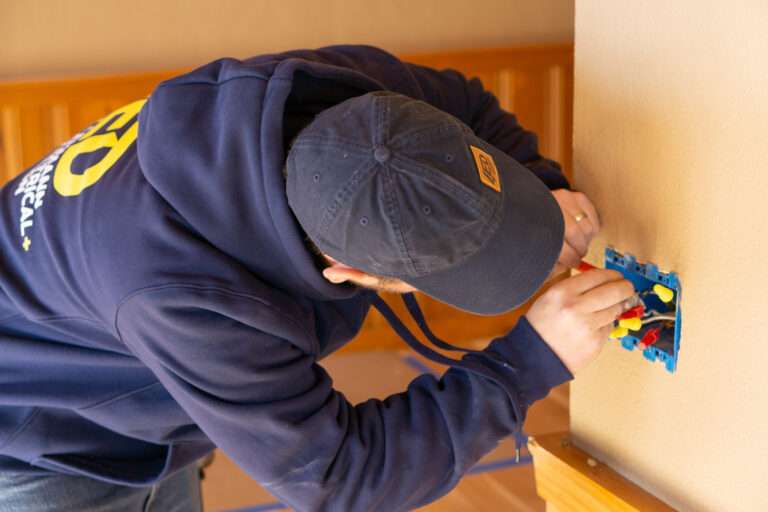
Most single-fault emergency calls are resolved in one visit, often inside a couple of hours. A failed receptacle, a burned-out breaker, a damaged cable in an accessible location, or a tripped and failed GFCI are same-visit repairs. What takes longer is tracing an intermittent fault, work inside finished walls, or anything that turns out to involve the service equipment, because that coordinates with your municipality’s permit and inspection process and sometimes with the utility. A temporary safe condition on the first visit and a scheduled return for the full repair is a normal and correct outcome, not a stall.
Work in Milwaukee and Waukesha County is permitted and inspected by your local municipality, which enforces Wisconsin SPS 316, the state’s electrical code, which adopts the 2023 NEC and has been in effect since September 1, 2026. Existing installations are not required to be brought up to the new edition unless they are altered, so a repair does not automatically trigger a whole-house upgrade. Lehmann Electrical & Design holds a 4.9-star rating on Google and an A+ rating with the BBB, and backs its workmanship with a 12-month warranty. Residential and commercial electrical work is handled across the area, alongside the solar and battery side of the business.
If you are looking at a scorched outlet, smelling something you cannot place, or watching your lights pulse, turn the circuit off and tell us what is happening or call 414-207-0109. Describing the smell, the sound, and which breakers are involved gets you a faster and more accurate answer than a generic service request.
Why homeowners call Lehmann Electrical & Design
- Led by licensed master electrician Jacob Lehmann
- A+ rating with the BBB and 4.9 stars on Google
- 12-month workmanship warranty on the work we do
- Permits pulled and inspections scheduled as part of the job
- Milwaukee, Wauwatosa and Waukesha County, from 12012 W Fairview Ave, Wauwatosa
Need someone now?
Tell us what you can smell, see or hear, and which part of the house it is coming from.
Licensed master electrician. 12-month workmanship warranty.
Frequently asked questions
▾What is considered an electrical emergency versus a repair?
An emergency involves immediate fire or shock risk: smoke, burning smell, scorch marks, sparks, buzzing or crackling, a shock from an appliance or fixture, water in a panel, or a damaged service wire. A repair is a dead outlet, a single breaker that trips under heavy load and resets cleanly, or a switch that has stopped working. Repairs can be scheduled. Emergencies need the circuit off now.
▾When should I call an emergency electrician instead of waiting?
Call immediately if you smell burning plastic, see scorching or melted plastic, hear buzzing or crackling from a panel or outlet, received a shock, or a breaker trips again right after one reset. Call the utility first for downed service wires or a neighborhood outage. Partial outages, whole-house flickering, and repeated tripping on multiple circuits warrant a call the same day even without smoke.
▾How long does an emergency electrician take?
Diagnosis is usually the bulk of the visit. A clear single fault, such as a burned receptacle or a failed breaker, is commonly found and repaired in one visit of a couple of hours. Intermittent faults, wiring inside finished walls, and anything involving the service equipment take longer, because they may require permit and inspection coordination with your municipality and sometimes the utility.
▾What do emergency electricians do on the call?
They make the situation safe first, usually by isolating the faulty circuit, then verify what is energized, test the circuit, inspect suspect devices once confirmed dead, and locate the source of the heat, arcing, or current leakage. Repair follows diagnosis. If a full repair cannot be completed safely that day, they leave the installation in a safe condition and schedule the remainder.
▾Can I just reset the breaker and keep going?
Reset it once. Push the handle firmly to OFF, then to ON. If it holds and nothing smells or sounds wrong, note what was running when it tripped. If it trips again, leave it off and have the circuit inspected. Never install a larger breaker to stop the tripping: the breaker is sized to protect the wire behind the wall, and a bigger one removes that protection.
Next step
Get it looked at
Tell us what you can smell, see or hear.
Licensed master electrician12‑month warranty4.9 on Google
Milwaukee, Wauwatosa and Waukesha County. Prefer to talk? Call 414-207-0109