Licensed master electrician · Call 414-207-0109
Painting a cover plate is fine. Painting it while it is still on the wall, or letting paint reach the outlet behind it, is where this goes wrong. The plate is a piece of trim. The receptacle behind it is a listed electrical device, and paint changes how it fits, how it grips a plug, and how much of its own labelling you can still read.

Yes, a cover plate can be painted, as long as it is off the wall when you do it and the device behind it stays clean.
The failure most people run into is not dramatic. It is a plate painted in place, which glues itself to the wall and to the screw heads, and a thin film of paint that has crept past the edge onto the face of the receptacle. Months later the plate cracks when someone tries to remove it, the screw heads are filled and round off, and the slots on the outlet have enough paint in them that a plug no longer seats properly.
A loose plug connection is the part that matters. A blade that does not sit firmly in the contact runs warmer than it should, and heat at a connection is the beginning of most outlet problems, including an outlet that gets hot to the touch.
What is usually causing it
Nearly every painted-outlet problem traces back to one of four decisions.
| What was done | What it causes |
|---|---|
| Plate painted while mounted | Plate bonds to wall and screws, cracks on removal, screw heads fill and strip |
| Spray paint used near a mounted plate | Overspray drifts through the slots onto the device face and into the contacts |
| Paint allowed onto the receptacle face | Slots narrow, plug grip weakens, listing marks and ratings become unreadable |
| Thick build-up behind the plate | Plate no longer seats flat, leaving a gap at the wall |
Spray paint is the worst version
Brushed paint sits where the brush puts it. Spray does not. Painting a wall or a plate with an aerosol anywhere near a mounted outlet puts a fine mist through the slots, and that mist lands on the contacts inside, not just the visible face. Paint is an insulator. Insulation on a contact surface is the opposite of what a connection needs.
Why the face of the device matters
A receptacle carries printed markings: its amperage and voltage rating, the testing laboratory’s mark, and whether it is tamper resistant. Those markings exist so that an electrician or an inspector can confirm the right device is in the right place. Paint over them and the device cannot be identified without pulling it out, which turns a two second visual check into a job.
The plate was never the problem
Cover plates are a trim item and are sold in the same finishes as the rest of a room. Replacing one is almost always a better outcome than painting one, because a new plate seats flat, the screws turn freely, and nothing has been added to the device behind it.
What is safe to check yourself, and what is not
Safe, and worth doing: looking at the plates in a room and noting which ones have paint across the seam, which screw heads are filled, and whether any plate sits proud of the wall rather than flat against it. Noticing that a plug feels loose in a particular outlet, or falls out under the weight of its own cord, is useful information and costs nothing to observe.
Not a homeowner job: anything behind the plate. The cover is the only part of an outlet assembly that is not electrical. Behind it sit the device terminals and the conductors feeding them, and switching off the obvious breaker is not the same as making them dead. Panel labelling is often wrong or out of date, and a box can hold conductors from more than one circuit, so a device can still be energised when the switch says otherwise. Confirming that is a test, not an assumption, and it is the reason this work belongs to a licensed electrician. Removing a painted device, cleaning contacts, replacing a receptacle or opening a box is work for a licensed electrician, carried out under a permit from the municipality where the work happens. In Milwaukee, Wauwatosa and across Waukesha County, that work falls under Wisconsin SPS 316, which adopts the 2023 NEC and took effect on September 1, 2026.
If an outlet is discoloured, scorched, buzzing, or smells of anything at all, paint is no longer the issue. Do not test it by touch. Stop using it, leave the breaker off, and have it looked at. If a breaker trips while you are working out what is going on, reset it once at most: firmly to OFF, then to ON. If it trips again, leave it off and have the circuit inspected. A breaker that trips with nothing drawing current is reporting a fault, not wearing out. A smell in particular is worth taking seriously, and an outlet that smells like fish describes why.
Plugs no longer holding in a painted outlet?
A licensed electrician checks whether paint has reached the contacts and replaces the devices that are past saving.
Licensed master electrician. 12-month workmanship warranty.
Outdoor outlets are a special case
Exterior receptacles sit in weatherproof covers, and those get painted along with the siding more often than anything indoors. Paint on a hinged in-use cover stops it closing properly, seals the drainage path at the bottom, and stiffens the gasket that keeps water out of the box. A cover that no longer shuts on its own is doing none of its job.
Outdoor devices are also specified differently from indoor ones, with weather resistance and tamper resistance both in play, and the markings that identify them are printed on the face that gets painted. If an outdoor outlet has been painted over, the cover is usually the part to replace first, and the device behind it is worth checking for water ingress at the same time.
When it points to a bigger problem
Most painted plates are a cosmetic nuisance and nothing more. A few are a clue about the house.
Paint across every plate in a room usually means the room was rolled quickly without removing trim, and the same shortcut was often taken elsewhere. It is worth a look at the smoke detectors, the vents and the thermostat in that room, because they are all commonly painted over in the same session, and a painted smoke detector is a genuine safety problem rather than a cosmetic one.
Layers of paint over many repaints also suggest an older house, and older houses carry older wiring. If plates have been painted four or five times, the devices behind them may be original. Receptacles wear out. The internal contacts lose tension with age and use, and a tired receptacle holds a plug loosely whether or not anyone has painted it.
The pattern that genuinely needs an electrician is a painted outlet that is also doing something: a plug that will not stay in, warmth at the plate, intermittent power to whatever is plugged in, or scorch marks at the slots. At that point the paint is incidental and electrical repair is the actual need.
What an electrician does about it
The visit starts with what is visible. An electrician looks at which devices are painted, whether paint has reached the contacts, and whether anything is warm, discoloured or loose. Plates come off, which is quick, and the condition of the device underneath decides the rest.
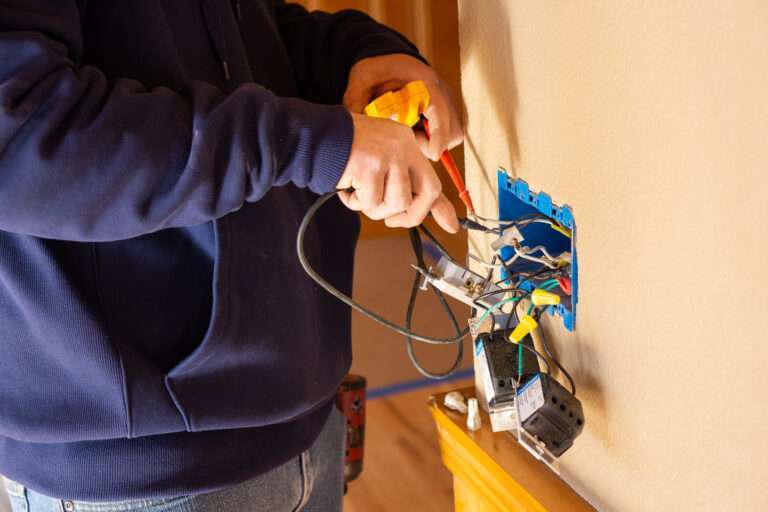
A painted device is replaced rather than cleaned. Solvent that removes paint from a receptacle also attacks the plastic it is bonded to, and a device that has been scrubbed back is no longer in the condition it was tested and listed in. Replacement is faster, cheaper in labour, and leaves a device whose markings can be read.
Where a receptacle is being replaced anyway, that is the moment to deal with anything else the box is hiding: back-stabbed connections that have loosened, a missing equipment ground on an older circuit, or a box that sits too deep behind a surface, which is what box extenders are made for. Where several devices in a room are involved, outlet installation usually gets handled in one visit rather than one at a time.
Lehmann Electrical & Design is led by master electrician Jacob Lehmann and works across Milwaukee, Wauwatosa and Waukesha County from 12012 W Fairview Ave, Wauwatosa. Work carries a 12-month workmanship warranty, and the company holds 4.9 stars on Google.
If a painted outlet in your home has started holding plugs loosely, or you would rather have the devices checked before repainting a room, you can request an estimate or call 414-207-0109.
Why homeowners call Lehmann Electrical & Design
- Led by licensed master electrician Jacob Lehmann
- A+ rating with the BBB and 4.9 stars on Google
- 12-month workmanship warranty on the work we do
- Permits pulled and inspections scheduled as part of the job
- Milwaukee, Wauwatosa and Waukesha County, from 12012 W Fairview Ave, Wauwatosa
Repainting a room soon?
Tell us how many outlets are involved and whether any of them run warm or hold plugs loosely.
Licensed master electrician. 12-month workmanship warranty.
Frequently asked questions
▾Is it OK to paint outlet covers?
Yes, with one condition: the plate should be off the wall. Painted flat on a drop sheet, left to cure fully, and refitted afterwards, a plate takes paint perfectly well. Painted in place, it bonds to the wall and the screws and becomes difficult to remove later, and paint reaches the device behind it.
▾Is it dangerous to paint outlet covers?
The plate itself is not dangerous to paint. What creates risk is paint on the receptacle: in the slots, on the contacts, or across the face. That interferes with how firmly a plug is held, and a loose plug connection runs warm. Paint also hides the markings that identify the device and can conceal early damage such as discolouration or cracking.
▾Is it safe to spray paint outlet covers?
Only off the wall, and ideally not at all near a mounted one. Aerosol paint drifts, and the mist travels through the slots onto the contacts inside the device rather than stopping at the visible surface. If a room is being sprayed, plates are better removed entirely and the openings masked.
▾Can you paint outlet covers with acrylic paint?
Acrylic will adhere to most plastic and metal plates, and it is the usual choice for matching a wall colour. The paint type matters far less than the two things that actually cause problems: whether the plate was removed first, and whether the paint was fully cured before the plate went back on. Paint that is still soft will stick the plate to the wall just as effectively as painting it in place.
▾Is it illegal to paint outlet covers?
Painting a cover plate is a decorating choice, not an electrical modification, and nothing stops a homeowner doing it. The picture changes once paint is on the device itself. A painted receptacle is no longer in the condition it was tested and listed in, and it is a normal finding for an electrician to replace it rather than pass it.
▾What should you paint outlet covers with?
Whatever suits the plate material and matches the wall, applied thinly and off the wall. Two thin coats hold up better than one thick one, because thickness is what stops a plate seating flat when it goes back. In practice, a replacement plate in the finish you want is usually a better result than paint, and it leaves nothing on the device behind it.
▾Is it safe to use outlet extenders?
Box extenders and spacers are manufactured products with a real purpose: bringing a device out to sit flush where the box ends up too deep behind a wall surface, which often happens after tile, panelling or a second layer of drywall goes on. Used as intended they are fine. What is not fine is stacking plates or packing a gap with improvised material to take up the distance, because that leaves the device unsupported and the opening unsealed.
Next step
Get the outlets checked
Tell us how many are painted and whether any hold plugs loosely.
Licensed master electrician12-month warranty4.9 on Google
Milwaukee, Wauwatosa and Waukesha County. Prefer to talk? Call 414-207-0109