Licensed master electrician · Call 414-207-0109
A breaker that will not stay on is usually doing its job. If the handle snaps back to the middle or to OFF the moment you release it, the fault that tripped it is still there: a short circuit, a ground fault, a genuine overload, or a failed breaker. A breaker that feels mushy and will not latch at all has often failed internally. Reset a tripped breaker once at most. If it will not hold, leave it off and have it diagnosed.
If you smell burning or hot plastic, see scorch marks or discoloration at the panel or an outlet, or hear buzzing or crackling, stop using that circuit or device, leave the breaker off, and call a licensed electrician. Do not touch the breaker, outlet or appliance to judge how hot it is.
A breaker has three positions, not two: ON, OFF, and tripped. Tripped sits partway between. To reset one properly you push the handle firmly all the way to OFF first, so the internal mechanism relatches, then move it to ON. Plenty of “my breaker won’t turn back on” calls are really “the handle was never pushed fully to OFF.”
Once you have done that, there are only a few possibilities:
- It goes to ON and immediately trips again. The fault is live and still on the circuit. Leave it off.
- It goes to ON and holds, then trips minutes or hours later. That points to a sustained overload or a heat-related fault.
- The handle feels loose, gritty or dead and never latches. The breaker itself has likely failed mechanically.
- It holds, but nothing on the circuit works. The breaker may have failed in a way that no longer passes current, or there is an open connection downstream.
One reset attempt is the limit. A breaker is a safety device with a defined trip curve, and repeatedly forcing it closed onto a short circuit stresses the breaker, the wiring and you.
What is usually causing it
Standard residential breakers are thermal-magnetic. Inside are two separate sensors: a heat-sensitive metal strip that responds to sustained current above the breaker’s rating, and a magnetic coil that responds instantly to the enormous current of a short circuit. Which one fired tells you a lot about what is wrong.
| What you observe | Likely cause | What it means |
|---|---|---|
| Trips instantly on reset, with nothing plugged in | Short circuit or ground fault in the wiring or a hardwired device | A live wiring fault. Diagnosis needed before anything is re-energized. |
| Trips instantly only when one appliance is plugged in | Failed appliance or cord | The circuit may be fine. The appliance is not. |
| Holds, then trips after 10 to 40 minutes of heavy use | Genuine overload on a circuit carrying too much | Needs load redistributed or a new circuit, never a bigger breaker. |
| Handle will not latch, feels dead or gritty | Mechanically failed breaker | Replacement by a licensed electrician. |
| GFCI or AFCI breaker trips and will not reset | Leakage fault, arcing fault, or a failed device | A real fault until proven otherwise. |
A few clarifications worth having straight:
Overload does not mean “the breaker is undersized.” Breakers are sized so a continuous load sits at or below 80% of the rating, which is the same as sizing the circuit at 125% of the continuous load. A 32 A appliance on a 40 A circuit is correctly matched and should not trip. Breakers trip above their rating, following their trip curve. So if a correctly matched load is tripping, something else is wrong.
The breaker protects the wire, not the appliance. Installing a larger breaker to stop the tripping removes the protection the wire was sized for and creates a fire risk. When a circuit is genuinely carrying more than it was built for, the answer is running a dedicated circuit for the heavy load, not a heavier breaker.
A GFCI that will not reset is not “being sensitive.” A Class A GFCI (UL 943) trips on 4 to 6 milliamps of current leaking away by any path, including through a person or through damp material. No metal contact is required. If it will not hold after one reset, there is real leakage somewhere or the device itself has failed. AFCI protection, which watches for the electrical signature of arcing, covers 120 V branch circuits in living areas rather than 240 V appliance circuits.
What is safe to check yourself, and what is not
Safe, with the panel cover left alone:
- Push the handle fully to OFF, then to ON. Once.
- Unplug everything on that circuit, then reset. If it holds with nothing plugged in, plug items back one at a time to find the culprit.
- Check whether the outlet is fed by a GFCI device elsewhere in the house. A garage, basement or exterior outlet often traces back to a GFCI receptacle in another room, and that device may be the one that tripped.
- Look and listen from a normal standing distance. Discoloration, scorch marks, a hot-plastic smell, buzzing or crackling are all reasons to stop and call.
Not safe, and not legal for a homeowner in most cases:
- Removing the panel cover. Behind it are energized busbars and terminals at full service voltage, with no insulation between you and them.
- Anything on the line side of the main breaker or on the service entrance conductors, the cables that carry utility power from the meter into your panel.
- Replacing a breaker, adding a circuit, or moving conductors. In Wisconsin this is permitted and inspected work, enforced by your local municipality under Wisconsin SPS 316, which adopts the 2023 NEC (in effect since September 1, 2026).
Here is the part that catches people out with the main breaker. Turning the main breaker OFF de-energizes the branch circuits, but the service conductors feeding the panel and the main breaker’s line-side lugs stay live. A homeowner cannot make them safe. Only the utility can, usually by pulling the meter, or a separate service disconnect ahead of the panel if one is fitted. So if your main breaker will not reset, there is no homeowner fix. That is a call, not a project.
Breaker still refusing to reset?
A licensed electrician isolates the circuit, traces the short or ground fault behind it and tests whether the breaker itself has failed.
Licensed master electrician. 12-month workmanship warranty.
When it points to a bigger problem
One circuit that trips once and resets cleanly is an event. Any of these patterns is a symptom of something structural:
- The main breaker trips or will not hold. This can be a failed main, a fault on the feeders, or a service genuinely loaded beyond what it can carry. It is not a reset-and-forget situation.
- Several different circuits trip in rotation, especially in summer or winter when heating and cooling run hard.
- Breakers trip with nothing unusual running, which more often means a wiring fault than a worn breaker.
- The panel is full, with no space to separate a heavy load onto its own circuit. That is where an upgraded service panel starts to come into the conversation, though only after the numbers are checked.
- Heat, smell or sound at the panel. Any of these means stop.
- Aluminum branch wiring, cloth-insulated wiring, or knob and tube anywhere in the circuit.
That last point about the numbers matters. Whether your service needs upgrading is decided by a load calculation, a documented tally of the connected loads in the house measured against the capacity of the service, not by how often a breaker trips. Tripping can equally mean one bad appliance, one loose connection, or one failed breaker on a service with plenty of headroom left. If you want a rough sense of where your house sits before anyone visits, a panel sizing estimator is a reasonable starting point, but it is not a substitute for the calculation.
What an electrician does about it
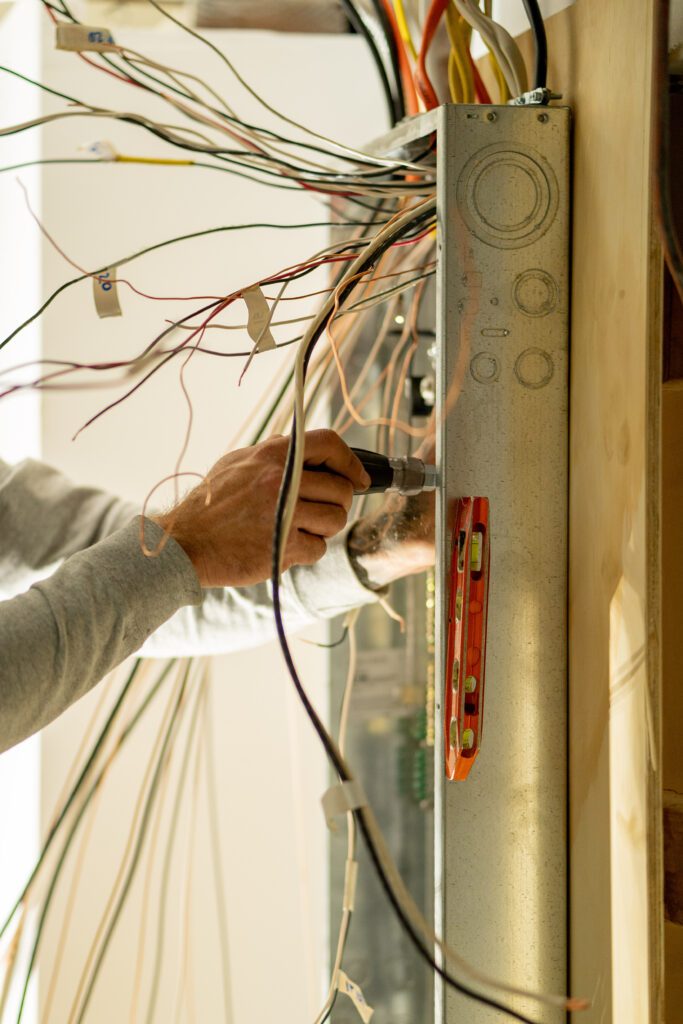
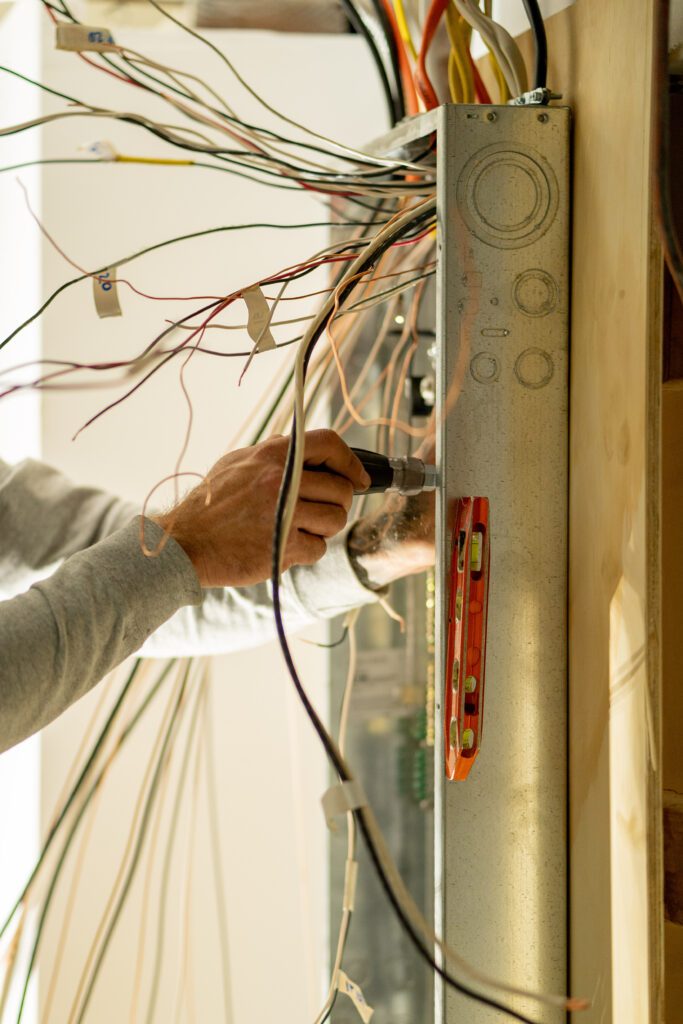
The work is diagnostic before it is anything else. On a breaker that will not reset, a licensed electrician typically:
- Confirms which circuit and which devices are involved, and whether the trip is thermal, magnetic, ground-fault or arc-fault in character.
- Isolates the circuit and tests the conductors for a short between conductors or a fault to ground, which separates a wiring problem from an appliance problem.
- Inspects terminations at the breaker, the neutral and ground bars, and the devices on the circuit for loose connections, heat damage and overheated insulation. Loose connections generate heat and can mimic other faults.
- Tests or replaces the breaker itself, matched to the panel it is listed for. A tandem breaker, which fits two circuits into one slot, is acceptable only where the panel is listed to accept one.
- Measures actual load on the circuit and, where the load is genuinely too much for it, recommends running a dedicated circuit rather than increasing breaker size.
- Performs a load calculation if the service itself is in question, and pulls the permit with your municipality for any work that requires one.
Jacob Lehmann is a master electrician, and Lehmann Electrical & Design holds a 4.9-star rating on Google and an A+ rating with the BBB. Work is covered by a 12-month workmanship warranty.
Why homeowners call Lehmann Electrical & Design
- Led by licensed master electrician Jacob Lehmann
- A+ rating with the BBB and 4.9 stars on Google
- 12-month workmanship warranty on the work we do
- Permits pulled and inspections scheduled as part of the job
- Milwaukee, Wauwatosa and Waukesha County, from 12012 W Fairview Ave, Wauwatosa
Ready to have it traced?
Tell us what the breaker feeds and what was running when it tripped.
Licensed master electrician. 12-month workmanship warranty.
Frequently asked questions
▾Why is my breaker not turning back on after I reset it?
Because the fault that tripped it is still present. A tripped handle sits between ON and OFF, so it has to be pushed firmly all the way to OFF before it will relatch, then moved to ON. If you have done that and it snaps back immediately, there is a live short circuit, ground fault or overload on the circuit. Leave it off and have it diagnosed rather than trying again.
▾Why will my main breaker not turn back on?
A main breaker that will not hold usually means the breaker has failed, there is a fault on the feeders, or the whole service is being loaded past its capacity. Unlike a branch circuit, there is nothing a homeowner can safely check: the service conductors and the main breaker’s line-side lugs remain energized even with the main off. Only the utility or a separate service disconnect can de-energize them.
▾Can a breaker itself go bad?
Yes. Breakers are mechanical devices and they wear, particularly after repeated trips or years of heat cycling. A handle that feels loose or gritty and will not latch, or a breaker that appears ON while the circuit is dead, both suggest internal failure. That said, a breaker tripping with nothing plugged in is more often a wiring fault than a worn breaker, so it should be tested rather than assumed.
▾How much does an electrical panel upgrade cost?
Cost depends on the service size, the condition of the existing service entrance, whether the meter or the utility connection has to be reworked, and your municipality’s permit and inspection requirements. Those variables move the number substantially, so a written figure only means something after someone has looked at your panel and run a load calculation. We are happy to quote one after a site visit.
▾Should I just put in a bigger breaker to stop the tripping?
No. The breaker is sized to protect the wire behind it, not the appliance in front of it. A larger breaker lets the conductors carry more current than they were sized for, and the failure mode is overheated insulation inside a wall. The correct fix for a genuinely overloaded circuit is a new dedicated circuit for the heavy load.
If a breaker in your home will not stay on, or your main breaker has tripped and will not reset, we can diagnose the cause and tell you whether it is a breaker, a circuit, or the service itself. Call 414-207-0109 or request an estimate and we will get a visit scheduled across Milwaukee and Waukesha County.
Next step
Get the circuit traced
Tell us what the breaker feeds and what was running when it went.
Licensed master electrician12-month warranty4.9 on Google
Milwaukee, Wauwatosa and Waukesha County. Prefer to talk? Call 414-207-0109