Licensed master electrician · Call 414-207-0109
A breaker that keeps popping, tripping or flipping off is doing its job: cutting power before a wire overheats. Repeated trips come down to one of four things: a circuit asked to carry more current than it was built for, a short circuit, a ground fault, or, less often, a worn breaker. A few causes are safe to investigate yourself. The rest need a licensed electrician before anyone opens the panel.
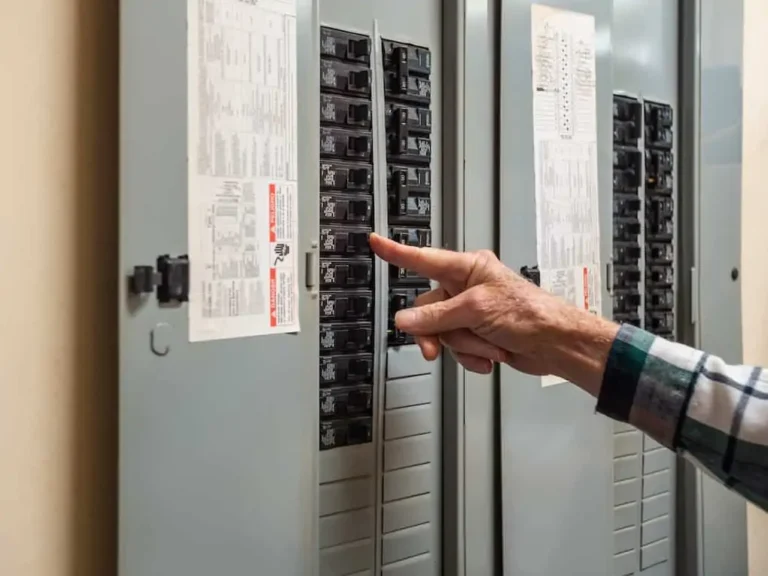
A breaker trips to protect the wire when the current goes over its rating or leaks where it should not. The usual causes are an overloaded circuit, a short circuit, a ground fault or, less often, a worn breaker. One trip is protection working. Repeated trips mean something is wrong.
- Reset a tripped breaker once only. If it trips again, leave it off.
- A burning smell, buzzing or scorch marks means stop using the circuit now.
- Trips with nothing plugged in usually point to the wiring, not the breaker.
- A breaker that trips across several circuits points at the panel, not one room.
If an outlet, switch plate or the panel smells hot, buzzes or shows scorch marks, stop using that circuit, leave the breaker off and call an electrician today.
What Usually Causes a Breaker to Keep Popping
An overloaded circuit. More devices are drawing current than the circuit was designed for. A 15-amp kitchen circuit running a microwave, a coffee maker and a toaster at once is a classic example. If the breaker trips the moment you add one more appliance, an overload is the first thing to rule out.
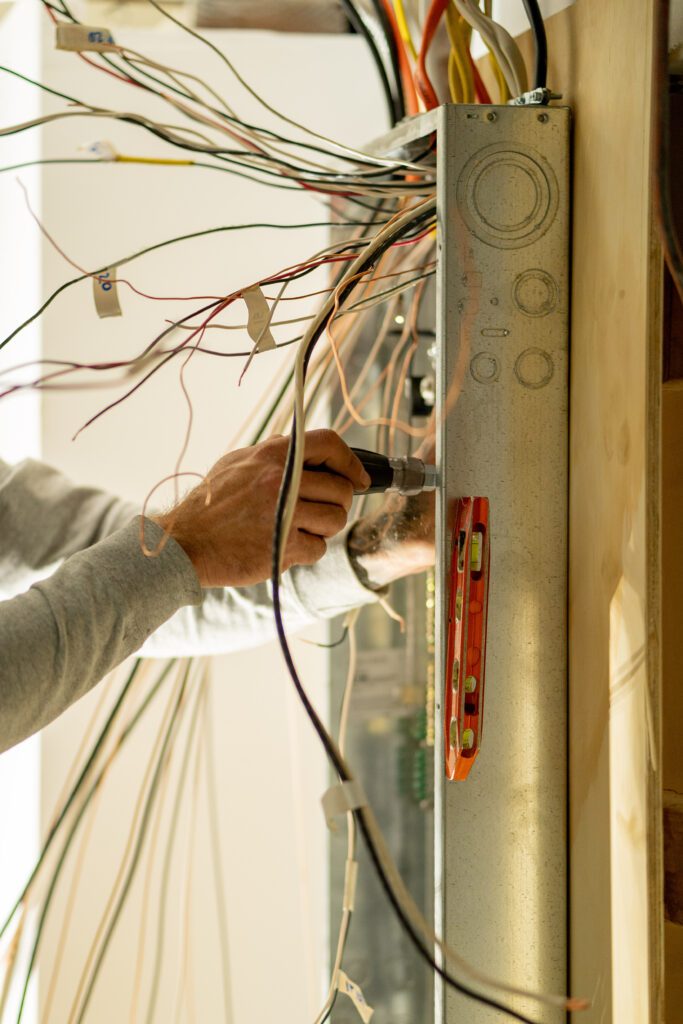
A short circuit. A hot wire (the wire carrying current) touches a neutral or ground wire, and current surges. The breaker trips instantly. Some shorts leave a burning smell or a scorched outlet; many leave no visible sign at all. A breaker that trips the instant you switch it back on is often reacting to a short.
A ground fault. Current leaks out of the circuit by any path it should not take: a damaged cable, damp material, a metal box or a person. No metal contact is needed. GFCI outlets (ground fault circuit interrupters, the ones with TEST and RESET buttons) trip at 4 to 6 milliamps of leakage, the UL 943 Class A range, far below what trips an ordinary breaker. One GFCI trip may be a real fault being cleared. A GFCI that keeps tripping always means a leakage fault on that circuit or a failed GFCI.
A worn breaker. Breakers are mechanical. An aged or heat-damaged breaker can trip below its rating. A breaker that trips with nothing plugged in, though, more often points to a wiring fault, such as a short or ground fault, than to the breaker itself.
| Symptom | Where to look first |
|---|---|
| Trips when you add one more appliance | Overloaded circuit |
| Trips the instant it is reset | Short circuit |
| Trips near water or damp areas | Ground fault |
| Trips with nothing plugged in | Wiring fault, less often a failing breaker |
| Trips in one room only | The circuit serving that room |
| Trips suddenly after years of no trouble | Worn breaker, new load or a developing fault |
Safe Checks for a Breaker That Keeps Popping
What you can check:
- Unplug everything on the tripping circuit, then reset the breaker once: push it firmly to OFF, then back to ON. If it trips again with nothing plugged in, leave it off and call an electrician; that points to a wiring fault.
- If it holds, plug devices back in one at a time. If it trips when one appliance goes back on, that appliance or the total load is the cause. Leave the breaker off and stop using that appliance on that circuit.
- Add up the watts on the circuit and divide by 120 to get approximate amps. Work out what is on the circuit from what lost power when it tripped, and treat the total as a rough guide. Anything that runs for hours should stay at or under 80 percent of the breaker’s rating: 12 amps on a 15-amp circuit, 16 amps on a 20-amp circuit. A load within that limit should not trip a healthy breaker.
- Look at outlets and switch plates on the circuit for discoloration, scorch marks or a burning smell. If you find any, or hear buzzing or crackling, stop using the circuit, leave the breaker off and call an electrician.
- Press RESET once on any GFCI outlet on that circuit. A tripped GFCI cuts power to everything downstream of it, which can look like a breaker trip. If it will not reset or trips again, leave it and call an electrician.
What you should not attempt:
Do not remove the panel cover. Even with the main breaker off, the service conductors and the main breaker’s line-side connections stay energized, and a homeowner has no way to switch them off. Only the utility can, usually by pulling the meter.
Do not keep resetting a breaker that keeps tripping. Forcing it back on can overheat the wiring it is there to protect.
Still tripping with nothing plugged in?
A licensed electrician measures the actual current on the circuit, checks every connection from the panel outwards, and tests whether the breaker itself is still doing its job.
Licensed master electrician. 12-month workmanship warranty.
When a Breaker Box Keeps Tripping: Signs of a Bigger Problem
Sometimes tripping is not a one-circuit issue but a symptom of a panel or service problem.
The panel has run out of capacity. Older homes in Milwaukee and Wauwatosa were often built with 60-amp or 100-amp service, long before home offices, chest freezers and window air conditioners. Breakers tripping across several circuits, or a panel packed with tandem (twin) breakers to find room, point to a panel that has outgrown the house, the usual reason for a panel upgrade. Tandems are fine where the panel is listed for them.
Loose or corroded connections. A loose connection at a terminal or junction box adds resistance and heats up under load. Often it trips nothing at all: it quietly overheats, arcs and chars the terminal, which is exactly what makes it dangerous (see the NFPA’s electrical safety guidance). AFCI breakers (arc fault circuit interrupters) detect arcing on a circuit’s wiring and cords, so an AFCI that keeps tripping may be catching a fault a standard breaker would miss. A loose terminal inside the panel is outside what an AFCI can see.
Aging wiring. Aluminum branch-circuit wiring from the late 1960s and early 1970s is prone to creep (the metal slowly deforms under a terminal screw) and oxidation, so its connections need devices rated for aluminum. Knob-and-tube wiring in older Milwaukee-area homes has no ground conductor and was not designed for modern loads.
If breakers trip across the house, or on circuits that should not be overloaded, an electrical inspection of the panel is the right starting point, and worth an electrician’s visit rather than another reset.
What an Electrician Does About a Breaker That Keeps Popping
When master electrician Jacob Lehmann or a member of the Lehmann team takes on an electrical repair like a tripping breaker, the first job is finding the actual cause rather than defaulting to a replacement.

A licensed electrician will:
- With the panel cover off, which is electrician-only work, measure the actual current on the tripping circuit with a clamp meter.
- Inspect the breaker for heat damage, loose terminals or a weakened mechanism, and swap in a known-good breaker if needed to confirm.
- Check connections at the panel, outlets and fixtures on that circuit for looseness, corrosion or signs of arcing.
- Decide on a breaker replacement, a new circuit or a panel upgrade based on measurements and a load calculation, not assumptions.
If the issue is an overloaded circuit, adding a dedicated circuit is often the right fix rather than a panel upgrade.
A panel upgrade involves the service conductors and the utility connection, so it needs utility coordination and a municipal permit under Wisconsin SPS 316, which adopts the 2023 NEC (in effect since September 1, 2026).
Why homeowners call Lehmann Electrical & Design
- Led by licensed master electrician Jacob Lehmann
- A+ rating with the BBB and 4.9 stars on Google
- 12-month workmanship warranty on the work we do
- Permits pulled and inspections scheduled as part of the job
- Milwaukee, Wauwatosa and Waukesha County, from 12012 W Fairview Ave, Wauwatosa
Ready to have it looked at?
Send which breaker it is, what was running when it tripped and whether it trips with nothing plugged in. The electrician arrives knowing what to test.
Licensed master electrician. 12-month workmanship warranty.
Frequently Asked Questions
▾Why does my breaker keep tripping with nothing plugged in?
With no load on the circuit, the likely cause is a wiring fault, such as a short or ground fault in the wiring itself, or a loose connection. A failing breaker is possible but is the last suspect. Leave the breaker off after one reset and have an electrician test the wiring first, then the breaker.
▾Why does my breaker keep tripping in one room?
Tripping limited to one room points to the circuit serving it: too many appliances on that circuit, a faulty outlet or fixture creating a short or ground fault, or a loose connection. Unplugging devices and checking outlets for discoloration are reasonable first steps before calling an electrician.
▾Why does my breaker keep tripping all of a sudden?
A breaker that was fine for years and starts tripping with no change in how you use the circuit may be weakening, or a loose connection or early arcing may be developing. A new appliance elsewhere in the home can also push the load higher. Sudden changes deserve an electrician’s evaluation, not repeated resets.
▾Why does my breaker keep tripping when I plug something in?
Try the device on a different circuit. If it trips there too, the device may be faulty or drawing more than its rating. If only the original circuit trips, that circuit is already near its limit, and a dedicated circuit for the appliance is usually the proper fix.
▾Why do my breakers trip so easily now?
Breakers can wear with age, humidity and heat cycling. If an electrician’s measurements show one tripping below its rating, it needs replacing, but a new load or a developing wiring fault can look the same, so have the circuit measured before anything is replaced.
▾Why do my breakers keep blowing?
People often say a breaker “blows” when it trips. If your home has a fuse box, as many older Milwaukee-area homes still do, a blown fuse must be replaced with one of the same amp rating, never larger. A larger fuse lets the wire overheat before anything cuts the power, which is a serious fire risk.
▾Why does my main breaker keep tripping?
When the main breaker trips and the whole house goes dark, the cause is upstream of any single circuit: the total load on your service, a failing main breaker or a fault at the service itself. Reset it once only if there is no burning smell, buzzing or scorching. If it trips again, leave it off and call a licensed electrician.
Next step
Tell us which breaker keeps popping
Send which circuit it is, what was running when it tripped and whether it trips with nothing plugged in. The electrician arrives knowing what to test.
Licensed master electrician12-month warranty4.9 on Google
Milwaukee, Wauwatosa and Waukesha County. Prefer to talk? Call 414-207-0109