Licensed master electrician · Call 414-207-0109

A panel upgrade rarely shows up as a line-item boost on an appraisal, but it does protect value in two concrete ways: it removes a defect that buyers, inspectors and insurers flag, and it makes the house capable of running modern loads. Homes with a 60 or 100 amp service, a fuse box, or a panel brand with known defects tend to draw repair requests and price concessions during negotiation. Replacing it closes that gap.
That is the honest answer. A new panel is not a kitchen remodel. It will not add a room or change how a house photographs. What it does is stop a buyer’s inspector from writing a paragraph that costs you more at the closing table than the work would have cost up front. If you are considering selling in the next few years, or you have already been told the service is undersized, the question worth asking is not “what does this add” but “what does leaving it alone subtract.”
What the job actually involves
An electrical panel upgrade means replacing the main breaker panel, and usually the service entrance equipment feeding it, with a larger-capacity assembly. “Service entrance” is the path power takes from the utility’s lines to your panel: the overhead or underground conductors, the meter socket, and the main disconnect. “Amperage” is the amount of current the service can carry at once, so a 100 amp service can deliver roughly half of what a 200 amp service can.
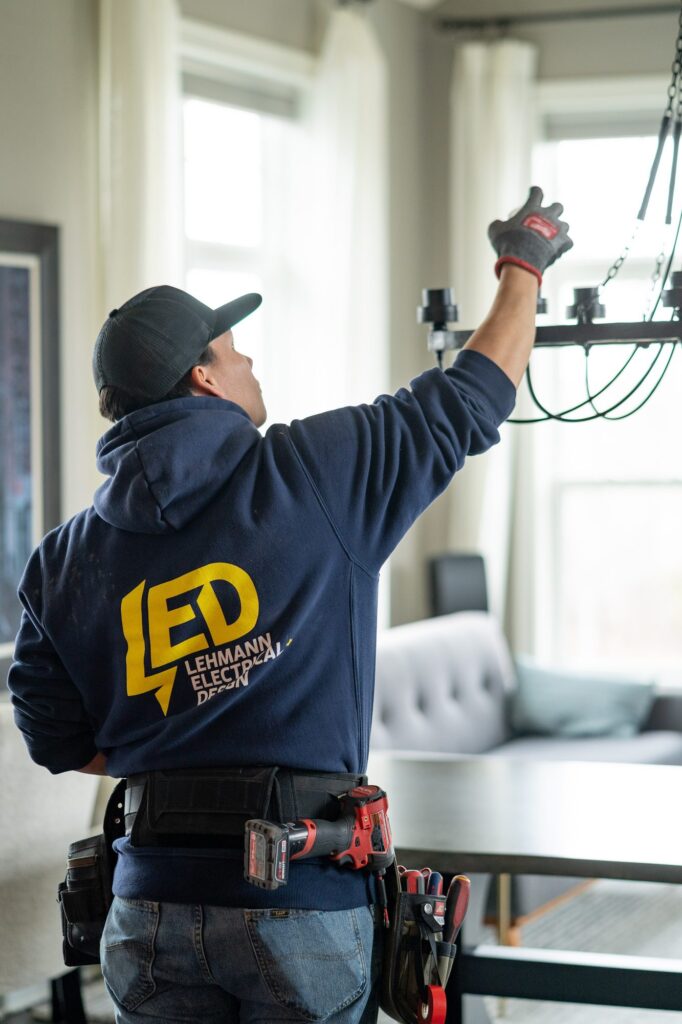
A typical residential job includes:
- Removing the old panel and, in many cases, the meter socket and service conductors
- Installing a new panel with more breaker spaces and a higher main breaker rating
- Re-landing every existing branch circuit on new breakers, including arc-fault and ground-fault types where the current code edition calls for them
- Bonding and grounding the new equipment, which often means new grounding electrode conductors and ground rods
- Coordinating a utility disconnect and reconnect with We Energies or the local provider
- Labeling the new directory accurately
Two terms worth defining now, because they appear on nearly every modern panel. An AFCI breaker (arc-fault circuit interrupter) watches for the electrical signature of arcing, the kind that starts fires inside walls, and applies to 120 volt branch circuits in living areas. A GFCI (ground-fault circuit interrupter) trips when a small amount of current leaks out of the circuit by any path, including through a person or damp material. No metal contact is needed for a GFCI to save someone.
This is not homeowner work, and not for the usual reason. Turning the main breaker off does not make the panel safe. With the main off, the service conductors feeding it and the line-side lugs on the main breaker itself stay fully energized. A homeowner cannot de-energize them. Only the utility can, usually by pulling the meter, or a separate service disconnect ahead of the panel if one is fitted. That is the whole reason this job is permitted, inspected, and performed by licensed electricians.
If you want to see what a complete service replacement covers before you call anyone, our overview of residential panel upgrades walks through scope in plain language.
How to tell if you need it
You cannot tell from symptoms alone. A load calculation decides it. That is a formal worksheet an electrician completes using the square footage of the house, the fixed appliances, the heating and cooling equipment, and the circuits already in place. It produces a number in amps, and that number is compared against the service rating. Tripping breakers and dim lights are clues worth investigating, not proof of an undersized service.
That said, some conditions reliably point toward a calculation being worth doing:
| What you have | What it usually means |
|---|---|
| 60 amp service, often with a fuse box | Well below what a modern house needs; frequently flagged in sales and by insurers |
| 100 amp service, all breaker spaces full | Capacity and space are both constraints; a calculation decides which matters |
| 100 amp service with room to spare | May be adequate depending on heating type and appliances |
| 150 or 200 amp service, panel physically full | Capacity may be fine; a subpanel can sometimes solve it |
| Fuses rather than breakers | Dated equipment, no AFCI or GFCI capability at the panel |
| Known-defective panel brands | A replacement recommendation, independent of amperage |
Warning signs that call for a service call regardless of amperage: a burning or hot-plastic smell near the panel, scorch marks or discoloration on the cover or breakers, buzzing, or crackling. If you notice any of those, stop using the affected circuit or device, leave the breaker off, and call an electrician. Do not reach toward the panel to judge temperature. Smell, sight and sound tell you what you need to know.
On breakers themselves: reset a tripped breaker once at most. Push it firmly to OFF, then back to ON. If it trips again, leave it off until an electrician has looked at it. Never fit a larger breaker to stop nuisance tripping. The breaker protects the wire behind it, and a bigger breaker on the same wire removes that protection. The fix for a genuinely overloaded circuit is another circuit, not a bigger device.
One sizing rule explains a lot of what homeowners find confusing. A continuous load, meaning three hours or more at maximum current, may occupy no more than 80 percent of a breaker’s rating. NEC 210.20(A) frames it the other way around: the overcurrent device must be rated at no less than the noncontinuous load plus 125 percent of the continuous load. A correctly paired load does not trip. A 32 amp continuous load on a 40 amp breaker is correct and should hold indefinitely. Breakers trip above their rating, following a time-current curve, not at it.
If you want a rough sense of where your house sits before booking anything, our panel load estimating tool gives you a starting figure to bring to the conversation. It is not a substitute for a field load calculation, but it tells you whether you are in the neighborhood.
What decides the price
We cannot publish a price figure here, and any contractor quoting one before seeing the service entrance is guessing. What we can do is tell you honestly which variables move a panel upgrade quote, so you can read competing bids and understand why they differ.
The main drivers:
Overhead versus underground service. An underground lateral that needs replacing is a trenching job on top of an electrical job. Overhead is usually simpler.
Whether the meter socket and service conductors are being replaced. Replacing only the panel is a smaller scope than a full service replacement. Many 60 and 100 amp services need the whole path replaced, not just the box.
Panel location. A panel in an unfinished basement near the meter is straightforward. A panel in a finished room, a closet, or on an interior wall far from the meter adds conduit, wall work and sometimes a relocation.
Target amperage. Going to 200 amps is the common residential answer. Going higher means heavier conductors and, occasionally, utility-side coordination.
Circuit count and breaker types. Every circuit gets re-landed. Where the adopted code edition calls for AFCI or GFCI breakers on a given circuit, those breakers cost more than standard ones, and a panel with 30 circuits carries more of them than a panel with 16.
Grounding and bonding condition. Older homes frequently need new ground rods and a new grounding electrode conductor, plus bonding of water and gas piping.
Aluminum branch wiring, knob and tube, or cloth-insulated conductors discovered during the work. These do not always have to be addressed to complete the upgrade, but they change what the electrician can safely re-land.
Utility scheduling and any temporary power. Some jobs need a coordinated disconnect window.
On the question people search for most, “how much does an electrical panel upgrade cost,” the only truthful answer from a contractor who has not seen your house is a range, and ranges published online vary so widely that they are close to useless for budgeting. Get two or three written quotes from licensed electricians who have physically looked at your meter, your panel and your grounding. Compare scope line by line, not bottom-line numbers. A bid that is substantially lower is usually a smaller scope, not a better deal.
A note on a related question that comes up often: how much a solar array adds to home value is a different calculation entirely, driven by system size, ownership versus lease, and local utility rates. It has nothing to do with whether your service panel is adequate, and it belongs in a separate conversation.
How long it takes and what is disrupted
Most straightforward residential panel replacements are a one-day job, with the house without power for a portion of that day. A full service upgrade that includes the meter socket and service conductors commonly runs one to two days. Jobs involving a relocated panel, an underground lateral, or significant grounding and branch-circuit remediation run longer.
Here is what a typical day looks like from inside the house:
| Phase | Roughly how long | Power status |
|---|---|---|
| Setup, protection, old panel documentation | 1 to 2 hours | On |
| Utility disconnect | Scheduled window | Off |
| Remove old equipment, set new panel and meter socket | 2 to 4 hours | Off |
| Re-land and terminate branch circuits | 2 to 4 hours | Off |
| Grounding, bonding, labeling | 1 to 2 hours | Off |
| Utility reconnect and energize | Scheduled window | Restored |
| Inspection | Separate visit, often days later | On |
Plan for the refrigerator and freezer. Keep the doors shut and they will generally hold for a working day, but if you have a deep freezer full of food, move the critical items to a cooler. If anyone in the house depends on powered medical equipment, say so when you book, because that changes how the day is sequenced. Sump pumps matter in a Wisconsin spring: if rain is forecast, mention it.
Noise and mess are modest compared with most renovation work. There is drilling, some conduit cutting, and often a small amount of drywall or sheathing work where new conduit penetrates. A good crew sheets the area and cleans up. Nobody needs to move out.
Weighing a panel upgrade before you sell?
A licensed electrician tells you what the existing service can carry and what an inspection is likely to flag, which decides whether the work is worth doing now.
Licensed master electrician. 12-month workmanship warranty.
Permits and inspection
A panel upgrade requires a permit, and the permit comes from your municipality, not from the state. Milwaukee, Wauwatosa, Waukesha, Brookfield, New Berlin and every other community in the service area issue their own electrical permits and send their own inspector. What they all enforce is the same statewide standard: Wisconsin SPS 316, which adopts the 2023 NEC and has been in effect since September 1, 2026. Work permitted before that date was reviewed under the 2017 NEC. Wisconsin skipped the 2020 cycle entirely.
> A new panel installed today is inspected against the 2023 NEC as adopted by Wisconsin SPS 316. Existing installations elsewhere in the house are not automatically required to be brought up to that edition, but circuits that are altered or extended as part of the work generally are. That distinction is the single biggest reason two quotes for “the same job” can describe different amounts of work.
The permit matters for resale specifically. An unpermitted panel replacement is a title and disclosure problem, not just a code problem. Buyers’ agents ask for permit records. Appraisers and insurers sometimes do. A properly permitted and inspected upgrade with a signed-off inspection card is documentation you hand a buyer. An unpermitted one is a question you have to answer.
Your electrician should pull the permit, schedule the inspection, be present for it, and give you the final paperwork. If a contractor suggests skipping the permit or asks you to pull it as the homeowner so the work is in your name, treat that as disqualifying.
Choosing an electrician
Look for three things: a Wisconsin license, a written scope you can read, and a willingness to do the load calculation before quoting a panel size. A contractor who tells you “you need 200 amps” within ninety seconds of walking into the basement has not calculated anything.
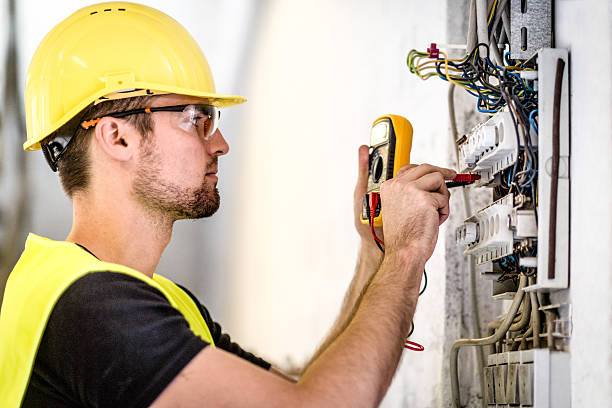
Questions worth asking on the estimate visit:
- whether the permit is pulled by the contractor, and who attends the inspection
- whether the meter socket and service conductors are included, or the panel only
- how many AFCI and GFCI breakers are in the quote, and why those circuits
- what happens if knob and tube or aluminum branch wiring turns up once the walls are open
- Who coordinates with the utility, and what disconnect window did they give you?
- What does your workmanship warranty cover, and for how long?
Lehmann Electrical & Design is led by master electrician Jacob W. Lehmann and works out of Wauwatosa, serving Milwaukee and Waukesha County. The company holds an A+ rating with the BBB and 4.9 stars on Google, and backs its work with a 12-month workmanship warranty. Homeowners in Waukesha County can read how service and panel replacement typically goes in that part of the area.
One last piece of plain advice. If you are upgrading purely as a resale play and the current service genuinely passes a load calculation and shows no defects, the money is probably better spent elsewhere. If the service is 60 or 100 amps, fused, defect-flagged, or physically out of room, do the work, pull the permit, keep the paperwork, and stop paying for it in negotiation.
Why homeowners call Lehmann Electrical & Design
- Led by licensed master electrician Jacob Lehmann
- A+ rating with the BBB and 4.9 stars on Google
- 12-month workmanship warranty on the work we do
- Permits pulled and inspections scheduled as part of the job
- Milwaukee, Wauwatosa and Waukesha County, from 12012 W Fairview Ave, Wauwatosa
Want a straight assessment?
Tell us the age of the house, the amp rating on the panel, and whether you are selling or staying.
Licensed master electrician. 12-month workmanship warranty.
Frequently asked questions
▾Does upgrading your electrical panel increase house value?
It protects value more reliably than it adds it. Appraisers rarely assign a separate dollar amount to a service panel, but inspectors, insurers and buyers’ agents all flag undersized or defective panels, and those flags turn into repair demands or price reductions. Replacing an inadequate service removes a negotiating lever from the buyer and lets the house serve modern loads. That is a real financial outcome, just not an appraisal line item.
▾What does an electrical panel upgrade mean, exactly?
It means replacing the main breaker panel, and usually the service entrance equipment feeding it, with higher-capacity equipment. In practice that often covers the service conductors, the meter socket, the main disconnect, the panel itself, new grounding and bonding, and every existing branch circuit re-landed on new breakers. A panel swap that reuses the old service conductors is a narrower job, and the two should never be quoted as if they are equivalent.
▾How long does an electrical panel replacement take?
Most straightforward residential replacements finish in a single working day, with the power off for several hours of it. A full service upgrade including the meter socket and service conductors typically runs one to two days. Relocating the panel, replacing an underground lateral, or remediating old branch wiring extends that. The inspection is usually a separate visit a few days later, and the house stays powered in the meantime.
▾Can I just add a subpanel instead of upgrading the service?
Sometimes. If the load calculation shows the existing service has capacity and the problem is purely a shortage of breaker spaces, a subpanel fed from the existing panel can be a legitimate and less invasive solution. If the calculation shows the service itself is undersized, a subpanel adds spaces without adding capacity and solves nothing. The calculation decides which situation you are in, which is why it comes first.
▾Will my insurer care about my panel?
Some carriers ask about service amperage, fuse boxes and specific panel brands at underwriting or renewal, and a few decline or surcharge older services. Policies vary, so check with your own carrier rather than assuming. If an insurer has already asked you about your panel in writing, bring that letter to the estimate. It often clarifies exactly what needs to change.
Get a load calculation and a written quote. If your panel is fused, full, or already flagged by an inspector or insurer, have it assessed properly before you guess at a number. Request an estimate for a panel upgrade and we will look at the service entrance, run the calculation, and put the scope in writing. Or call 414-207-0109.
Next step
Get the panel assessed
Tell us the age of the house and the amp rating on the panel.
Licensed master electrician12-month warranty4.9 on Google
Milwaukee, Wauwatosa and Waukesha County. Prefer to talk? Call 414-207-0109