
Looking to switch to solar but wondering about the real costs? You’re not alone. With electricity bills climbing and the 30% federal tax credit still available, more homeowners are asking the same question: exactly how much do solar panels cost to install?
The short answer? Most homeowners spend between $18,000 and $32,000 for a complete solar panel installation before incentives. After the federal tax credit, you’re looking at $12,600 to $22,400. But here’s what really matters – the specific cost for your home depends on several key factors we’ll break down in this guide.
Average cost to install solar panels
Right now, the average cost of solar panels ranges from $2.50 to $4.20 per watt installed. For a typical 7kW system that covers most homes’ electricity needs, expect to pay around $21,000 before any rebates or tax credits.
Here’s how solar panel installation costs break down by system size:
- 5kW system: $12,500 – $21,000 (perfect for smaller homes)
- 7kW system: $17,500 – $29,400 (ideal for average households)
- 10kW system: $25,000 – $42,000 (great for larger homes with high usage)
- 12kW system: $30,000 – $50,400 (suitable for big families or electric vehicle owners)
The price difference comes down to where you live, your roof’s complexity, and which installer you choose. States like California and New York typically see higher installation costs, while Texas and Florida offer more competitive pricing.
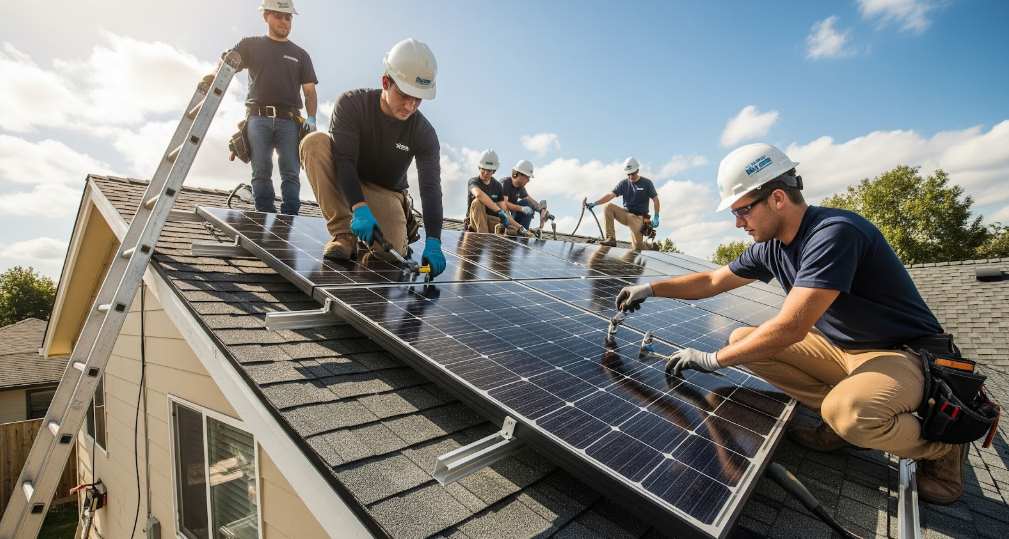
solar panel installation cost breakdown
Understanding where your money goes helps you make smarter decisions. Here’s how much each component typically costs:
Solar panels themselves make up about 30-40% of your total project cost. Quality panels from brands like LG, SunPower, or Canadian Solar range from $0.85 to $1.50 per watt.
Installation labor accounts for another 25-35% of expenses. This includes mounting your panels, running electrical connections, and ensuring everything meets local codes. Experienced crews charge more, but they also finish faster and avoid costly mistakes.
Electrical components like inverters, monitoring systems, and safety equipment represent 15-25% of costs. Don’t skimp here – these components determine how efficiently your system converts sunlight into usable electricity.
Permits and inspections typically cost $1,500 to $3,000 depending on your location. While annoying, proper permitting protects you legally and ensures your system meets safety standards.
Additional costs might include roof repairs, electrical panel upgrades, or trenching for ground-mounted systems. Budget an extra 10-15% for unexpected expenses.

solar panels for home cost
Choosing the right system size dramatically impacts both your upfront solar panel cost and long-term savings. Most homes need between 15-25 panels, but your specific requirements depend on your electricity usage and roof space.
A 5kW system generates roughly 6,000-8,000 kWh annually. This works well for energy-conscious households using 500-600 kWh monthly. After the federal tax credit, expect to pay around $10,500.
7kW systems produce 8,400-11,200 kWh yearly, covering homes using 700-900 kWh monthly. This is America’s most popular size because it balances cost with energy production. Your net cost after incentives? Approximately $14,700.
10kW installations generate 12,000-16,000 kWh annually, perfect for larger families or homes with electric heating, pools, or EV charging. Post-credit pricing sits around $21,000.
Going bigger makes sense if you plan to add electric vehicles, heat pumps, or other high-usage appliances. Solar panels last 25-30 years, so think about your future electricity needs, not just today’s usage.
Factors That Affect Solar Installation Costs
Several variables influence how much you’ll pay for solar panels. Understanding these helps you budget accurately and avoid surprises.
Your roof condition matters enormously. Installing panels on a newer composition shingle roof costs less than working with tile, slate, or metal roofing. If you needs roof repairs or replacement, handle that first – removing and reinstalling solar panels later costs thousands.
Roof complexity affects pricing too. Simple, south-facing roofs with minimal chimneys or skylights are installer favorites. Complex layouts with multiple angles, dormers, or shading issues require more time and custom solutions, driving up labor costs.
Your location impacts solar panel installation cost in multiple ways. Areas with high living costs generally have higher installation prices. However, states with strong solar incentives often offset higher upfront costs with better long-term value.
Electrical upgrades sometimes catch homeowners off-guard. Older homes might need panel upgrades to handle your solar system’s electrical load. Budget $1,500-$4,000 for electrical work if your home was built before 1990.
Ground-mount systems cost 15-25% more than rooftop installations due to additional materials and site preparation. However, they’re worth considering if your roof isn’t suitable or you want optimal panel positioning.
Solar Panel Financing Options & Payment Methods
How you pay for solar panels significantly impacts your total cost and monthly cash flow. Each financing method has distinct advantages depending on your financial situation.
Paying cash upfront delivers the best long-term value. You’ll capture the full 30% federal tax credit, avoid interest charges, and own your system immediately. Most cash buyers see 8-12 year payback periods with 20+ years of free electricity afterward.
Solar loans let you go solar with little or no money down while still claiming tax credits. Interest rates range from 3-8% for qualified borrowers. Many solar-specific lenders offer 12-20 year terms that keep monthly payments reasonable.
Solar leases and PPAs require minimal upfront costs but offer smaller long-term savings. You’ll pay a monthly fee instead of owning the system. While attractive for cash-strapped homeowners, these options typically provide 50-70% less lifetime value compared to ownership.
PACE financing uses your property taxes to fund solar installations. Payments stay with the property if you move, but not all areas offer PACE programs.
Federal Tax Credits & Local Rebates for Solar
The federal solar tax credit remains the most valuable incentive available. This credit lets you deduct 30% of your total solar installation cost from your federal taxes – not just reduce taxable income, but actually subtract from taxes owed.
For a $25,000 system, you’ll receive a $7,500 credit. The full credit applies to equipment, installation, permits, and even energy storage if installed simultaneously. However, this generous incentive drops to 26% in 2033 and 22% in 2034 before disappearing for residential installations.
Many states and utilities offer additional rebates. California’s SGIP program provides battery storage incentives. New York’s NY-Sun initiative offers capacity-based rebates. Texas doesn’t have state incentives, but many utilities provide rebates and net metering.
Net metering policies significantly impact your solar investment value. This arrangement credits you for excess electricity your panels send to the grid. Strong net metering means your surplus summer production offsets winter usage, maximizing your savings.
Solar Panel ROI & Long-term Savings Calculator
Smart homeowners evaluate solar panels as a 25-year investment, not just an upfront expense. The numbers are compelling when you crunch them correctly.
Payback periods typically range from 6-10 years depending on your electricity rates, system cost, and available incentives. Higher electricity rates mean faster payback. Areas with time-of-use billing often see even better returns since solar produces power during expensive peak hours.
25-year savings commonly range from $20,000-$60,000 for average-sized systems. Homes with higher electricity usage or expensive utility rates see the biggest benefits. Remember, electricity rates typically increase 2-3% annually, making your future savings even more valuable.
Home value increases on average 4% according to recent studies. For a $400,000 home, that’s $16,000 in added value. Solar homes also sell 20% faster than comparable properties without panels.
Environmental benefits include eliminating 3-4 tons of carbon emissions annually per installed kW. Over 25 years, a 7kW system prevents roughly 75 tons of CO2 – equivalent to planting 1,900 trees.
Choosing the Right Installer ,Why Homeowners Pick Lehmann Electrical?
Price is only part of the equation; workmanship and warranty protect your investment. Our Wauwatosa-based team delivers full-service design, install, and post-install support.
- NABCEP-certified crew with 15-year workmanship warranty
- Local permitting expertise across Milwaukee County municipalities
- Optional EV-charger wiring bundled at reduced cost
- In-house service team ensures warranty claims stay hassle-free
Getting Accurate Solar Installation Quotes
Shopping for solar requires comparing multiple proposals carefully. Here’s how to ensure you’re getting fair pricing and quality installation.
Request at least three detailed quotes from different installers. Prices can vary by 20-30% for identical systems, so shopping around pays off. Make sure each quote includes the same equipment specifications and warranty terms for accurate comparison.
Beware of door-to-door sales tactics and high-pressure situations. Reputable installers let you research and decide at your own pace. Be especially cautious of companies requiring immediate decisions or offering “one-day only” pricing.
Verify installer credentials through your state licensing board and Better Business Bureau. Look for NABCEP-certified installers who demonstrate ongoing education and professional standards. Check recent customer reviews and ask for local references.
Compare equipment specifications, not just total price. Higher-quality panels and inverters cost more upfront but deliver better long-term performance and warranties. A slightly more expensive system often provides better value over 25 years.
Getting solar panels installed in 2025 represents an excellent investment for most homeowners. With current technology, favorable financing options, and generous federal incentives, the conditions align perfectly for switching to solar power.
Start by calculating your specific needs, gathering multiple quotes from qualified installers, and understanding your financing options. The upfront solar panel installation cost may seem substantial, but the long-term savings and environmental benefits make it one of the smartest home improvements you can make.
Ready to explore solar for your home? Contact our certified installers today for a personalized cost estimate and see exactly how much you could save with solar panels.