
You’ve probably heard it before: “LED bulbs last 25,000, 50,000, even 100,000 hours.” But how true is that in real homes?
In this guide, we’ll break down the real-world lifespan of LED bulbs, what affects their longevity, and how you can make yours last for years if not decades.
By the end, you’ll know exactly what to look for when buying or installing LED bulbs and how to get the best performance for your investment.
What “Lifetime” Really Means for an LED Bulb
Understanding the L70 Standard
Unlike incandescent bulbs that burn out suddenly, LEDs gradually lose brightness over time. The industry uses the L70 standard, meaning a bulb’s “end of life” is when it produces only 70% of its original light output.
So, when you read “50,000-hour lifespan,” that doesn’t mean it goes dark at 50,001 hours; it means brightness has dropped to around 70%.
Sudden Failure vs Gradual Dimming
LED bulbs usually fade, flicker, or change color before they die completely. Sudden failures happen, but they’re less common and usually due to driver or power issues rather than the LED chip itself.
Key takeaway: “LED lifespan” is about useful light, not total blackout.
Claimed vs Real-World Lifespans
What Manufacturers Promise
Many LED bulbs claim to last 25,000 to 100,000 hours, depending on the product and quality.
That’s roughly:
- 13+ years at 10 hours of use per day, or
- 45+ years at 3 hours per day.
What Actually Happens
In the real world, lifespan depends on heat, installation, and power quality. Independent tests and customer experiences show that most quality bulbs realistically last 20,000 to 40,000 hours.
Cheaper or poorly cooled bulbs often fail much sooner, sometimes within 8,000–15,000 hours, especially in enclosed or overheated fixtures.
Real-world tip: A bulb’s components, especially the driver and capacitors, are usually the first to fail, not the LEDs themselves.
What Shortens LED Lifespan (and How to Avoid It)
1. Heat & Poor Ventilation
LEDs hate heat. When trapped inside enclosed fixtures or insulated ceiling cans, their internal temperature rises, drastically reducing their lifespan.
How to fix it:
- Use open or ventilated fixtures.
- Avoid covering LED fixtures with insulation.
- Choose bulbs rated for enclosed fixtures if necessary.
2. Power Surges & Overcurrent
Voltage spikes, unstable wiring, or poor power quality can damage the driver circuit, the brain of the LED bulb.
Prevention:
- Use surge protectors.
- Ensure wiring connections are tight and properly rated.
- Avoid extremely cheap bulbs that lack built-in protection.
3. Moisture, Dust & Poor Environments
In bathrooms, outdoors, or dusty areas, heat and moisture accelerate component wear.
Prevention:
- Use bulbs rated for damp locations.
- Clean fixtures periodically to remove dust.
- Avoid using indoor bulbs outdoors.
4. Low-Quality Components
Cheaper LEDs often cut corners on drivers, capacitors, or solder quality. The result? Flickering, dimming, and short lifespans.
What to do:
- Buy from reputable brands with strong warranties.
- Look for ENERGY STAR, UL, or DLC certifications.
- Avoid unbranded imports that promise unrealistic lifespans.
5. Incompatible Dimmers or Frequent Switching
Using the wrong dimmer switch or turning LEDs on/off rapidly can stress internal electronics.
Pro tips:
- Use LED-compatible dimmers only.
- Avoid motion sensors with rapid cycling unless rated for LEDs.
- In vibration-prone areas (like ceiling fans), choose vibration-resistant bulbs.
How to Choose LED Bulbs That Truly Last
Key Specs to Check
When shopping for LEDs, look for:
- Rated life: 25,000 h minimum (50,000 h for premium)
- Warranty: At least 5 years
- Certifications: ENERGY STAR, UL, DLC
- Heat management: Aluminum heat sink or cooling vents
- Driver quality: Constant current, surge protection
- Usage rating: Enclosed, damp, or outdoor as needed
Choose the Right Product for the Right Place
Don’t install indoor LEDs in outdoor sockets or recessed fixtures not rated for them. Always match the bulb type to its environment.
Stick with Trusted Brands
Brands with strong testing and warranty programs tend to use higher-grade components. The difference in upfront cost often pays off in reliability and longevity.
Installation Tips to Maximize LED Lifespan
Use the Right Fixtures
Allow for air circulation around the bulb. Avoid small, sealed enclosures unless specifically designed for LEDs.
Use Proper Dimmers and Drivers
LED-compatible dimmers prevent flicker and premature failure. Old-style dimmers can distort voltage, shortening lifespan.
Check Your Wiring
Loose or undersized wiring increases electrical stress. Ensure secure connections and consider whole-home surge protection.
Reduce Vibration
In ceiling fans or garages, vibration can shake solder joints loose. Use rough-service or vibration-resistant LEDs when needed.
When to Replace an LED Bulb
Common Signs
- Noticeable dimming (below 70% of original brightness)
- Flickering or intermittent performance
- Color shifting (turning warmer or bluish)
- One or two diodes are failing in an array.
Once brightness or quality drops noticeably, replacement ensures consistent lighting and efficiency.
Cost-Benefit View
Running a degraded LED wastes energy and provides poor lighting. Replacing it sooner may save on power costs and comfort in the long run.
LED vs Incandescent vs CFL Lifespans
| Bulb Type | Typical Rated Life | Real-World Average | Failure Mode |
| Incandescent | 1,000 h | ~1 year | Filament burnout |
| CFL | 8,000–15,000 h | 6–10 years | Ballast failure |
| LED | 25,000–100,000 h | 10–20 years | Dimming or driver failure |
LEDs can last 30 times longer than incandescent bulbs and up to five times longer than CFLs, all while using 75% less energy.
(Source: U.S. Department of Energy – energy.gov)
Real-World Experience: What We’ve Seen at Lehmann Electrical & Design
Over our 5+ years installing LED lighting systems for homes across Wisconsin, here’s what we’ve consistently observed:
- Enclosed ceiling fixtures in hot areas cause early failures (8,000–15,000 h).
- Open, well-ventilated fixtures often achieve or exceed rated life (~25,000–40,000 h).
- Cheaper bulbs dim quickly and flicker after just a few years.
- High-quality LEDs maintain over 85–90% brightness after 30,000 h.
- Most failures come from driver electronics, not the LED chips themselves.
The takeaway? A few smart choices in installation and brand selection can easily double the real lifespan of your LED lighting.
Choosing and Installing LEDs for Your Home
Pick bulbs by lumens (brightness), not watts. An 800-lumen LED equals a 60-watt old bulb but uses 10 watts.
For expert help, consider a pro like us at Lehmann Electrical & Design. We handle LED Lighting Installation to ensure it lasts. Check our Lighting Contractor services or full Electrical Services Milwaukee for safe setups.
In our tests, proper installation boosts life by 20%.
Conclusion
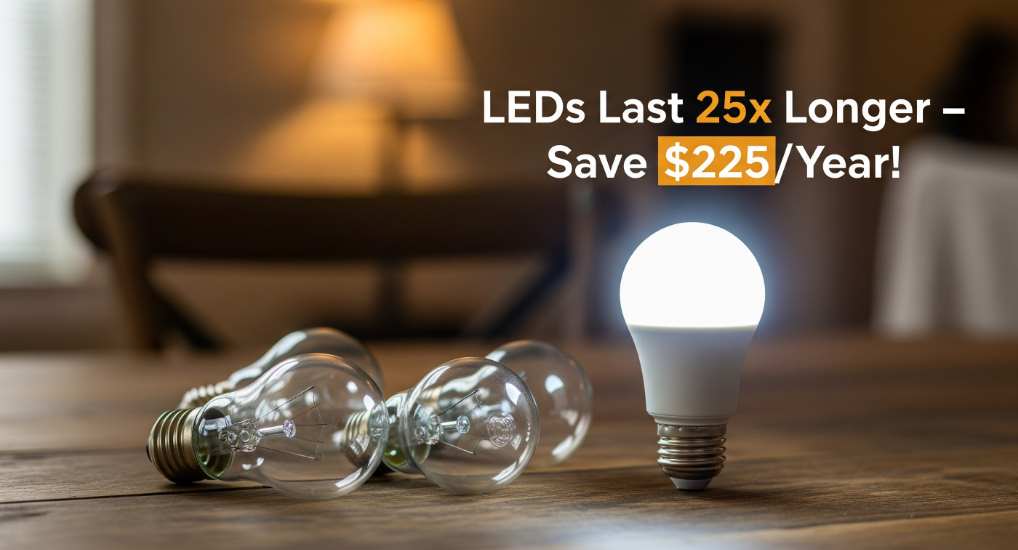
LED bulbs last 25,000-50,000 hours, or 10-20+ years with normal use, far longer than old bulbs. Factors like heat and quality matter, but tips like good fixtures help them last. You’ll save $225+ yearly on energy and help the environment.
Takeaway: Switch to LEDs for reliable, cheap light. Next, check your home’s bulbs and plan an upgrade. Want expert help designing or upgrading your lighting? Book an LED Lighting Installation consultation today.
FAQ: How long do LED bulbs last
Do LED bulbs really last 10 years?
Yes, many last 10-20 years with 3-8 hours daily use, based on 25,000-50,000-hour ratings, though quality and conditions affect this.
What shortens LED bulb life?
Heat, voltage surges, frequent switching, and poor quality parts can cut life short; keep them cool and use protectors.
How do I know if an LED bulb is dying?
It dims, flickers, or buzzes; LEDs fade to 70% brightness instead of burning out suddenly.
How do LEDs compare to incandescent bulbs in lifespan?
LEDs last 25-50 times longer (25,000-50,000 hours) than incandescents (1,000 hours), saving energy and money.
Why do my LED bulbs burn out fast?
Often, due to heat buildup, bad dimmers, or low-quality bulbs, choose ENERGY STAR and proper fixtures to fix this.