Licensed master electrician · Call 414-207-0109
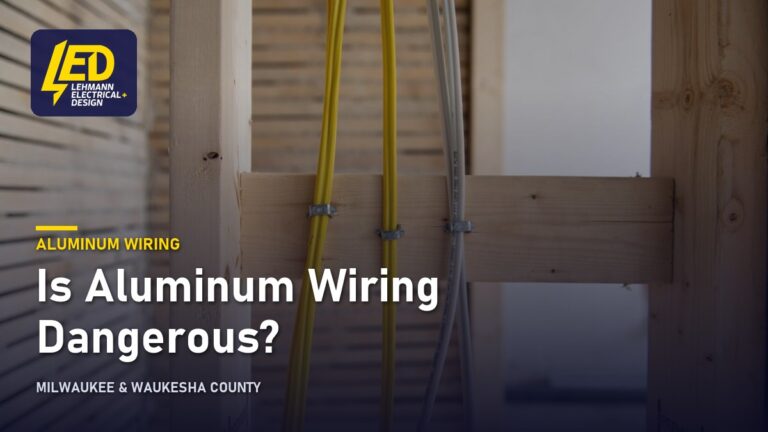
Aluminum branch circuit wiring is not dangerous along the wire itself. The risk is at the connections, where aluminum meets a receptacle, switch, or splice. The U.S. Consumer Product Safety Commission attributes the fires to overheated terminals at those points. Aluminum expands, contracts, and oxidizes differently than copper, so joints loosen and heat up over years. A home with it is not an emergency, but it does need a licensed electrician to assess and permanently repair the connections.
What the job actually involves
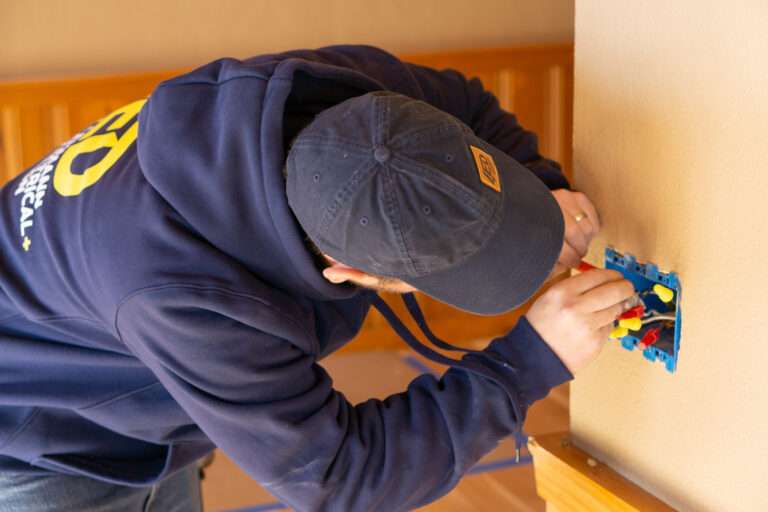
The work is a connection repair, not a wire replacement in most cases, and it sits inside our electrical wiring work rather than being a job of its own. An electrician opens every device box on the aluminum circuits, identifies which conductors are aluminum, and permanently joins each aluminum conductor to a short copper tail that then lands on the receptacle, switch, or fixture. The aluminum stays in the wall. The copper takes the mechanical and thermal abuse at the terminal.
CPSC’s Publication 516, Repairing Aluminum Wiring, states that the agency approves of only three methods for a permanent repair:
| Method | What it is | CPSC position |
|---|---|---|
| Complete rewire in copper | Pulling out the aluminum branch circuits and replacing the cable | Accepted permanent repair |
| COPALUM crimp | A special metal sleeve crimped around the aluminum and copper with a dedicated tool | Accepted permanent repair |
| AlumiConn connector | A listed set-screw connector joining aluminum to copper | Accepted alternative where COPALUM is unavailable |
That table is the whole universe of permanent fixes as CPSC describes them. Everything else is a partial measure. CO/ALR switches and receptacles, which are listed for use with aluminum conductors, do perform better than ordinary devices, but CPSC staff does not accept device replacement or twist-on pigtailing as solving the overheating problem in aluminum-wired branch circuits. That matters because twisting an aluminum and copper conductor together under an ordinary wire nut is exactly what many homeowners picture when they hear the word “pigtail.”
A full job also includes checking the panel connections, confirming the circuits are sized correctly for what is actually on them, and leaving the work for inspection. None of this is homeowner work. Anything behind a panel cover involves conductors that stay energized with the main breaker off: the service conductors and the main breaker’s line-side lugs are live until the utility pulls the meter, and CPSC itself warns that people without thorough electrical training should not inspect or repair aluminum wiring.
How to tell if you need it
Start with the house’s age and the wire markings. Aluminum branch circuit wiring was used widely in single-family homes built or rewired roughly between the mid-1960s and the mid-1970s. CPSC estimated in 1974 that two million homes and mobile homes had been built with aluminum wiring since 1965. That figure is more than fifty years old and should not be scaled, updated, or applied to Wisconsin, but it tells you the practice was common, not rare.
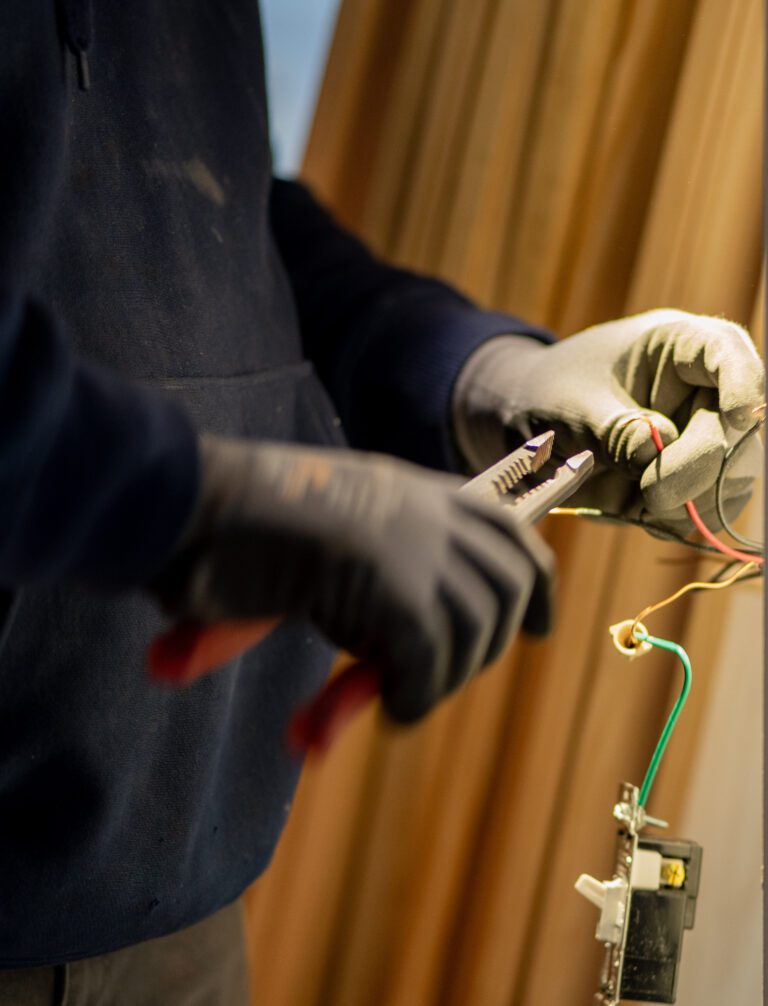
On the wire itself, the cable jacket is usually printed with “AL” or “ALUMINUM.” Where a cable is visible in an unfinished basement or attic, the lettering is often readable without touching anything. A silver-colored conductor under a device screw is a strong indicator, though some copper conductors are tin-plated and also look silver, which is why identification is a job for someone who knows the difference.
CPSC’s own list of warning signs is short and worth memorizing:
> Warm switch or receptacle face plates. A strange or distinctive odor, or the smell of burning plastic, near a receptacle or switch. Lights that flicker with no traceable cause. CPSC advises seeking expert advice immediately, and warns that people without thorough electrical training should not inspect or repair the wiring themselves.
Read that first sign the way CPSC means it: a plate you happen to notice is warm, not a plate you go round testing by hand. If you have a burning or hot-plastic smell, scorch marks, discoloration, buzzing, or crackling at any outlet or switch, stop using that circuit, leave the breaker off, and call an electrician. Do not touch the device to judge how hot it is. Use smell, sight, and sound.
One more clue worth noting: aluminum branch circuits and older cloth-insulated systems sometimes turn up in the same house, because a home wired in one era often had circuits added in another. If a home inspection flagged aluminum in some rooms, it is reasonable to ask whether earlier wiring is still in service elsewhere in the house. Homeowners dealing with older cloth-insulated systems usually find the two questions arrive together.
What decides the price
Four things drive the cost of an aluminum connection repair, and none of them is the amount of wire in the walls.
How many device boxes there are. The repair is priced per connection point in practice, because that is where the labor goes. A small ranch with twenty devices on aluminum circuits is a different job from a four-bedroom colonial with sixty.
Which repair method fits. COPALUM crimping requires a specific tool and training. The AlumiConn connector is more widely available. The right choice depends on box fill, conductor condition, and what is listed for the configuration, and an electrician decides that after opening boxes, not from a phone call.
How crowded the boxes are. Adding a copper tail and a connector takes up volume inside the box. Where a shallow box is already packed, the box may need to be replaced or the device relocated, which adds time.
What else the inspection turns up. Boxes that have already overheated often have damaged conductors, brittle insulation, or a device that has to be replaced outright. Circuits that were extended by a previous owner sometimes have splices buried where they should not be.
Lehmann Electrical & Design does not publish a figure for this work. The honest answer is that a per-connection repair cannot be quoted accurately until someone has counted the connections and seen their condition. An on-site assessment produces a real number instead of a range that drifts once work starts.
How long it takes and what is disrupted
A whole-house aluminum connection repair is rarely a one-visit job, and the device count is what decides whether it is a day or several. The disruption is specific and manageable.
Power goes off circuit by circuit, not all at once, so an electrician will typically work one area of the house at a time. Expect furniture pulled away from walls, outlet and switch plates off, and an electrician moving between rooms with a light. Receptacles in the room being worked on are out of service for that stretch. The refrigerator, furnace, and anything on a circuit not being touched usually stay live.
There is no drywall demolition in a connection repair. That is one of its main advantages over a full rewire: the aluminum stays where it is, so walls and ceilings stay closed. A full copper rewire is a different scale of job, with access holes, patching, and painting, and it is usually chosen because the circuits themselves are inadequate rather than because of the aluminum alone.
Did an inspection report flag aluminum wiring?
Send us the report. We will tell you how many connection points are involved and which permanent repair fits your boxes.
Licensed master electrician. 12-month workmanship warranty.
Permits and inspection
Aluminum connection repair is permitted electrical work, and the permit comes from your local municipality: Milwaukee, Wauwatosa, Waukesha, or whichever city, village, or town you are in. The municipality enforces Wisconsin SPS 316, which adopts the 2023 NEC and has been in effect since September 1, 2026. Work permitted before that date was done under the 2017 NEC, and an existing installation is not required to be brought up to the new edition unless it is altered.
That last clause is the one homeowners misread. Having aluminum wiring does not put you in violation of anything. It was installed legally under the code of its day, and no Wisconsin rule orders you to remove it. What the current code governs is the work you choose to do now: the connectors, the devices, the box fill, and the circuit protection all have to meet the adopted cycle.
A licensed electrician pulls the permit, does the work, and schedules the inspection. The inspection record matters later, when you sell. A buyer’s inspector who finds aluminum will note it, and a documented, permitted repair answers the question before it becomes a negotiating point. Insurance and lending treatment of aluminum wiring varies by carrier and by lender, so ask yours directly rather than relying on general advice.
Choosing an electrician
Ask three questions before you book.
First, which permanent repair method does the electrician use, and why that one for your house. An answer that names COPALUM or AlumiConn and explains the box-fill reasoning is a good sign. An answer that leads with replacing the receptacles is not, because device replacement alone is not accepted by CPSC as solving the overheating problem.
Second, who pulls the permit and who meets the inspector. The answer should be the contractor, not you.
Third, is the person doing the work licensed in Wisconsin. Jacob W. Lehmann holds Wisconsin master electrician license 1283316, and Lehmann Electrical & Design works under Wisconsin electrical contractor license 1492849. The company holds an A+ rating with the BBB and 4.9 stars on Google, and backs its work with a 12-month workmanship warranty.
A flat whole-house price quoted over the phone, with no question about how many devices are involved, is a warning sign. So is a contractor who presents a complete rewire as the only option. Sometimes a rewire is the right call, usually because the circuits are undersized for modern loads rather than because of the metal. That is a conclusion from an assessment, not an opening pitch. The same logic applies when an inspector raises questions about the real risks of older wiring: the honest answer depends on condition, not on vintage alone.
Book an on-site assessment. If an inspection report mentioned aluminum, or if you have warm plates, flickering lights, or a smell near an outlet, request a quote or call 414-207-0109. An electrician will identify what you actually have, count the connection points, and give you a written number for the repair.
Why homeowners call Lehmann Electrical & Design
- Led by licensed master electrician Jacob Lehmann
- A+ rating with the BBB and 4.9 stars on Google
- 12-month workmanship warranty on the work we do
- Permits pulled and inspections scheduled as part of the job
- Milwaukee, Wauwatosa and Waukesha County, from 12012 W Fairview Ave, Wauwatosa
Want the connections made permanent rather than patched?
Tell us the rooms involved and roughly how old the house is.
Licensed master electrician. 12-month workmanship warranty.
Frequently asked questions
▾When was aluminum wiring banned?
It was not banned. CPSC never prohibited aluminum branch circuit wiring, and there is no date after which it became illegal. The confusion comes from a line in CPSC’s own documents noting that no information was developed for aluminum-wired homes built after 1972, which describes the limits of their survey, not a ban. Manufacturing practices and connector standards changed, but the wire was never outlawed.
▾Is pigtailing aluminum wiring safe?
It depends entirely on how the pigtail is made. A copper tail joined to aluminum with a COPALUM crimp or a listed AlumiConn connector is accepted by CPSC as a permanent repair. A copper tail twisted onto aluminum under an ordinary wire nut is not: CPSC staff does not accept twist-on pigtailing as solving the overheating problem. Same word, two completely different outcomes.
▾Why is aluminum wiring dangerous at the connections specifically?
Aluminum expands and contracts more than copper as it heats and cools, so a terminal screw that was tight on installation day can loosen over years of normal load cycling. Aluminum also forms a surface oxide that resists current flow. A loose, oxidized joint gets hot, which loosens it further. The wire in the wall is fine. The joint is where energy turns into heat.
▾Is aluminum wiring safe if nothing has ever gone wrong?
No visible problem is not proof of a sound connection, because the heating happens inside a closed box. CPSC’s Publication 516 reports that homes built before 1972 and wired with aluminum were 55 times more likely to have one or more wire connections at outlets reach Fire Hazard Conditions than copper-wired homes. CPSC notes that survey covered only connections at outlets, not other connections and splices, and that no information was developed for aluminum-wired homes built after 1972.
▾Does aluminum wiring mean I need a whole new electrical system?
Usually not. The connection repair leaves the aluminum in the walls and addresses the actual failure point. A full copper rewire makes sense when the circuits themselves are inadequate, when insulation is deteriorating, or when a renovation is already opening walls. An assessment tells you which situation you are in. We quote both the connection repair and a full copper rewire, so the assessment is not steered toward one answer before anyone has opened a box.
Next step
Get your aluminum connections assessed
Tell us what the inspection found and which rooms are involved.
Licensed master electrician12‑month warranty4.9 on Google
Milwaukee, Wauwatosa and Waukesha County. Prefer to talk? Call 414-207-0109