Licensed master electrician · Call 414-207-0109
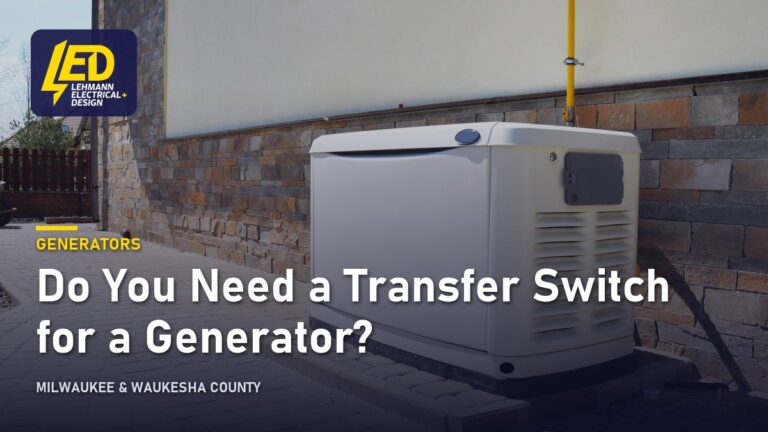
Yes, in almost every case. If you want a generator to power your home’s existing wiring, lights, outlets, furnace, well pump, refrigerator, a transfer switch is the piece that makes it legal and safe. It disconnects your house from the utility before connecting it to the generator, so generator power cannot push back out onto the utility lines. The only generator setup that does not need one is a portable unit used purely with extension cords.
What the job actually involves
A transfer switch is a device that lets your house draw power from either the utility or the generator, but never both at once. That “never both at once” is the whole point. Without it, generator power can travel backward through your wiring and out onto the utility lines, which can energize conductors a lineworker believes are dead. It can also destroy the generator the moment utility power returns.
There are three broad approaches, and which one applies to you depends entirely on the generator.
Manual transfer switch. Usually a small panel mounted beside the main electrical panel, feeding a set of pre-selected circuits. The electrician reroutes those circuits into the switch and runs a feeder to a weatherproof inlet box on the outside wall. When the power goes out, you roll the portable generator outside, plug it into the inlet with a heavy cord, start it, and flip the switch handles from “utility” to “generator.” This is the standard answer for portable generators.
Interlock kit. A sliding metal plate on the face of the existing panel that physically prevents the main breaker and a back-fed generator breaker from being on at the same time. It only works if the kit is listed for that exact panel make and model. Not every panel has one available, and fitting a non-listed kit is not acceptable work.
Automatic transfer switch (ATS). Paired with a permanently installed standby generator. It monitors utility voltage, starts the generator when power drops, transfers the load, usually within seconds of the generator warming up, then transfers back and shuts the generator down when utility power is stable again. No one has to be home.
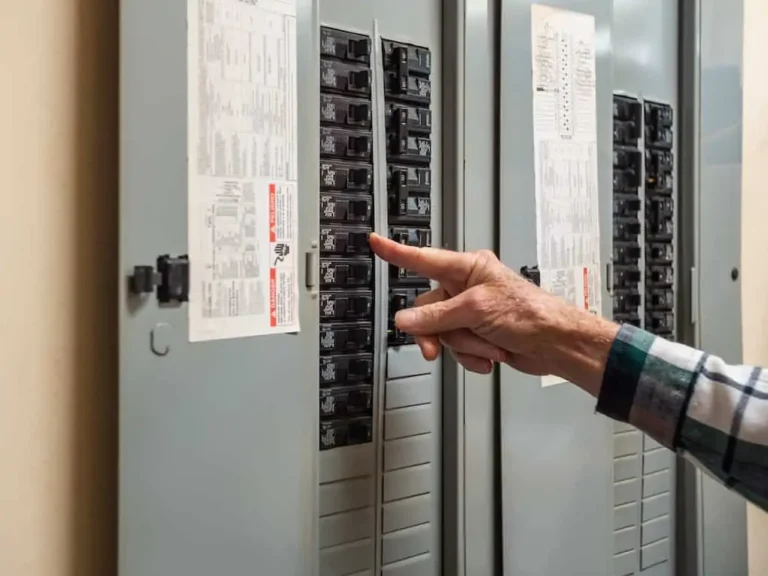
In all three cases the work happens inside or right beside your main panel, and with a service-entrance automatic switch on the supply side of it, on conductors you cannot de-energize. Turning the main breaker off does not make the panel safe: the service conductors coming in and the line-side lugs on the main breaker stay energized. Only the utility can de-energize those, typically by pulling the meter, or a separate service disconnect ahead of the panel if one is fitted. That is why a transfer switch is licensed electrician work with a permit, not a weekend project. Our standby and portable generator work always includes the switch, the inlet or the ATS, and the permit.
> A transfer switch is not an accessory to a generator. It is the part that keeps generator power inside your house and utility power out of it. Backfeeding a panel through a dryer outlet with a double-male cord skips that separation entirely, which is why it is sometimes called a “suicide cord.” The hazard is real, it reaches beyond your property line, and no generator manufacturer sanctions it.
How to tell if you need it
Work through this in order. It takes about a minute.
| Your setup | Transfer switch needed? | What you need |
|---|---|---|
| Portable generator, extension cords only to appliances | No | Properly rated outdoor cords, generator outside and away from windows |
| Portable generator, want to run furnace, well pump, hardwired lights | Yes | Manual transfer switch or listed interlock kit, plus exterior inlet |
| Permanently installed standby generator | Yes | Automatic transfer switch, sized to the load being backed up |
| Generator already installed by a previous owner, switch unknown | Inspect first | Have the existing installation verified before relying on it |
The dividing line is simple. If the generator only ever connects to a device by a cord you can see, no transfer switch is involved. The moment you want generator power to reach anything that is wired into the house, a furnace blower, a sump pump, a well pump, ceiling lights, bathroom outlets, you need a transfer switch or a listed interlock.
That is why most homeowners with a portable generator end up wanting one. Extension cords handle a refrigerator and a lamp. They cannot handle a furnace, and in a Wisconsin January, the furnace is the load that matters.
Signs you should have an existing setup looked at: a generator inlet on the wall with no visible switch or interlock inside, a double-male cord stored with the generator, a panel with a back-fed breaker and no interlock plate, or any installation you cannot find a permit record for. If you see scorch marks, discoloration around breakers, or smell burning or hot plastic near the panel, stop using that circuit, leave the breaker off, and call an electrician before doing anything else.
What decides the price
We cannot quote a figure without seeing the house, and we do not publish ranges we would then have to walk back. But the variables are not mysterious, and knowing them tells you roughly where your job sits.
Which circuits you want backed up. A manual switch covering, say, eight or ten essential circuits is a different job from an automatic switch carrying the whole service. More circuits means more rerouting inside the panel and more labor.
Manual versus automatic. An ATS is a larger, more complex device with control wiring back to the generator, so it costs more in both equipment and labor than a manual switch or an interlock kit.
Whether a listed interlock exists for your panel. If one does, the hardware is modest. If your panel has no listed kit available, the alternative is a separate transfer switch panel, which is more work.
Distance and routing. How far the generator or inlet sits from the panel, whether the run is through a finished basement ceiling, an exterior wall, or an unfinished joist bay, and whether any trenching or conduit is needed.
Panel condition and available space. The switch has to connect to a panel that can accept the work. If breaker positions are full or the equipment is obsolete, that affects the scope.
Generator size and fuel type. A natural gas standby unit needs a gas connection coordinated with a plumber; propane needs a tank. Those are not electrical costs but they are part of your total.
Sizing drives a lot of this, and sizing comes from the circuits you intend to run, not from the square footage of the house. A 2,400 square foot home that only needs a furnace, a sump pump, a fridge and some lighting needs far less generator than a 1,600 square foot home with a well pump and electric water heating. Our load and sizing calculator walks through the loads one at a time so you arrive at a number that reflects your actual house.
How long it takes and what is disrupted
Most residential transfer switch installations are a one-day job. An interlock kit on a compatible panel, with the inlet on the nearest exterior wall, can be a half day. A manual transfer switch panel with ten circuits rerouted is typically a full day. An automatic transfer switch paired with a new standby generator usually spans two days of electrical work, plus separate visits for the gas or propane connection and the concrete or composite pad, and those are often scheduled on different days by different trades.
Power is off while the work is done. For an interlock or a manual switch, expect the main breaker off for a few hours in the middle of the day, not the whole visit. The electrician does the prep work, the mounting, the conduit and the inlet with power on, then takes the service down for the panel connections. For a service-entrance ATS the shutdown can be longer, because that switch sits between the meter and the panel.
Plan for it the way you would plan for a scheduled outage. Nothing in the house runs during the shutdown window, so if someone works from home, pick a day that suits. No walls come down for a typical job. The switch mounts beside the panel, the inlet mounts outside, and the conduit between them is usually surface-run in a basement or garage where it is out of the way.
Got a generator and no safe way to connect it?
A transfer switch or interlock is the only connection that cannot backfeed the street, and it is the part that needs a licensed electrician and a permit.
Licensed master electrician. 12-month workmanship warranty.
Permits and inspection
Yes, this needs a permit, and the permit is issued by your municipality: the City of Milwaukee, Wauwatosa, Brookfield, New Berlin, Waukesha and the rest each run their own inspection process. The electrical work is governed by Wisconsin SPS 316, which adopts the 2023 NEC (in effect since September 1, 2026). Work permitted before that date was done under the 2017 NEC, and an existing legal installation does not have to be brought up to the new edition unless it is altered.
Pulling the permit is the contractor’s responsibility, and the inspector’s visit is part of the job, not an optional extra. It matters for three practical reasons. First, an inspector checking the interlock or switch independently confirms that the utility and generator sources genuinely cannot be connected at the same time. Second, an unpermitted generator connection is the kind of thing that surfaces at closing when you sell. Third, insurers have been known to ask questions after a fire or a backfeed incident, and a permit record answers them.
Lehmann Electrical & Design works under Wisconsin electrical contractor license 1492849, and Jacob Lehmann holds Wisconsin master electrician license 1283316.
Choosing an electrician
Ask these four questions before anyone starts.
Who pulls the permit? The answer should be the contractor, without hesitation, and the inspection should be included in the quote rather than listed as the homeowner’s errand.
How did you arrive at the switch size and the generator size? You want to hear about the specific circuits being backed up and a load calculation, which is the arithmetic that adds up the connected loads to establish what the generator and switch must carry. If the answer is based on the square footage of your house, keep looking.
If an interlock is proposed, is it listed for my exact panel? Make, model and the kit part number. “It’ll fit” is not the same answer.
What is covered after the work is done? Lehmann Electrical & Design backs its installations with a 12-month workmanship warranty. Equipment carries its own manufacturer warranty, which is separate.
One more thing worth saying plainly: avoid anyone who offers to “just back-feed the dryer outlet” or suggests you can skip the switch because you will “remember to turn the main off.” The interlock exists precisely because people forget, and the consequence lands on a lineworker who had no part in the decision.
If you are weighing a portable setup against a standby unit, start with the loads. The same calculator gives you a defensible number to bring to any quote conversation, including ours.
Why homeowners call Lehmann Electrical & Design
- Led by licensed master electrician Jacob Lehmann
- A+ rating with the BBB and 4.9 stars on Google
- 12-month workmanship warranty on the work we do
- Permits pulled and inspections scheduled as part of the job
- Milwaukee, Wauwatosa and Waukesha County, from 12012 W Fairview Ave, Wauwatosa
Want to know which switch suits your house?
Tell us the generator you have or are buying, and which circuits you want running.
Licensed master electrician. 12-month workmanship warranty.
Frequently asked questions
▾Do I need a transfer switch for my portable generator?
Only if you want it to power the house wiring. Running extension cords from the generator directly to a refrigerator, a few lamps and a phone charger needs no transfer switch. The moment you want the furnace, a sump pump, a well pump or hardwired lighting, you need a manual transfer switch or a listed interlock kit plus an exterior inlet. There is no safe cord-based workaround for hardwired loads.
▾How do I install a transfer switch for my generator?
This is not homeowner work, and we will not describe the steps. The installation involves connections inside the main panel, on circuits you cannot de-energize yourself: with the main breaker off, the service conductors and the main breaker’s line-side lugs stay energized, and only the utility or a separate service disconnect can kill those. It requires a municipal permit, an inspection and a licensed electrician. Call 414-207-0109 and we will scope it.
▾Is a transfer switch required for a generator?
For any generator connected to your home’s wiring, yes. Wisconsin SPS 316, which adopts the 2023 NEC (in effect since September 1, 2026), governs the work, your municipality issues the permit, and no inspector will pass a generator connection that allows utility and generator power to be joined. A listed interlock kit satisfies the separation requirement as an alternative to a separate switch, where one exists for your panel.
▾What size transfer switch do I need for my generator?
It follows from two things: the generator’s output and the circuits you want backed up. The switch must be rated for the amperage it will carry, and the circuits selected must fit within what the generator can actually supply. Sizing never comes from house square footage. An electrician performs a load calculation, adding up the connected loads, then matches switch rating and generator capacity to it.
▾How long can a whole house generator run?
A natural gas standby unit connected to the utility gas line can run continuously for days, limited mainly by scheduled maintenance intervals in the manufacturer’s manual, typically an oil change after a set number of running hours. A propane unit runs until the tank empties, which depends on tank size and load. A portable generator runs for the hours its fuel tank allows, then needs refueling after a cooldown.
▾Can I just turn off my main breaker and plug the generator into an outlet?
No. Back-feeding through an outlet relies on you remembering to turn the main breaker off every single time, and it uses a cord with exposed male prongs that are energized when the generator runs. If the main is ever left on, generator power goes out onto utility lines. A transfer switch or listed interlock removes the possibility of human error entirely.
Get a straight answer on your generator setup. Jacob Lehmann and the Lehmann Electrical & Design team install manual transfer switches, listed interlock kits and automatic transfer switches across Milwaukee and Waukesha County, permit and inspection included. Tell us what you want to keep running and we will tell you what it takes.
Request a generator estimate or call 414-207-0109.
Next step
Get your switch quoted
Tell us the generator and the circuits you need.
Licensed master electrician12‑month warranty4.9 on Google
Milwaukee, Wauwatosa and Waukesha County. Prefer to talk? Call 414-207-0109