Licensed master electrician · Call 414-207-0109
A Level 1 charger is slow because it is doing exactly what it was designed to do. It plugs into an ordinary 120 volt household outlet and draws about 12 amps, which works out to roughly 1.4 kilowatts and typically 3 to 5 miles of range per hour of charging. Nothing is broken. A Level 1 cord is a trickle charger, and no outlet, extension cord, or setting will make it faster.
The cord that came in your trunk is not a slow version of a fast charger. It is a different class of equipment.
Level 1 charging uses a standard 120 volt outlet, the same kind that runs a lamp or a vacuum. Most Level 1 cords are limited to 12 amps continuous, which is about 1.4 kW going into the car. Level 2 charging uses a 240 volt circuit, the same voltage a clothes dryer or electric range uses, and can deliver anywhere from about 3.8 kW up to roughly 11.5 kW depending on the circuit the house can support. That is the whole story in one line: you have half the voltage and a fraction of the current.
Here is what that difference looks like in practice for a car that takes about 75 kWh to fill from empty:
| Charging level | Voltage | Typical current | Power to the car | Rough miles added per hour | Time for a 75 kWh battery |
|---|---|---|---|---|---|
| Level 1 (wall outlet) | 120 V | 12 A | about 1.4 kW | 3 to 5 | 50+ hours |
| Level 2 at 24 A | 240 V | 24 A | about 5.8 kW | 18 to 22 | 13 to 15 hours |
| Level 2 at 32 A | 240 V | 32 A | about 7.7 kW | 24 to 30 | 10 to 12 hours |
| Level 2 at 48 A | 240 V | 48 A | about 11.5 kW | 35 to 44 | 7 to 8 hours |
Miles per hour vary by vehicle efficiency, battery temperature, and how full the battery already is, so treat the range column as a ballpark rather than a promise. The actual amperage a Level 2 charger can be set to depends on what spare capacity your electrical panel has, which is why no one can quote you a charge rate over the phone.
What is usually causing it
If your Level 1 charging is slower than the numbers above, or slower than it was last month, these are the usual explanations.
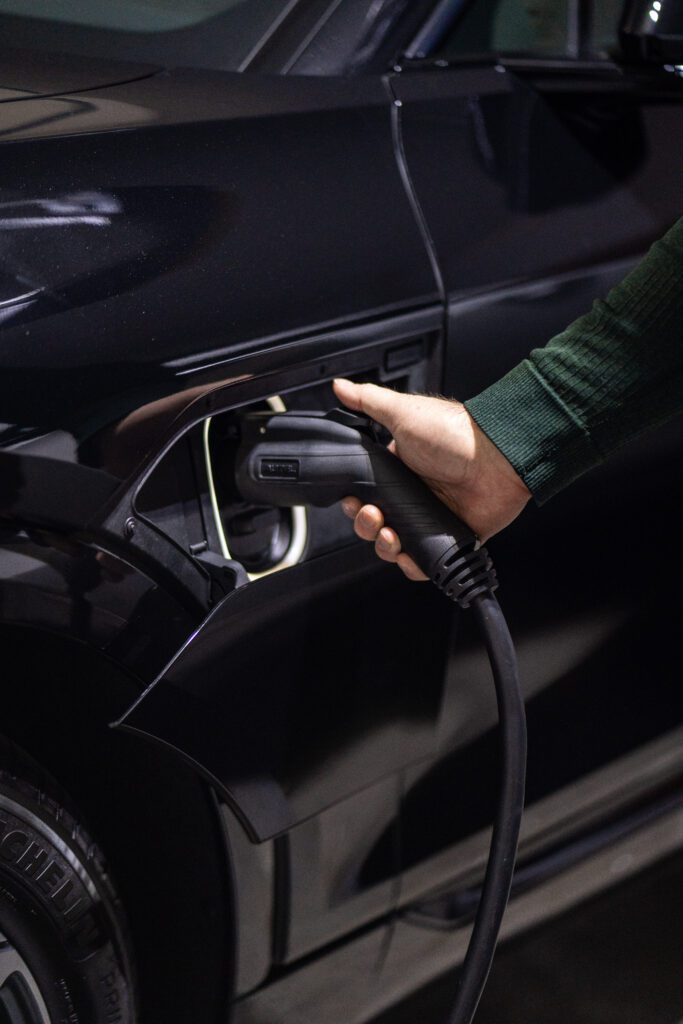
The car is limiting the draw, not the cord. Many EVs let you choose a 12 amp or an 8 amp setting for 120 volt charging. An 8 amp setting cuts output to roughly 1 kW. Check the charging screen in the vehicle, not the cord.
Cold weather. Below freezing, the car spends part of the incoming power heating the battery pack before it stores any of it. On a 1.4 kW supply there is very little left over, and Wisconsin winters can take a Level 1 charge rate down to almost nothing overnight. A car that gained 40 miles in July may gain 15 in January on the same outlet.
Cabin preconditioning and accessories. If the car is scheduled to warm itself up while plugged in, the heater can consume more than the outlet is supplying. The battery effectively stops gaining.
The battery is nearly full. Charging tapers sharply in the top 10 to 20 percent of the pack. That is normal lithium battery behavior, not a fault.
A shared or marginal circuit. A Level 1 cord on the same 15 or 20 amp circuit as a freezer, a shop vacuum, or garage lighting is sharing a budget it needs most of. Breakers are sized so that a continuous load, meaning one that runs three hours or more at full current, occupies no more than 80 percent of the breaker rating. A 12 amp charger is the whole of that continuous budget on a 15 amp circuit, with nothing left for anything else on it. A Level 1 cord set generally does not compensate for a sagging supply the way some Level 2 equipment can; it keeps drawing, or it faults.
Long or thin extension cords. Voltage drop across a long cord means less power at the car and heat in the cord. Manufacturers tell you not to use one for a reason.
A loose or worn outlet. An outlet whose contacts have lost their grip creates resistance, which creates heat and lowers the voltage reaching the cord. This is the one cause on this list that is a safety problem rather than an inconvenience.
> If you smell burning or hot plastic near the outlet or the panel, or you see discoloration or scorch marks, or you hear buzzing or crackling, stop using that circuit. Unplug the charger, switch that breaker off, leave it off, and have a licensed electrician inspect it. Do not touch the outlet or the charger to judge how hot it is. Smell, sound, and visible discoloration tell you what you need to know without putting your hand anywhere near a fault.
What is safe to check yourself, and what is not
Safe to check: the settings and the surroundings. Not safe: anything behind a cover.
You can safely:
- Open the vehicle’s charging menu and confirm the 120 volt current limit is set to 12 amps rather than 8.
- Look at the departure or preconditioning schedule and see whether the car is heating itself on your electricity.
- Note what else is plugged into the same garage or basement circuit and unplug the big consumers while charging.
- Remove any extension cord and plug the charger directly into the wall outlet.
- Look at the outlet and the cord head for discoloration, melted plastic, or a plug that falls out when nudged.
- Reset a tripped breaker once. Push the handle firmly to OFF, then to ON. If it trips again, leave it off and call an electrician. A breaker that trips with the charger unplugged usually means a wiring fault, not a tired breaker.
Leave these to a licensed electrician:
- Removing the panel cover. With the main breaker off, the service conductors feeding the panel and the line side lugs of the main breaker stay energized. A homeowner cannot de-energize them. Only the utility can, usually by pulling the meter, or a separate service disconnect ahead of the panel if the house has one.
- Replacing an outlet or testing it with a meter.
- Any attempt to change a breaker size. Never install a larger breaker to stop tripping. The breaker protects the wire, and a bigger breaker on the same wire removes that protection. The answer to an overloaded circuit is a correctly sized new circuit.
- Adding a 240 volt circuit. That work is permitted by your municipality, whether that is Milwaukee, Wauwatosa, Waukesha, or a neighboring community, and it is inspected against Wisconsin SPS 316, which adopts the 2023 NEC (in effect since September 1, 2026).
Charging overnight and still not full?
A licensed electrician measures what the circuit is actually delivering and tells you whether a Level 2 circuit is worth it for your car and your panel.
Licensed master electrician. 12-month workmanship warranty.
When it points to a bigger problem
Most of the time slow Level 1 charging is just physics. The question worth separating first is whether the charging is slow by design or slower than it used to be. A Level 1 lead that has always added three or four miles an hour is behaving normally. One that has got worse, or that is underperforming on a Level 2 circuit, is a different problem, and why an EV charger is not charging at full speed covers that case. Three situations here mean something else.
A GFCI that will not hold. Garage outlets are commonly protected by a ground fault circuit interrupter, a device that cuts power when it detects 4 to 6 milliamps of current leaking away by any path, including through a person or through damp material. No metal contact is needed. If a GFCI trips once, reset it once. If it will not hold, there is a real leakage fault or the device itself has failed. That needs inspection, not repeated resetting.
Heat or damage at the outlet. A 12 amp load for ten hours a night is a workout for a receptacle that was installed to run a trouble light. Warm is not automatically alarming, but discoloration, a hot plastic smell, or a plug that no longer grips is a connection failing under load.
Repeat breaker trips. Standard residential breakers are thermal-magnetic: a heat-sensitive strip handles sustained overload and a magnetic coil handles short circuits. A correctly loaded circuit does not trip. Repeated trips mean the circuit is genuinely overloaded, shared with too much, or faulted.
Worth knowing: the AFCI requirement, which stands for arc-fault circuit interrupter and protects 120 volt branch circuits in living areas, applies to those circuits and not to a 240 volt EV charger circuit. A Level 2 charger must be on its own dedicated circuit under NEC 625.40 regardless. That dedicated circuit is one of the main reasons a proper home EV charger installation behaves predictably where a shared outlet does not.
What an electrician does about it
The work starts with arithmetic, not with a drill.
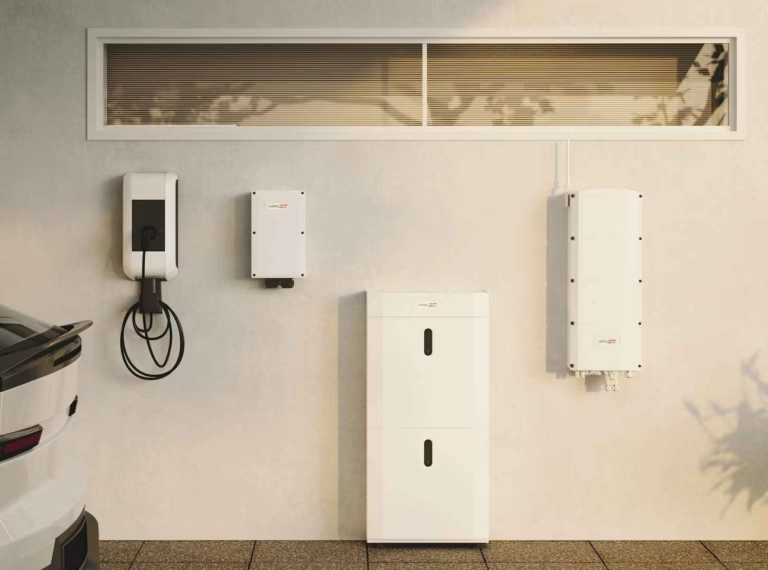
A licensed electrician performs a load calculation, which is a structured accounting of everything in the house that draws power, measured against the capacity of the service entrance, the point where the utility’s wires land and feed your panel. That calculation determines how many amps are actually available for a charger. Only then does charger amperage get chosen, which is why a reputable estimate will not name a charge rate before someone has looked at your panel.
From there the job typically involves confirming spare capacity and breaker space, running a dedicated 240 volt circuit from the panel to the parking spot in appropriately sized conductors, installing and commissioning the unit, pulling the municipal permit, and meeting the inspector. Sizing follows the same 80 percent rule: a 32 amp charger belongs on a 40 amp circuit, a 48 amp charger on a 60 amp circuit. Those pairings are correct and will not trip.
If your garage circuit turns out to be overloaded rather than merely slow, the repair is a properly sized dedicated circuit, not a larger breaker. Tesla owners should know that hardwired wall connectors and NACS adapters have their own commissioning steps, which is why a Tesla wall connector install is quoted a little differently from a universal unit.
On cost: we do not publish a figure here, because the real number depends on the distance from your panel to your parking spot, whether the run is surface-mounted or concealed, the spare capacity in your panel, your municipality’s permit fee, and the charger you choose. A 15 foot run in an attached garage next to the panel and a 70 foot run to a detached garage are different jobs. Anyone quoting you a flat price sight unseen is guessing at one of those variables.
Lehmann Electrical & Design is led by master electrician Jacob Lehmann and holds an A+ rating with the BBB and 4.9 stars on Google. Workmanship on our installations is covered by a 12-month warranty.
Ready to stop trickle charging?
If you are tired of adding four miles an hour, the next step is a walkthrough of your panel and your parking spot so someone can tell you what amperage your house will actually support. Tell us what you drive and where you park on the request an estimate form, or call 414-207-0109. We cover Milwaukee and Waukesha County, and you can see the full scope of our EV charging work if you want to read more first.
Why homeowners call Lehmann Electrical & Design
- Led by licensed master electrician Jacob Lehmann
- A+ rating with the BBB and 4.9 stars on Google
- 12-month workmanship warranty on the work we do
- Permits pulled and inspections scheduled as part of the job
- Milwaukee, Wauwatosa and Waukesha County, from 12012 W Fairview Ave, Wauwatosa
Thinking about a proper charging circuit?
Tell us the car, where it parks and how far that is from the panel.
Licensed master electrician. 12-month workmanship warranty.
Frequently asked questions
▾How fast does a Level 1 charger charge, and how long does it take?
A Level 1 cord on a 120 volt outlet draws about 12 amps, delivering roughly 1.4 kW and typically 3 to 5 miles of range per hour. A 75 kWh battery from near empty takes well over 50 hours. For a plug-in hybrid with a small pack, overnight Level 1 is often enough. For a full battery EV with a daily commute, it usually is not.
▾Why is my new charger so slow?
If it is a new Level 1 cord, it is performing normally, because 120 volts and 12 amps is the ceiling. If it is a new Level 2 unit charging slower than expected, check the amperage it was commissioned at. Installers set the output to match the circuit the panel can support, so a unit capable of 48 amps may be correctly configured for 24 or 32.
▾Why has my charger become slower than it used to be?
Three usual reasons. Temperature, since a cold battery spends incoming power on warming itself. A changed vehicle setting, such as a current limit dropped to 8 amps or a preconditioning schedule turned on. Or a degrading connection at the outlet, which shows up as discoloration, a hot plastic smell, or a plug that no longer grips. The first two are harmless, the third is not.
▾Can I make a Level 1 charger faster?
Not meaningfully. You can confirm the car is set to 12 amps rather than 8, remove extension cords, and stop sharing the circuit with a freezer or a space heater. Those recover lost output, they do not add any. The only real upgrade is a dedicated 240 volt circuit, which has to be installed by a licensed electrician and permitted by your municipality.
▾Is it safe to leave a Level 1 charger plugged in every night?
Generally yes, provided the cord goes directly into a sound wall outlet in good condition, not an extension cord or a power strip, and that circuit is not also running other large loads. A 12 amp draw for ten hours a night is a sustained load on a receptacle that was probably never intended for one, so look it over periodically for discoloration or a loose fit.
Next step
Get your charging sorted
Tell us the car and where it parks.
Licensed master electrician12-month warranty4.9 on Google
Milwaukee, Wauwatosa and Waukesha County. Prefer to talk? Call 414-207-0109