
As solar power continues to become a viable energy solution, choosing the right type of solar panel for your home or business is a crucial decision. The two primary types of solar panels available today are monocrystalline and polycrystalline panels. Both have their advantages and disadvantages, and the right choice for you depends on your budget, available space, and long-term energy goals.
Monocrystalline Solar Panels: High Efficiency, Higher Price
What Are Monocrystalline Solar Panels?
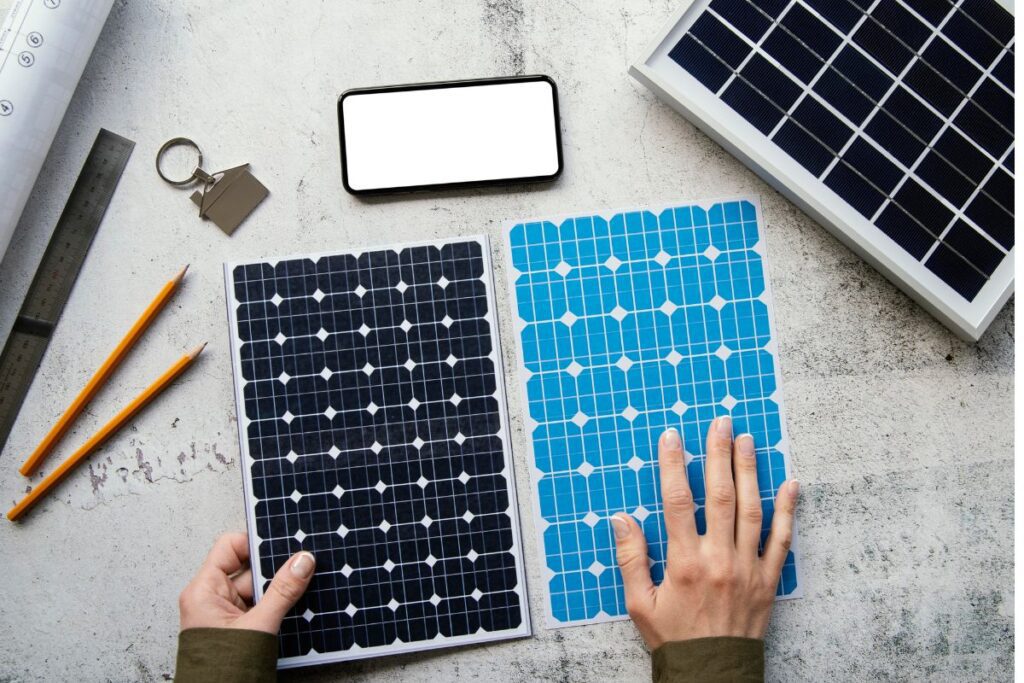
Monocrystalline solar panels are made from a single, continuous crystal structure, which results in their distinctive black color. These panels are considered the most efficient and have a high power output.
Benefits of Monocrystalline Solar Panels
- Higher Efficiency: Monocrystalline panels typically boast efficiency ratings of 18-22%, meaning they convert more sunlight into electricity per square meter.
- Longer Lifespan: These panels generally last longer than polycrystalline panels, with many offering warranties of up to 25 years.
- Space-Saving: Due to their higher efficiency, they require less space for the same energy output, making them ideal for installations with limited roof space.
Drawbacks of Monocrystalline Solar Panels
- Higher Initial Cost: They tend to be more expensive upfront due to the higher quality of the materials used in manufacturing.
- Costly Installation: Installation can also be more expensive due to the complexity of handling the panels.
Polycrystalline Solar Panels: Budget-Friendly, Slightly Less Efficient
What Are Polycrystalline Solar Panels?
Polycrystalline solar panels are made from silicon that is melted and poured into molds, creating multiple crystal structures. These panels are typically blue in color and less expensive than their monocrystalline counterparts.
Benefits of Polycrystalline Solar Panels
- Lower Cost: Polycrystalline panels are significantly cheaper than monocrystalline panels, making them a more affordable option for many homeowners.
- Affordable for Large Installations: Due to their lower cost, polycrystalline panels are often used in large-scale installations where space is not a major issue.
Drawbacks of Polycrystalline Solar Panels
- Lower Efficiency: Polycrystalline panels generally have efficiency rates of 15-18%, meaning they require more space to generate the same amount of electricity as monocrystalline panels.
- Shorter Lifespan: These panels tend to have a slightly shorter lifespan than monocrystalline panels, with warranties ranging from 20-25 years.
Choosing the Right Solar Panel for Your Needs
Efficiency vs. Cost
When deciding between monocrystalline and polycrystalline panels, the first thing to consider is efficiency versus cost. Monocrystalline panels, while more expensive, offer greater efficiency and a better long-term investment. On the other hand, polycrystalline panels may be more suitable if you have ample space and are looking for a more affordable option.
Use Cases
- Monocrystalline panels are ideal for homeowners with limited roof space or those looking to maximize their energy efficiency.
- Polycrystalline panels are great for larger installations where space is abundant, and cost is a more significant concern.
What We Recommend at Lehmann Electrical
We install both. But we usually recommend monocrystalline panels unless there’s a specific reason to go with poly.
Why Do We Recommend This?
- You get more energy per square foot
- Better performance in low-light (important here in winter)
- Less degradation over time
- Cleaner look, aesthetics matter to some folks
Lehmann Electrical installed systems on ranch homes, cabins, and commercial shops across Wisconsin. We look at your actual power needs, how much roof you’ve got, what direction it faces, and how much snow loads it’s going to see. Then we figure out what works.
Monocrystalline vs Polycrystalline: Key Points
| Feature | Monocrystalline | Polycrystalline |
| Efficiency | 18–22% | 15–17% |
| Appearance | Uniform black | Blue, fragmented |
| Space efficiency | Higher | Lower |
| Cost | Higher | Lower |
| Lifespan | 25–30 years | 25–30 years (may degrade faster) |
| Best for | Small roofs, max output | Large roofs, budget-focused |
Conclusion: Which Solar Panel Is Right for You?
In the end, the right choice between monocrystalline and polycrystalline solar panels depends on your specific needs. If you’re looking for high efficiency, long-term savings, and have limited roof space, monocrystalline panels may be your best option.
However, if you’re working with a tight budget and have plenty of space for installation, polycrystalline panels could offer an excellent balance of value and performance.
FAQ
What is the difference between monocrystalline and polycrystalline solar panels?
Monocrystalline panels are more efficient and expensive, made from a single silicon crystal, while polycrystalline panels are cheaper but slightly less efficient.
Which solar panel is better for small roofs?
Monocrystalline panels are ideal for small roofs because they offer higher efficiency and require less space.
Are polycrystalline panels worth the investment?
If you’re on a budget and have ample space for installation, polycrystalline panels are a cost-effective choice that still provides reliable energy output.