Licensed master electrician · Call 414-207-0109
A failed electrical inspection is not a condemnation of your house. The inspector writes up a correction notice listing the specific items that do not comply, you (or your electrician) fix them, and the work is re-inspected. The permit stays open until the corrections pass. Nothing is torn out, no fine arrives in the mail, and power is rarely shut off unless the inspector finds an immediate hazard. The fix is almost always narrower than homeowners fear.
What a Failed Inspection Actually Means and What Happens Next
When an electrical inspection fails, the inspector issues a written list of corrections. Each item cites what was found and, usually, the code section behind it. That list is the whole job. You are not starting over.
Here is the sequence in most Milwaukee and Waukesha County municipalities:
- The inspector inspects, fails the item or items, and leaves or emails a correction notice.
- The permit remains open. An open permit is not a penalty; it is the file staying active until the work is signed off.
- A licensed electrician performs the corrections. If the original work was done under a permit by a contractor, that contractor is normally the one who returns.
- Someone requests a re-inspection with the municipality.
- The inspector returns, verifies the corrections, and signs off. Most jurisdictions re-inspect only the failed items, not the entire installation again.
Two things change that picture. First, if the inspector finds something immediately dangerous, such as an energized conductor left exposed, severe overheating damage, or a service connection that is not safe, they can red-tag the work and require it de-energized until repaired. Second, if the failure is in rough-in wiring that has already been covered by drywall, the corrections may mean opening walls. That is why rough-in inspections exist before insulation and drywall go up.
The corrections themselves range from trivial to substantial. Missing cable staples, an ungrounded receptacle, a double-tapped breaker (two wires under one breaker terminal not listed for two), missing GFCI protection in a bathroom or kitchen, missing AFCI protection on a bedroom circuit, an unlabeled panel directory, or a junction box with no cover. GFCI stands for ground-fault circuit interrupter, a device that cuts power when a small amount of current leaks out of the intended path, including through a person. AFCI stands for arc-fault circuit interrupter, which looks for the electrical signature of arcing in a wire and shuts the circuit down. Both show up constantly on correction notices because both are required in places where older houses simply never had them.
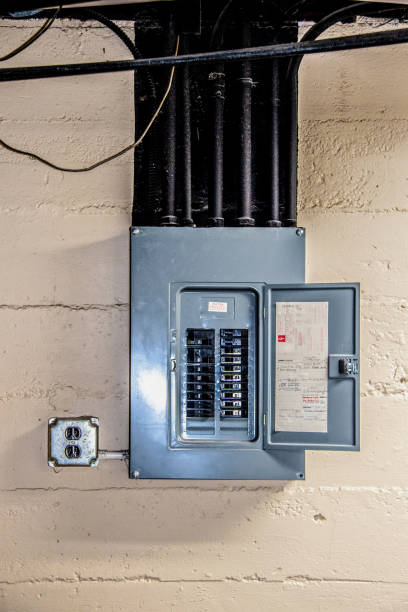
Work behind the panel cover, on the service entrance (the cable and equipment bringing utility power into the house), or on the line side of the meter is not homeowner territory under any circumstance. Turning the main breaker off does not de-energize the service conductors or the line-side lugs of the main breaker itself. Only the utility, typically by pulling the meter, or a separate service disconnect ahead of the panel can kill that power. Corrections in that zone belong to a licensed electrician.
How to Tell If You Need an Inspection or a Correction Visit
You need an electrical inspection in a handful of clear situations, and you need a correction visit whenever a notice has your address on it.
Signs it is time to call:
- You have a correction notice in hand. The clock on an open permit does not run forever, and municipalities vary on how long they will leave one open before it expires.
- You are selling or buying. A home inspector’s electrical findings are not the same as a municipal inspection, but they generate the same list of things a buyer wants fixed. If you are on either side of a sale, it helps to know what an inspection looks for in a home purchase before negotiations start.
- You are about to pull a permit for other work. Inspectors look at what is in front of them, but obvious adjacent problems often get written up too.
- The house has knob and tube, cloth-insulated wiring, or a fuse panel. None of these automatically fail anything, but they invite scrutiny.
- You bought a house with finished work that has no permit history. Unpermitted work is a common reason a later inspection fails: the inspector has no record that anything was ever approved.
Stop using a circuit immediately and leave the breaker off if you notice a burning or hot-plastic smell, scorch marks, discoloration around an outlet or breaker, buzzing, or crackling. Those are not inspection items to schedule around. Call an electrician. Do not touch the device or the panel to judge how hot it is; smell, sight, and sound tell you what you need to know.
A note on resetting breakers, because it comes up during correction work: reset a tripped breaker once, pushing firmly to OFF and then to ON. If it trips again, leave it off until an electrician has looked at it. A GFCI gets one reset too. If it will not hold, there is a real leakage fault or the device has failed. A GFCI that keeps tripping is not “doing its job”; it is reporting a problem.
Never fix a tripping circuit by installing a larger breaker. The breaker protects the wire, not the appliance. If a circuit is genuinely overloaded, the answer is a new circuit.
What Decides the Price of Fixing a Failed Inspection
The price of correction work is driven by four things: how many items are on the notice, how accessible they are, whether the panel has to be opened or replaced, and whether anything has to be opened up in a finished wall or ceiling.
| Correction type | Typical access | Relative effort |
|---|---|---|
| Missing cover plates, box covers, panel labeling | Open and visible | Lowest |
| Adding GFCI or AFCI protection at the device | Outlet box | Low to moderate |
| Adding GFCI or AFCI protection at the panel | Behind panel cover | Moderate |
| Replacing an ungrounded receptacle or correcting a double-tap | Outlet box or panel | Moderate |
| Running a new dedicated circuit | Depends on finished surfaces | Moderate to high |
| Correcting rough-in wiring already covered by drywall | Requires opening walls | Highest |
| Service entrance or grounding electrode corrections | Line side, utility coordination | Highest |
We do not publish prices for this work, because no two correction notices are alike and a figure would mislead you. What we will do is walk the notice with you and quote the actual list.
Other cost factors worth knowing about: re-inspection fees are charged by the municipality, not by us, and some jurisdictions charge for a second re-inspection even when the first was free. If the original work was done without a permit, there may be a separate permit fee to bring the work into the record. And if the house has an older panel where compatible breakers are no longer manufactured, a correction that would otherwise be simple becomes a larger conversation.
How Long It Takes and What Gets Disrupted
Most correction work on a residential notice is a half-day to a full day of labor, and the disruption is limited to the circuits being worked on.
Here is the realistic timeline, start to finish:
- Assessment visit: usually under an hour, often done at the same appointment as the repair if the notice is short.
- Correction work: a few hours for device-level items such as GFCI, AFCI, receptacle replacements, and labeling. A day or more if new circuits are involved or finished surfaces have to be opened.
- Scheduling the re-inspection: this is the part nobody controls. Municipal inspection queues in Milwaukee and Waukesha County run anywhere from a couple of days to a couple of weeks depending on the season and the department’s backlog.
- Re-inspection itself: typically 15 to 45 minutes for a residential correction check.
Power interruption depends entirely on the scope. Device-level corrections need only the affected circuit off, which means one or two rooms at a time. Anything inside the panel means the main is off, so the whole house is dark for that portion of the day. We schedule panel work for a window that suits you and tell you in advance how long you will be without power. Service entrance corrections involve coordinating with the utility, which adds a scheduling step but not usually a longer outage.
Drywall is the real disruption variable. If a correction requires opening a wall or ceiling, patching and painting are separate from the electrical work and are typically handled by you or your contractor after the re-inspection passes.
Holding a correction notice you do not understand?
A licensed electrician reads the notice, tells you what each item actually means, and what clearing it involves.
Licensed master electrician. 12-month workmanship warranty.
Permits and Inspection in Wisconsin
Permits are issued by your local municipality, which enforces the state electrical code. Wisconsin SPS 316 adopts the 2023 edition of the National Electrical Code, in effect since September 1, 2026. Before that date, Wisconsin worked from the 2017 NEC; the state skipped the 2020 cycle entirely.
That transition matters for a failed inspection in a specific way. Existing installations are not required to be brought up to the new code edition simply because the edition changed. The code in force applies to new work and to work being altered. If your 1970s bedroom circuits have no AFCI protection, nobody is going to fail your house for that on its own. But if you open those circuits up and rewire part of them under a permit, the altered portion is inspected against the edition in force now.
How many inspections are there, and how often? For a project, usually two: a rough-in inspection after the wiring is run but before insulation and drywall cover it, and a final inspection once devices, fixtures, and covers are in. Larger projects can add a service or temporary-power inspection. For an existing house with no work underway, there is no mandatory inspection cycle at all. A municipal electrical inspection is tied to permitted work, not to a calendar.
A voluntary safety inspection is a different animal. It is not a permit inspection, it does not expire on a set date, and it does not produce a correction notice with legal weight. It produces a report. Knowing what gets checked on an inspection walkthrough tells you what a report will and will not cover.
Choosing an Electrician to Clear a Correction Notice
Choose someone who will read the notice line by line with you, tell you which items are theirs to fix and which are the municipality’s to re-inspect, and pull the permit when a permit is needed.

Questions worth asking any contractor before they start:
- Will you pull the permit, or am I expected to? (For work requiring a permit, the contractor should.)
- Will you request the re-inspection and meet the inspector?
- Which items on this notice can you clear today, and which need a return visit?
- If the panel has to be opened, how long will the house be without power?
Be skeptical of anyone who tells you the notice is wrong and nothing needs doing, or who proposes to correct panel-side items without a permit. Also be skeptical of anyone who turns a three-item notice into a whole-house rewire proposal without walking you through why.
Lehmann Electrical & Design is led by master electrician Jacob W. Lehmann and carries an A+ rating with the BBB and 4.9 stars on Google. Our work carries a 12-month workmanship warranty. Our electrical inspection and correction services cover both municipal correction work and voluntary safety assessments across Milwaukee and Waukesha County.
Why homeowners call Lehmann Electrical & Design
- Led by licensed master electrician Jacob Lehmann
- A+ rating with the BBB and 4.9 stars on Google
- 12-month workmanship warranty on the work we do
- Permits pulled and inspections scheduled as part of the job
- Milwaukee, Wauwatosa and Waukesha County, from 12012 W Fairview Ave, Wauwatosa
Want the corrections cleared?
Tell us what the notice lists, who issued it, and whether there is a closing date to work to.
Licensed master electrician. 12-month workmanship warranty.
Frequently Asked Questions
▾How many electrical inspections are there on a typical job?
Usually two. A rough-in inspection happens after the wiring is run and boxes are set but before insulation and drywall cover anything, so the inspector can see the cable, boxes, and connections. A final inspection happens after devices, fixtures, and cover plates are installed and the circuits are energized. Larger projects may add a separate service or temporary-power inspection. Small permitted repairs sometimes need only a final.
▾How long between electrical inspections on a project?
Entirely dependent on your construction schedule, not on a fixed interval. Rough-in has to pass before anything is covered, so the gap between rough-in and final is however long drywall, flooring, and finish work take. That can be a week on a small remodel or several months on an addition. Re-inspection after a correction notice depends on your municipality’s queue, commonly a few days to a couple of weeks.
▾How long are electrical inspections good for?
A passed permit inspection does not expire. It is a permanent record that the permitted work was approved under the code edition in force at the time. What does expire is an open permit with outstanding corrections, and the window varies by municipality. A voluntary safety inspection report has no official expiration either, but its usefulness fades as the house changes, so most homeowners treat one as current for a few years.
▾How do electrical inspections work?
An inspector visits, compares the installation to the state code in force, and either approves it or issues a written correction list. For permitted work, someone requests the inspection through the municipality and meets the inspector on site. The inspector checks grounding, bonding, conductor sizing, box fill, device and breaker types, GFCI and AFCI protection where required, labeling, and workmanship. Approval closes that stage of the permit.
▾What does an electrical inspection entail for an existing house?
A voluntary inspection of an existing house is a systematic walkthrough: the panel and its labeling and breaker condition, grounding and bonding, visible wiring methods, receptacle grounding and polarity, GFCI and AFCI protection where present, smoke and carbon monoxide alarms, and any signs of overheating such as discoloration or scorch marks. The result is a prioritized report, not a pass or fail.
▾How often should you have an electrical inspection?
There is no required cycle for an existing Wisconsin home. Reasonable triggers are buying or selling, a house older than roughly 40 years that has never been assessed, a planned addition or major appliance, visible aluminum branch wiring or knob and tube, or any sign of a problem such as repeated tripping, buzzing, or a hot-plastic smell. Absent those, every few years is sensible.
Have a correction notice you need cleared? Send us the notice and we will tell you exactly what it takes to pass the re-inspection. Request an estimate or call 414-207-0109.
Next step
Get the corrections cleared
Tell us what the notice lists and whether there is a deadline.
Licensed master electrician12‑month warranty4.9 on Google
Milwaukee, Wauwatosa and Waukesha County. Prefer to talk? Call 414-207-0109